
Διαβάστε στα Ελληνικά εδώ

Σφραγίδες Ναών: Η πηγή προέλευσης του stamp rally;
Έχετε αναρωτηθεί ποτέ τι κάνουν οι πιστοί στους ιαπωνικούς σιντοϊστικούς ναούς αντί να αφήσουν λεφτά στο παγγάρι και να ανάψουν κερί; Μαζεύουν σφραγίδες. Με κοκκινόμαυρο μελάνι. Σε ένα ειδικό βιβλίο. Μάθετε περισσότερα στο άρθρο…
Goshuin Collection
as a log of my trips
The most popular hobby of the Japanese people, apart from creating mascots for everything, is to participate in stamp rallies. No matter the prize or the theme, the stamp collecting scene is huge. Even train stations have their own commemorative stamp, sometimes changing depending on the year’s events or the season. But what is the cause of such fascination with creating and collecting stamps in Japan?
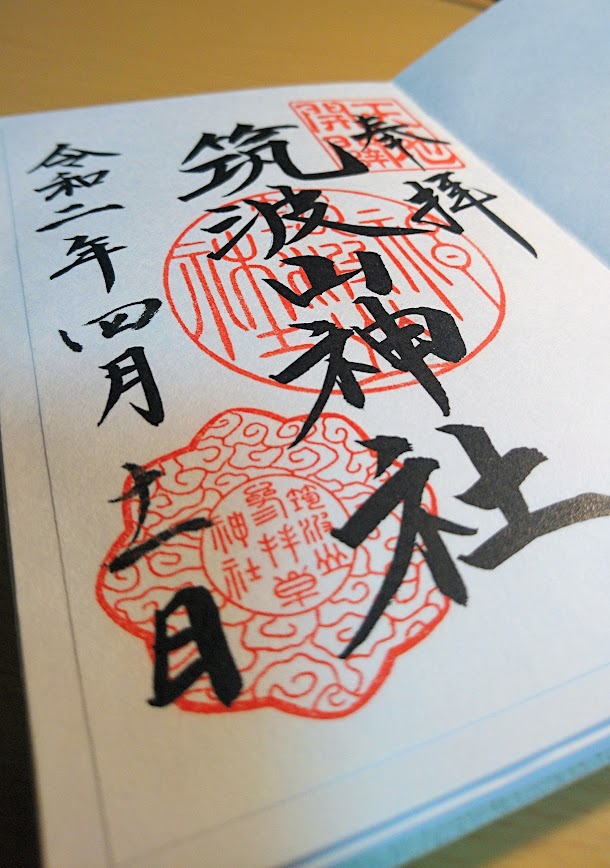
I got you there, didn’t I? I don’t know the answer, but honestly my best guess would be that it is just the natural progression of the concept of stamp collection from shrines during religious pilgrimages. Common people would consider it a life goal to visit holy sites around the country. What a better way to prove your pilgrimage with a date-marked handwritten stamp from the shrine or temple you visited? These religious stamps are referred to specifically as goshuin (御朱印).
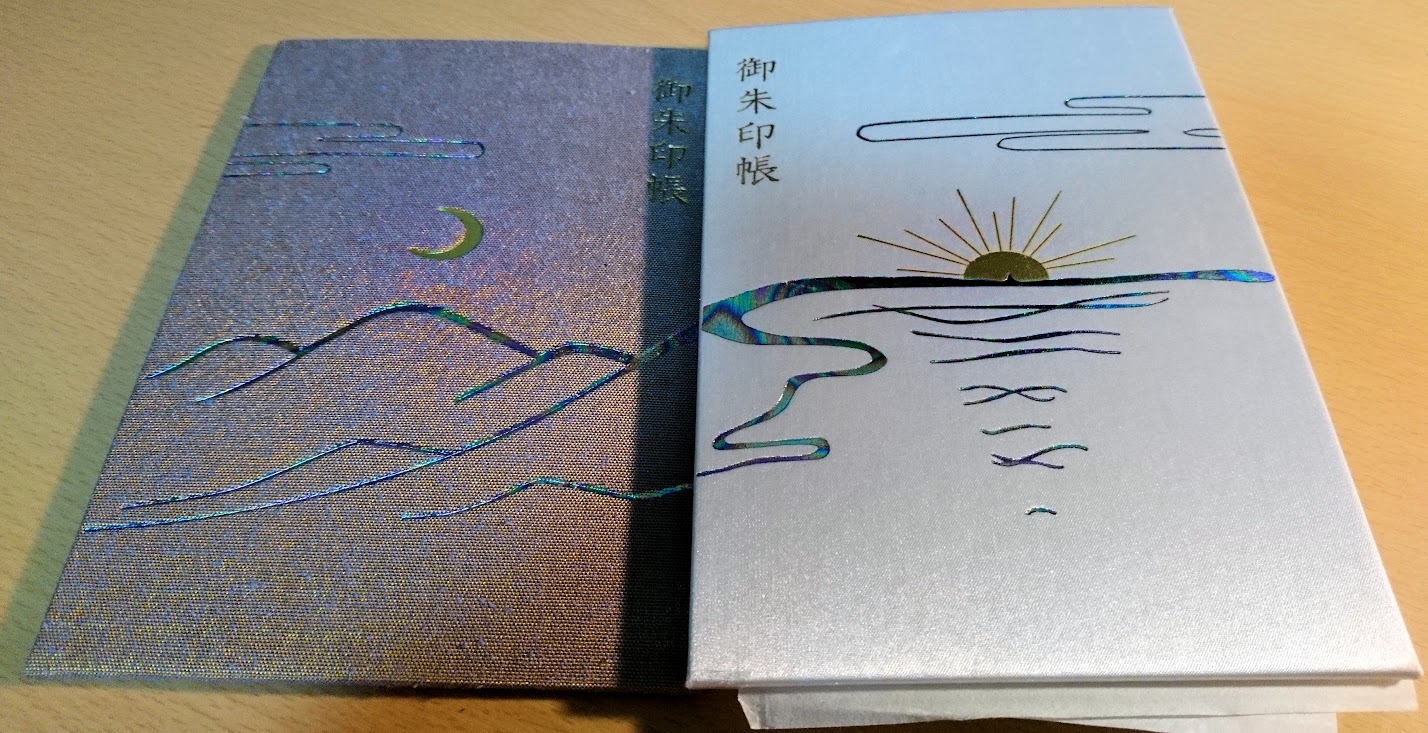
The custom of collecting stamps during pilgrimage proved to be a fruitful business endeavor for shrines, thus many of them started to make their own special booklets to write the stamps in. These books are called shuincho (朱印帳). I happen to own two of them; one that was given to me as a gift during the Dewa-Sanzan tour and the other I bought myself at Gotokuji temple in Setagaya. The latter one is the temple famous for its many mini manekineko cat statues.
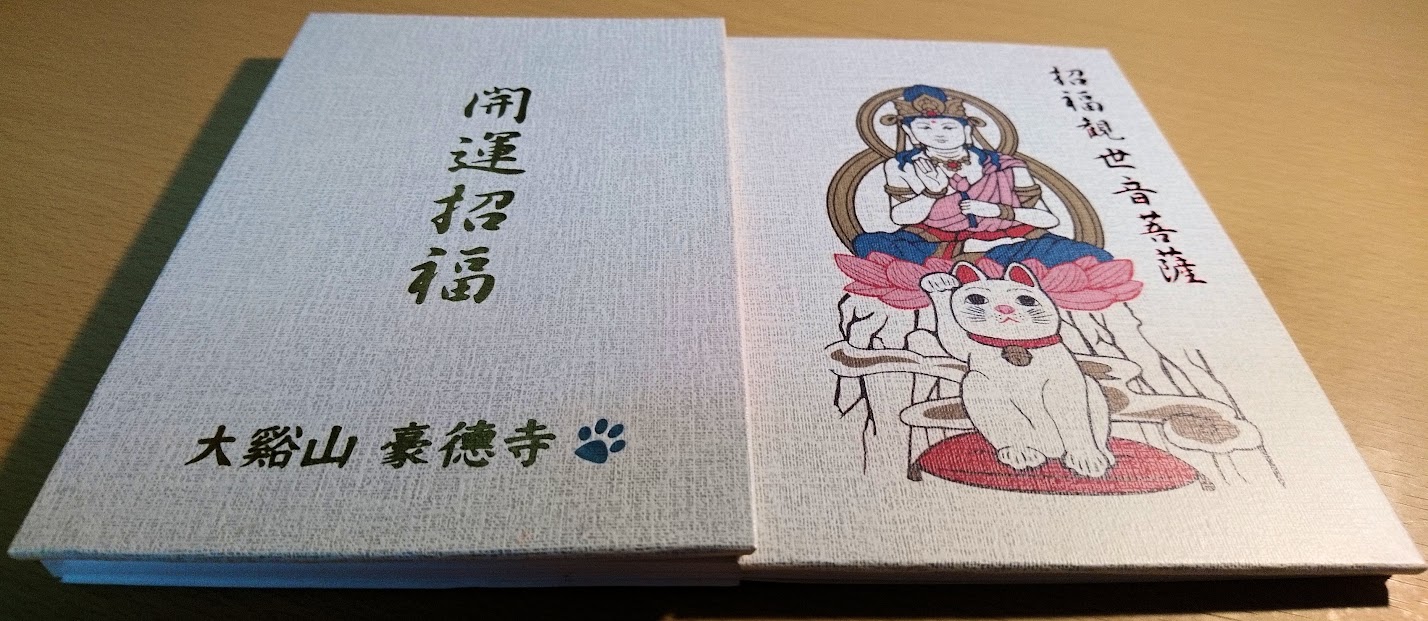
Usually, buying the booklet means it comes together with the first stamp already written in, the stamp of the temple you bought it from. So, the first one for me is the Gotokuji stamp, as you an see by the 大谿山 豪徳寺 written on the left. The date of acquisition is marked on the right as 令和元年八月十二日 which is the equivalent kanji numerals for the date 2019/08/12.

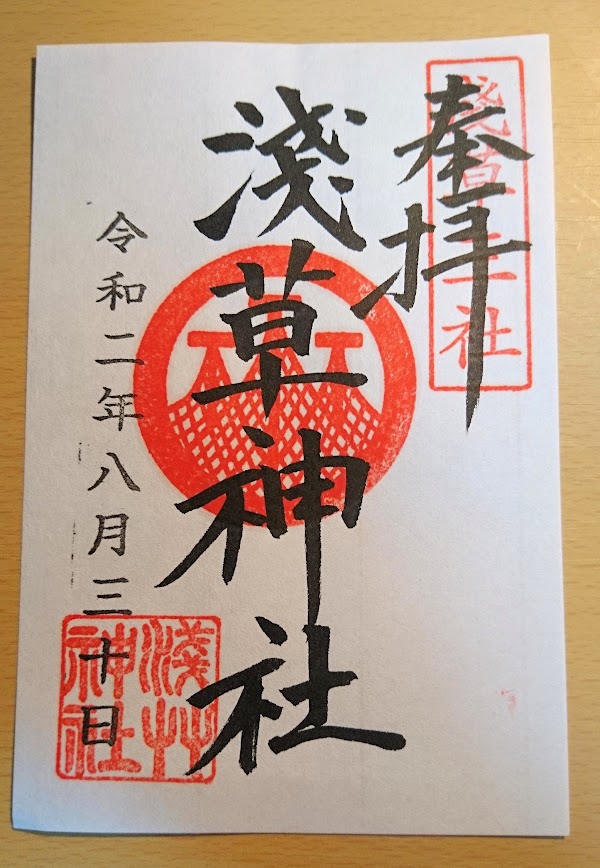
Normal prices for a goshuin are at around 300yen and for the shuincho booklen at 1500yen. Of course, depending on the status and the popularity of the temple, costs increase. For example, the stamps from Sensoji temple (浅草寺) and Asakusa shrine (浅草神社) in the tourist friendly old town of Tokyo are priced at 500yen.
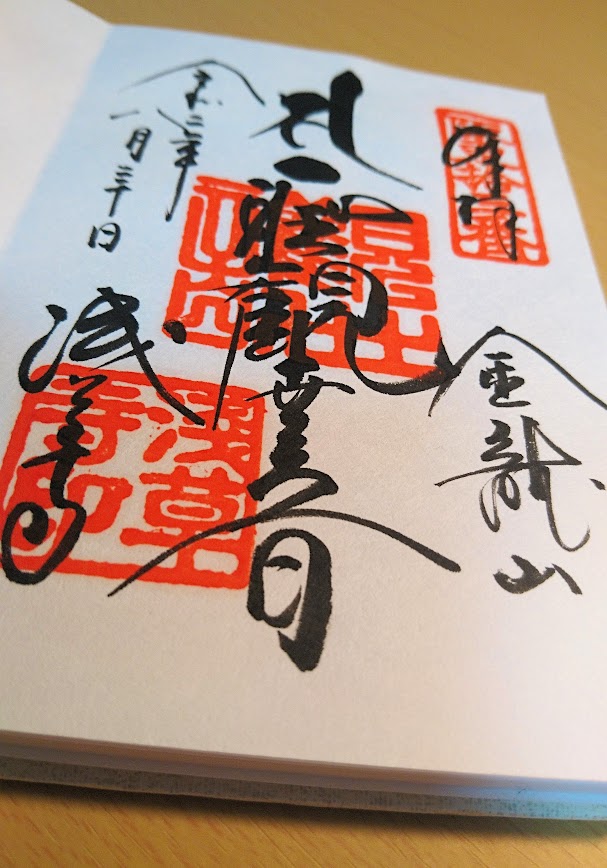
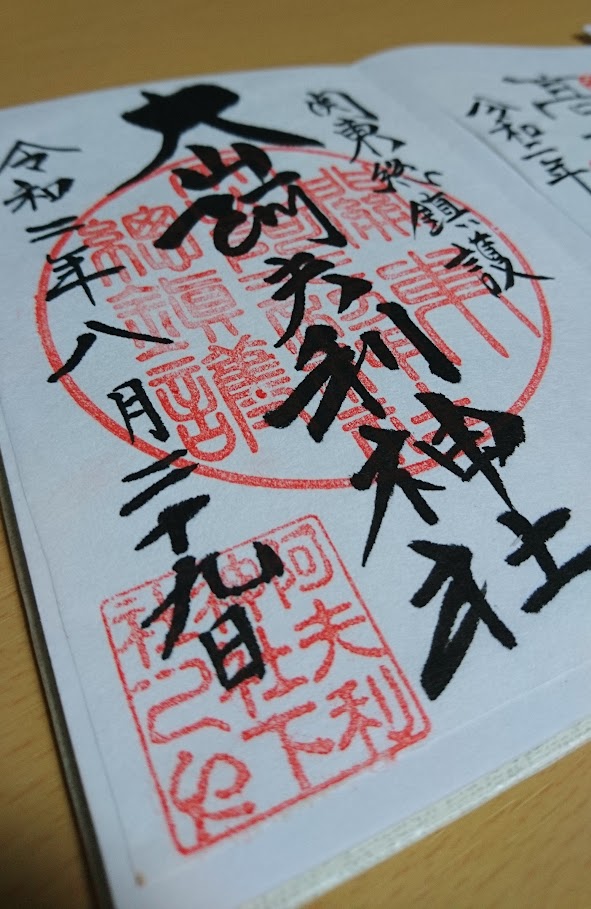
A nice souvenir from a mountain hike can easily be a goshuin, as many mountains in Japan are considered holy or have a shine at their base or peak. Here are the goshuin from Mt. Tsukuba (筑波山) in Chiba prefecture and Mt. Oyama (大山) in Kanagawa prefecture. I also managed to get one from Musashi Mitake shrine (武蔵御嶽神社) on top of Mt. Mitake (御嶽山) in Saitama prefecture.

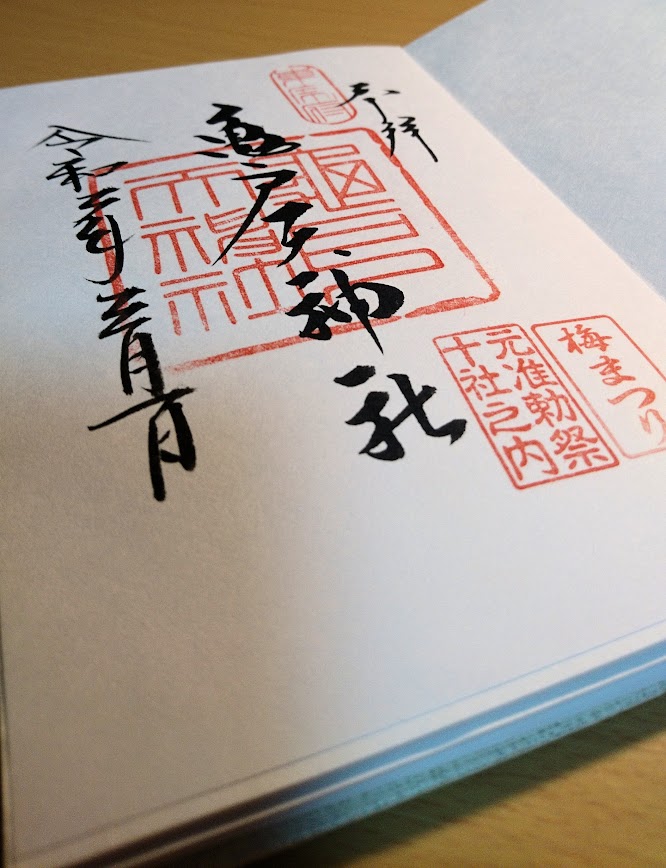
The complete stamp can be simple, with just black ink for the date and location name and two or three crimson red stamps. Like the one I received from Kameido-Tenjin shrine (亀戸天神社) close to Tokyo Skytree. That temple is mostly famous for its hanging lilac wisterias, but I visited it during a plum tree festival in February, so there is an additional 梅まつり (plum festival) red stamp at the bottom right. Sometimes, the paper itself might be decorated with a theme representative of the shrine or for a seasonal event, like the one from Ichōgaoka Hachiman Shrine (銀杏岡八幡神社) in Asakusabashi, the temple on the hill of Icho trees, which is decorated with the characteristic icho leaf. Additionally, due to an event for the summer, it has blue stamp tagged as 夏詣 (natsumai) or summer visit to the temple, as it was one of the 13 shrines participating in the 夏詣2020 campaign, which had special stamps created for the summer season.

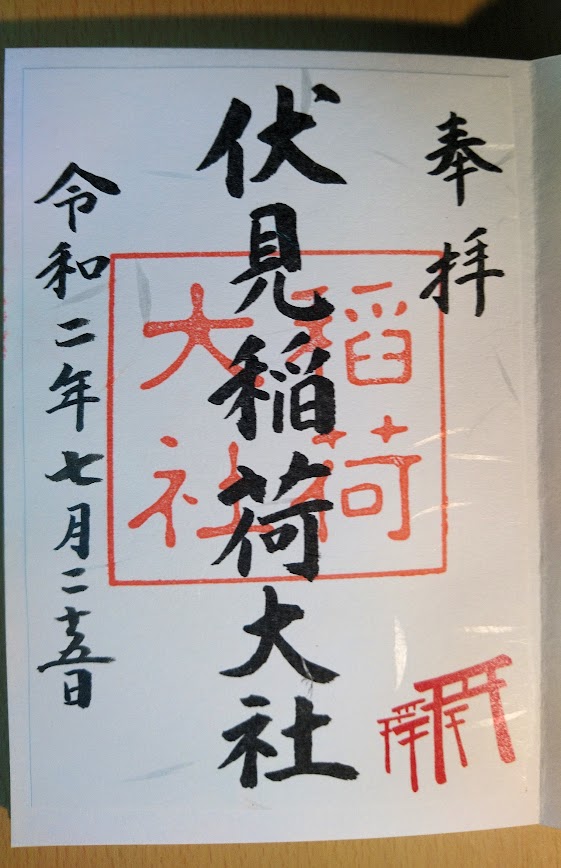
In Kyoto, there are a lot of themes embraced from he famous shrines in the area. For example, the stamp from the fox shrine of Fushimi-Inari Taisha (伏見稲荷大社), has some red torii gates to remind you of the hundreds of torii gates on your way up to the top of Mt. Inari. At the Yasaka shrine (八坂神社) in the Gion district, the neighborhood of geishas, there is a hole where the blue dragon (青龍) god of the east resides, thus the stamp shows a dragon on it.

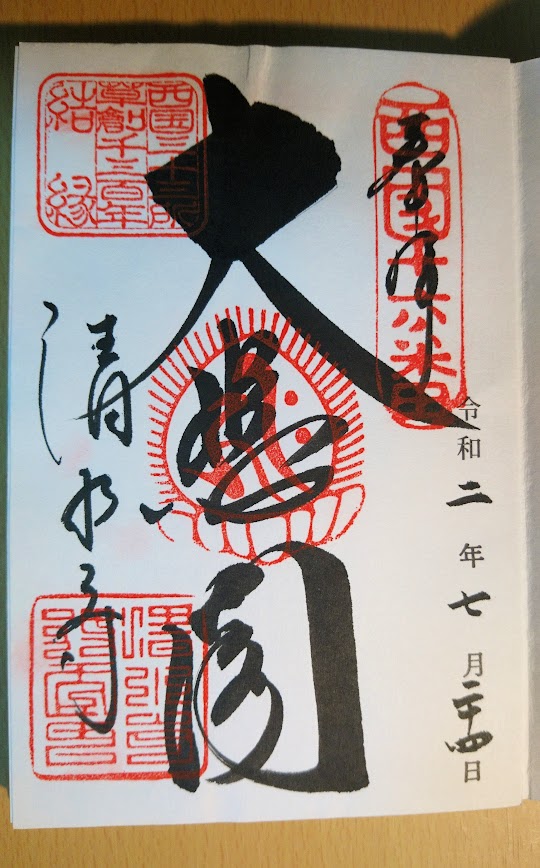
Some temples are so crowded that the priests don’t even bother to write a stamp on your booklet, but instead give you are prepared piece of paper with the stamp and date to stick in the booklet by yourself later. The ultimate automation of the process was found at Kinkakuji (金閣寺), the golden pavilion temple in Kyoto, where a printed-out, abnormally long goshuin doubles as an entrance ticket. The date was missing and I had to cut it in half in order to attach it in my book. I am still not sure if this is deemed acceptable for shinto-buddhist standards, so I just hope that no priest will look inside my shuincho before writing a new stamp.
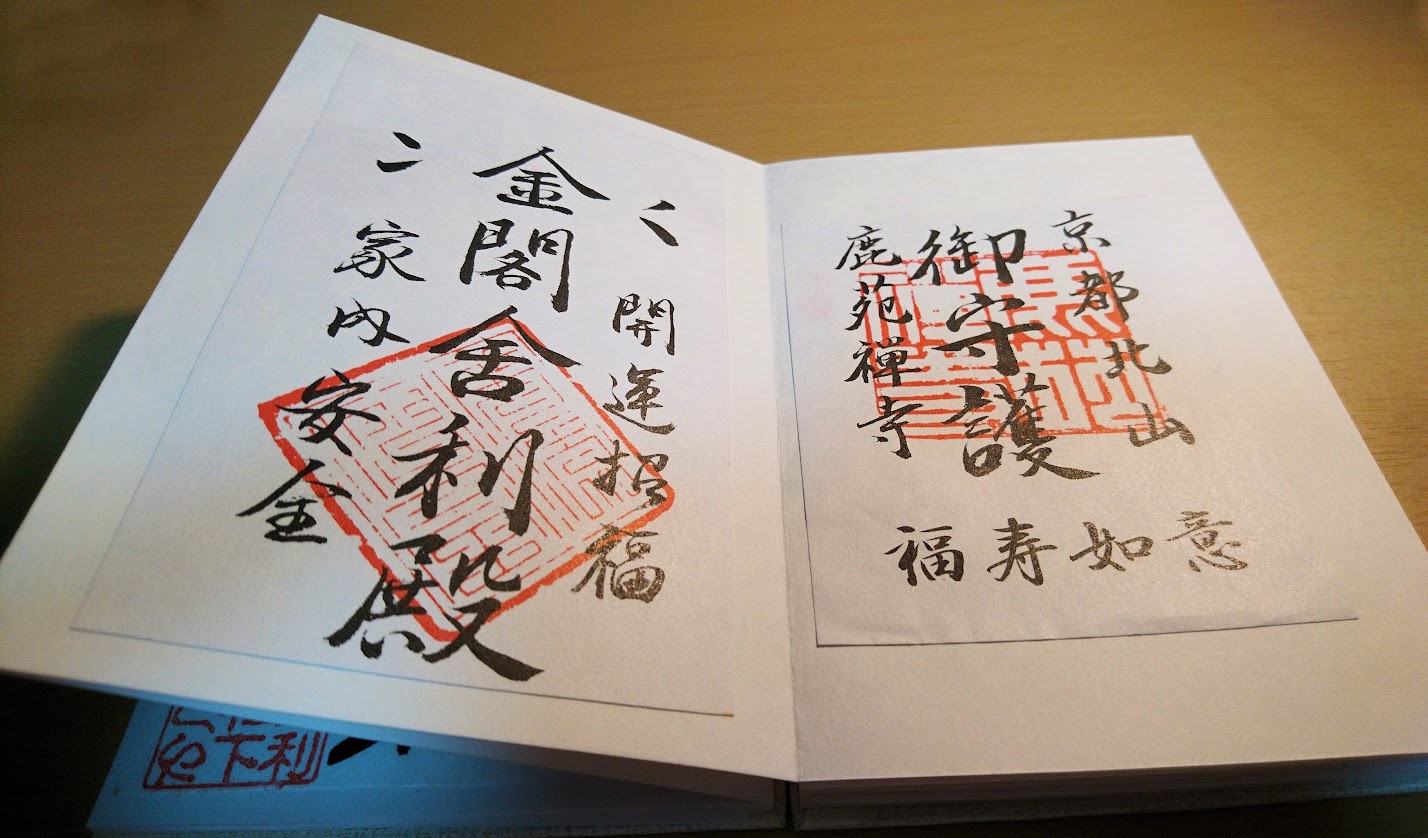
I still have a long way to go to fill my booklet. It is a pricey hobby indeed, but I prefer to imagine how beautiful it would look, spread open across a table in the living room, reminding me of all the places I’ve been in Japan after returning to my home country. What do you think about the hobby of collecting goshuin? Would you be interested in collecting some for yourself?
Read more:
Σφραγίδες Ναών: Η πηγή προέλευσης του stamp rally;
Έχετε αναρωτηθεί ποτέ τι κάνουν οι πιστοί στους ιαπωνικούς σιντοϊστικούς ναούς αντί να αφήσουν λεφτά στο παγγάρι και…
Keep readingBooklets 1 & 2
locations of my stamp collection Booklet #0 Booklet #1 中秋の名月 Booklet #2 I got a new shuincho from…
Keep readingBooklets 3 & 4
locations of my stamp collection Booklet #3 The main deity of Itsukushima shrines is Benzaiten (弁天) in the…
Keep reading belleelene