
Imagine standing right in the middle of Greece, yet somehow feeling completely hidden away, like you’re lost in the middle of nowhere. That’s Vardousia for you. As my mountaineering teachers told me, Vardousia is a special kind of mountain where you can do almost everything — from hiking to serious climbing — whether you’re just starting out or already an expert.

To get to Vardousia, you usually pass through the village of Athanasios Diakos, named after the famous hero of the Greek Revolution of 1821, who was born around here. Hidden deep among forests and gorges, the mountain has always been a place where rebels and outlaws could hide. In ancient Greek mythology, it’s said that the Muse Urania, the goddess of astronomy, picked Vardousia as her secret escape. There’s even a story that the nearby village of Musunitsa got its name from her — the locals used to call her Muse Uranitsa or Musa Nitsa with affection, and over the years it turned into Musunitsa. On a spookier note, some say that lamia spirits live deep under the mountain and might snatch naughty children if they’re not careful.


Today there are two mountain refuges operating on Vardousia, less than a kilometer apart. The bigger one close to Pitimaliko at 1918m is run by EOS Amfissas and has three floors and a big dining hall. The other close to Meterizia at 2015m, run by POA of Athens, is smaller, not manned, and a lot more basic — but it’s cozy and a real lifesaver when you need it. There are two water springs nearby too, although you shouldn’t count on them too much in the heart of winter because sometimes -oh- pipes break.


The highest peak of Vardousia is called Korakas, meaning “crow,” reaching up to 2,495 meters. That was actually the mountain’s original name, before the Slavic name “Vardousia” became more common. Long ago, it was also called Anemistos, meaning “the one who waves,” because of the strong winds that hit its sides and make the water streams wave. It’s one of the few mountains in Greece that has an alpine landscape, and maybe that’s what makes it so special. It’s also the second tallest mountain in Roumeli, the central part of Greece, an area that used to be home to many nomadic tribes coming down from the north. The goat-herding traditions that once shaped these mountain slopes have gradually faded into oblivion.


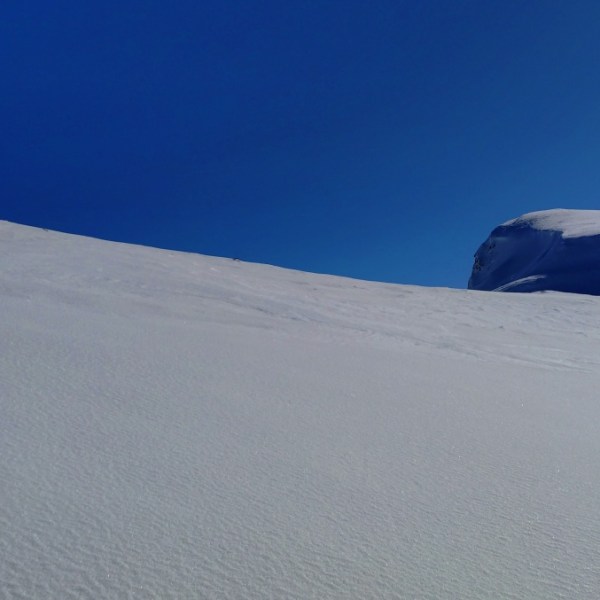
What makes Vardousia truly breathtaking is how different its landscapes are. The northern side has lots of high, sharp peaks, while the southern side is much rougher. There are steep climbing faces on the northwest side too, towards a place called Skorda Pitimalkou. After pushing through the narrow pass known as the Gates, you reach a wide, beautiful plateau called the “Megas Kampos”, namely “Great Valley.” When you finally get to the top of Korakas, you can look down at the steep eastern side of the mountain, cheekily nicknamed “Asanser” (meaning “elevator”) because of how fast you could imagine sliding down it. Vardousia is also full of water, with streams that feed into the Evinos and Mornos rivers further below.


We ended up in Vardousia as part of our final training weekend in mountaineering school. Every serious mountaineering school seems to include a weekend here — it’s almost a rite of passage. Whether you’re bracing against the wild winds at the Gates, cautiously descending a rope on self-tightening knots, pushing your way across the never-ending mountain plateau, or standing at the summit with the steep cliffs dropping beneath your feet — this mountain offers everything. I can say with confidence, it’s perfect for training. You really get a bit of everything, and you come out the other side stronger.


But beyond the physical challenge, what made this trip unforgettable was the team — this group of people I’d trained with, grown with, and learned to trust on the mountain. It wasn’t just another climb; it was a kind of farewell. During that weekend, somewhere between the icy slopes and the chatty meals in the refuge, I realized it would be the last time we’d all be together as one class. Some would go on to climb with different clubs, others would follow different paths entirely. That sense of an ending added a weight to everything — to every laugh we shared, to every quiet moment when we stood still and looked out at the ridges. It hit me harder than I expected. It’s strange how a mountain can hold both challenge and beauty, joy and a bit of heartbreak — but I guess that’s what makes it unforgettable.

Here you’ll find the relevant trails from the roadside to the mountain huts and to the summit, during winter season. You can read more hiking posts under the tag hiking. If you liked this article, share it with your friends. You can also follow this blog, and follow me on Instagram or Facebook, to never miss a post. Until next time!


Read more:
Parn-ace-us
Parn-ace-us! Don’t mock my efforts—this was the best pun I could come up with for Mt. Parnassus. Even…
Keep reading
Hiking in Greece: The legendary Agrafa
For the past few weeks, I’ve made it a ritual to dedicate each Sunday to the hiking gods.…
Keep reading
Hiking in Greece: Hermes playground at Mt Ziria
The Ziria mountain range is home to the second tallest peak of the Peloponnese. Taygetus is first, Ziria…
Keep reading belleelene