Few people know about Mount Pateras, despite it being one of Attica’s most pristine and historically rich mountains. It took 10 years of living in Athens for me to learn of its existence, and admire how it’s hovering above beautiful beaches.
So, Patéras means father and messy as we always are, we decided to scale it on Mother’s day. This mountain forms the rugged northwestern edge of Attica, acting as a natural limestone extension of Mt Parnitha that separates the Thriasian Plain from the Megarian valley. It was known in antiquity as Agchaion, capturing the distress (agchos) of the goddess Demeter as she searched these slopes for her daughter Persephone. Centuries later, woodcutters renamed it Páteras after the massive structural roof beams (paterá) they harvested from its forests. Páteras turned into Patéras with time, and unfortunately has absolutely nothing to do with a father.
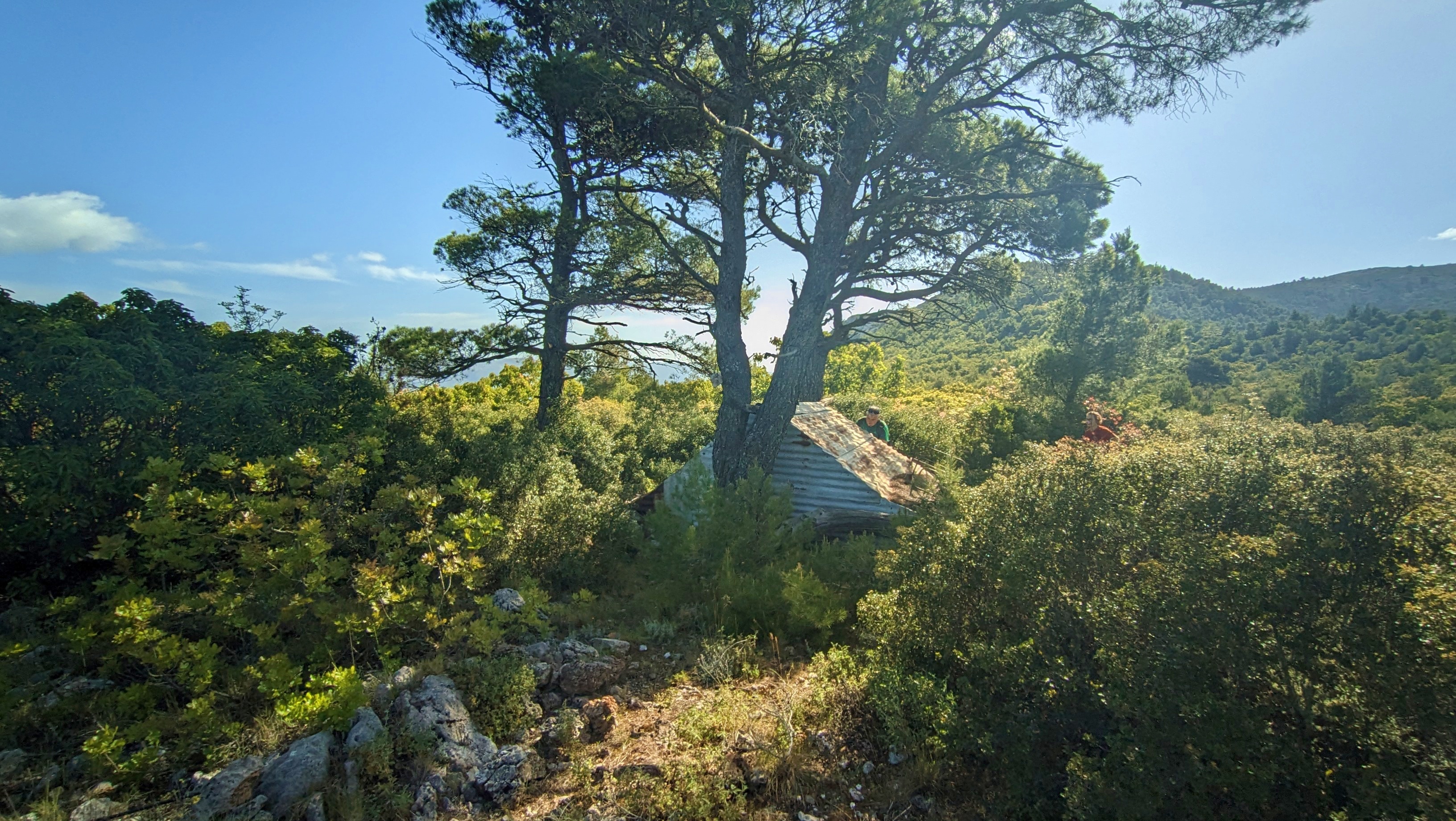
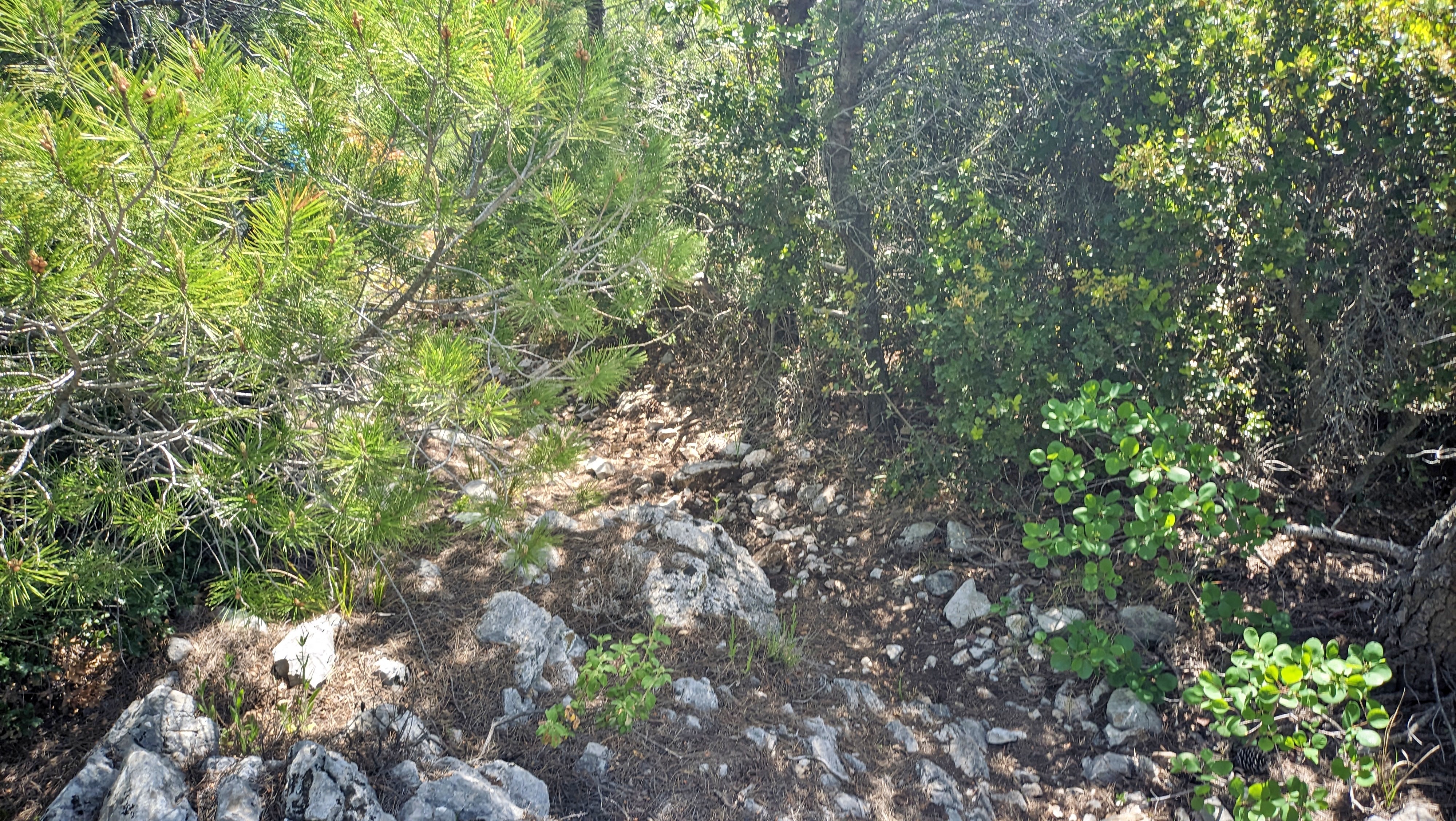
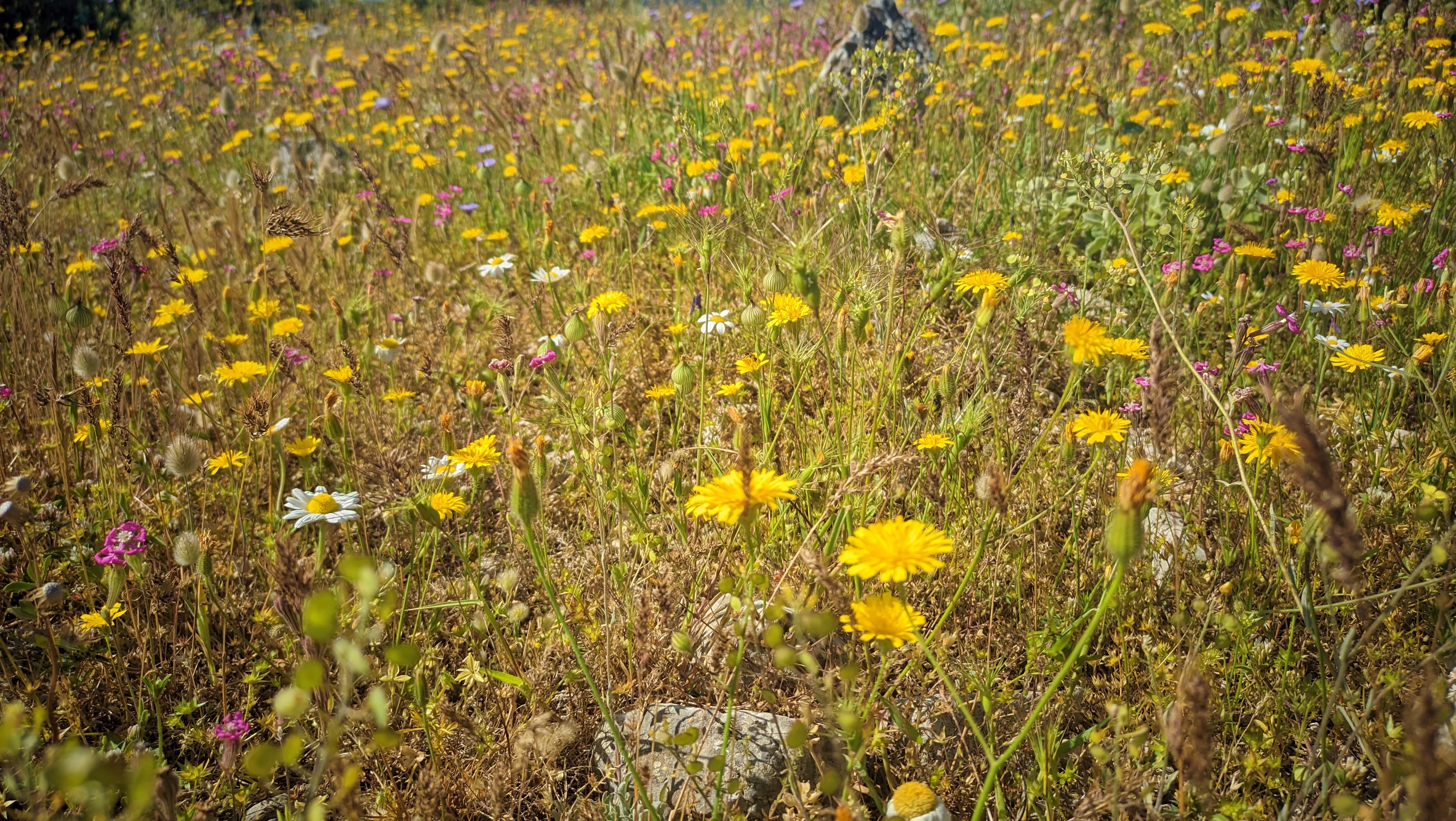
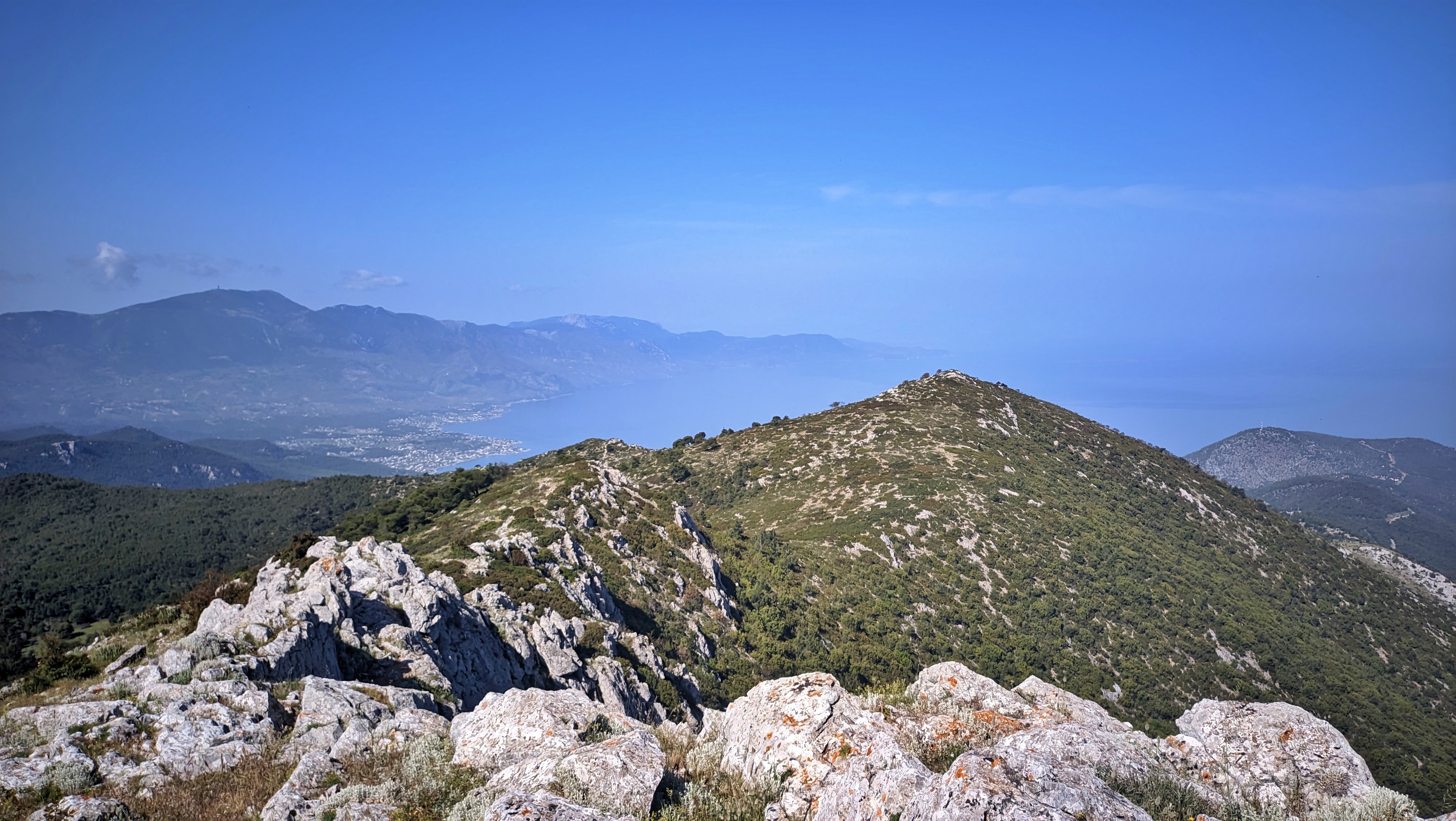
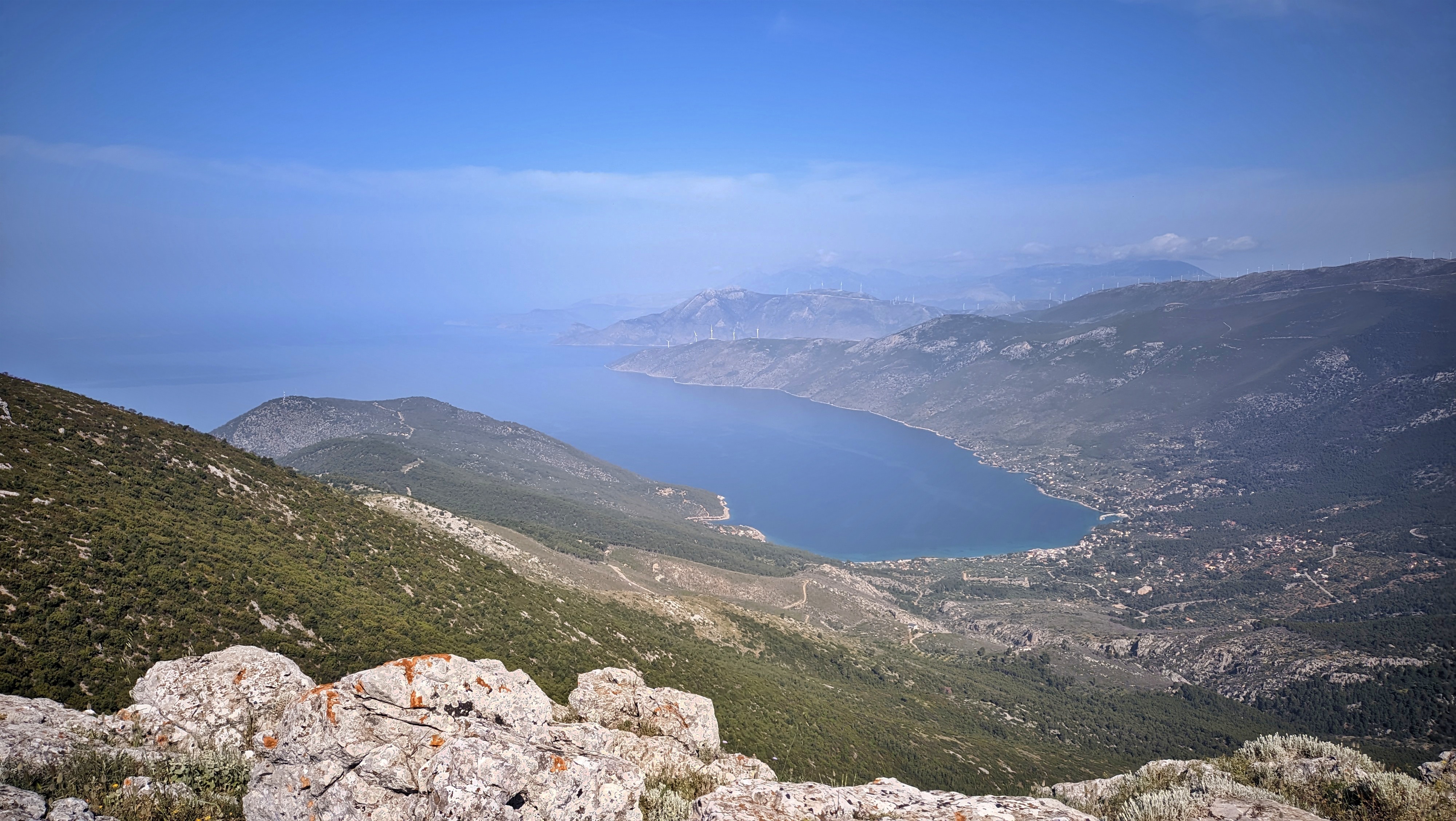
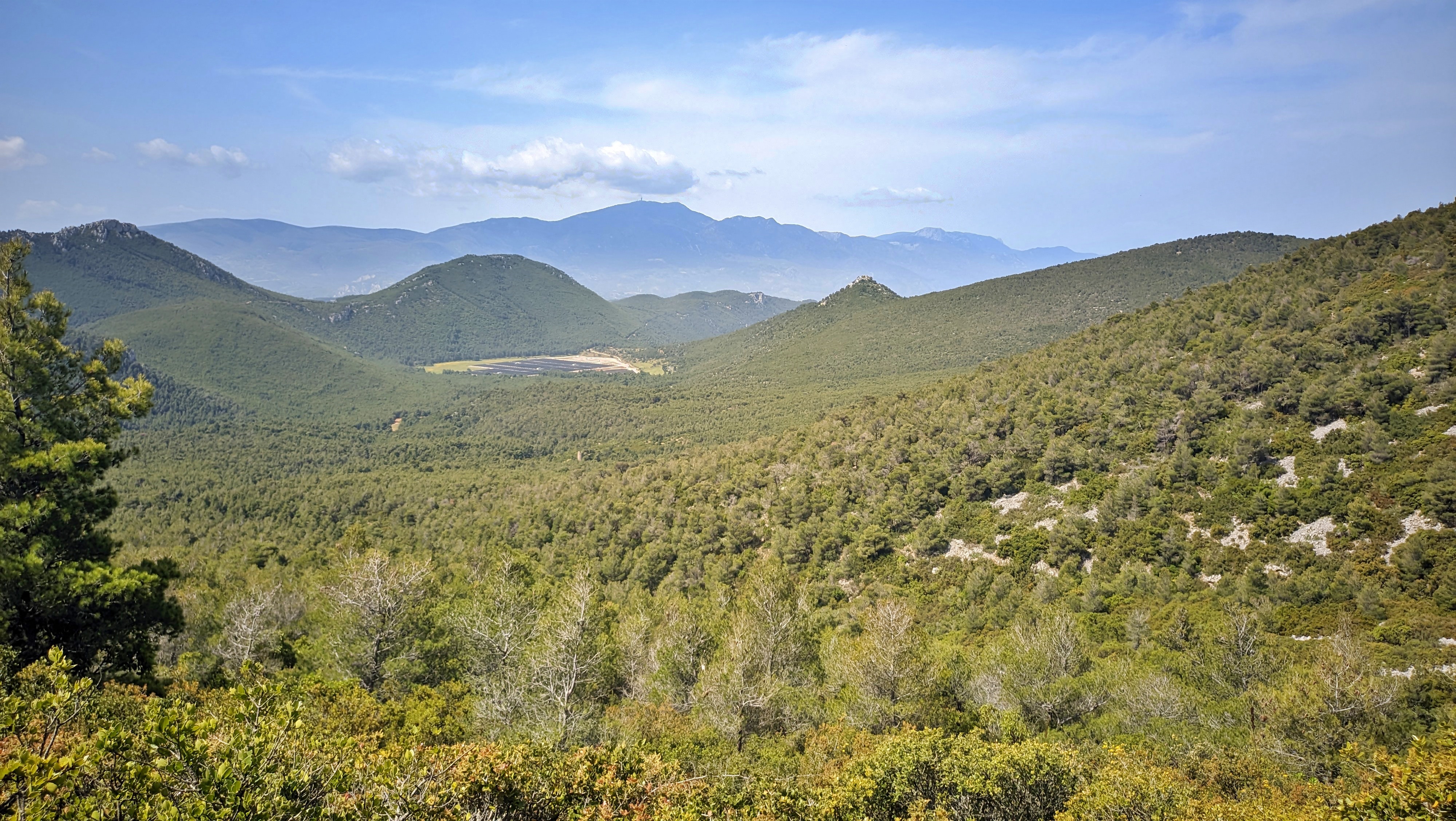
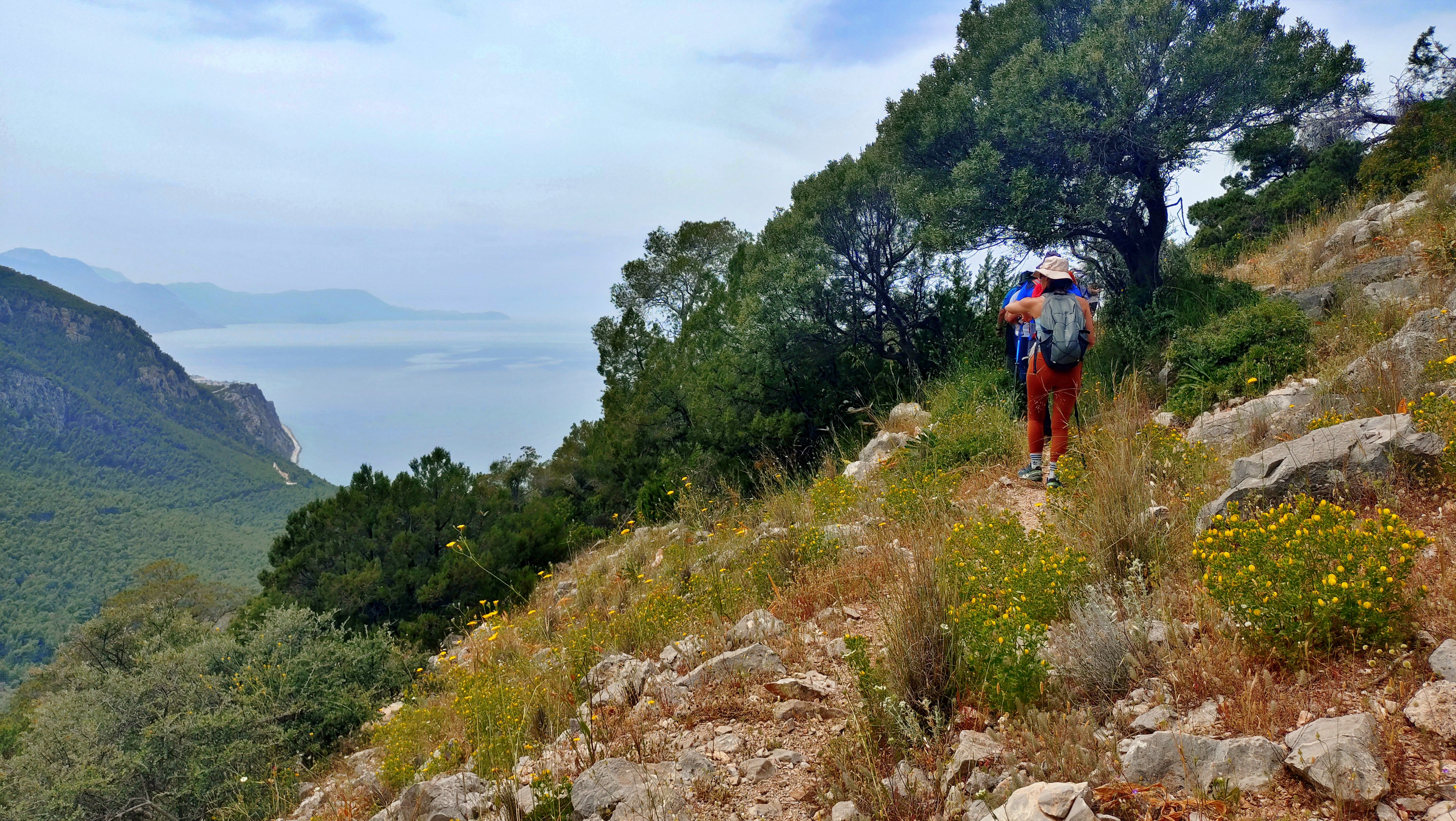
Though devastating wildfires in 1985 and 2016 altered its landscape, the mountain boasts incredible ecological resilience, showcasing a rapidly regenerating pine forest. From the direction of the village Agios Nektarios, we start with a 2km uphill climb. Keeping your back to the mountain means you have a constant, uninterrupted panoramic view of the Alkynonides gulf expanding behind as you climb. The trail eventually ducks into a lush, green path before delivering you to the summit. While the highest peak of Mt Patera is Leontari at 1,132 meters, our specific expedition focuses on the 916m summit of Kaliakouda. From the top, the unobstructed views of the surrounding peaks and the azure coastline are unmatched.
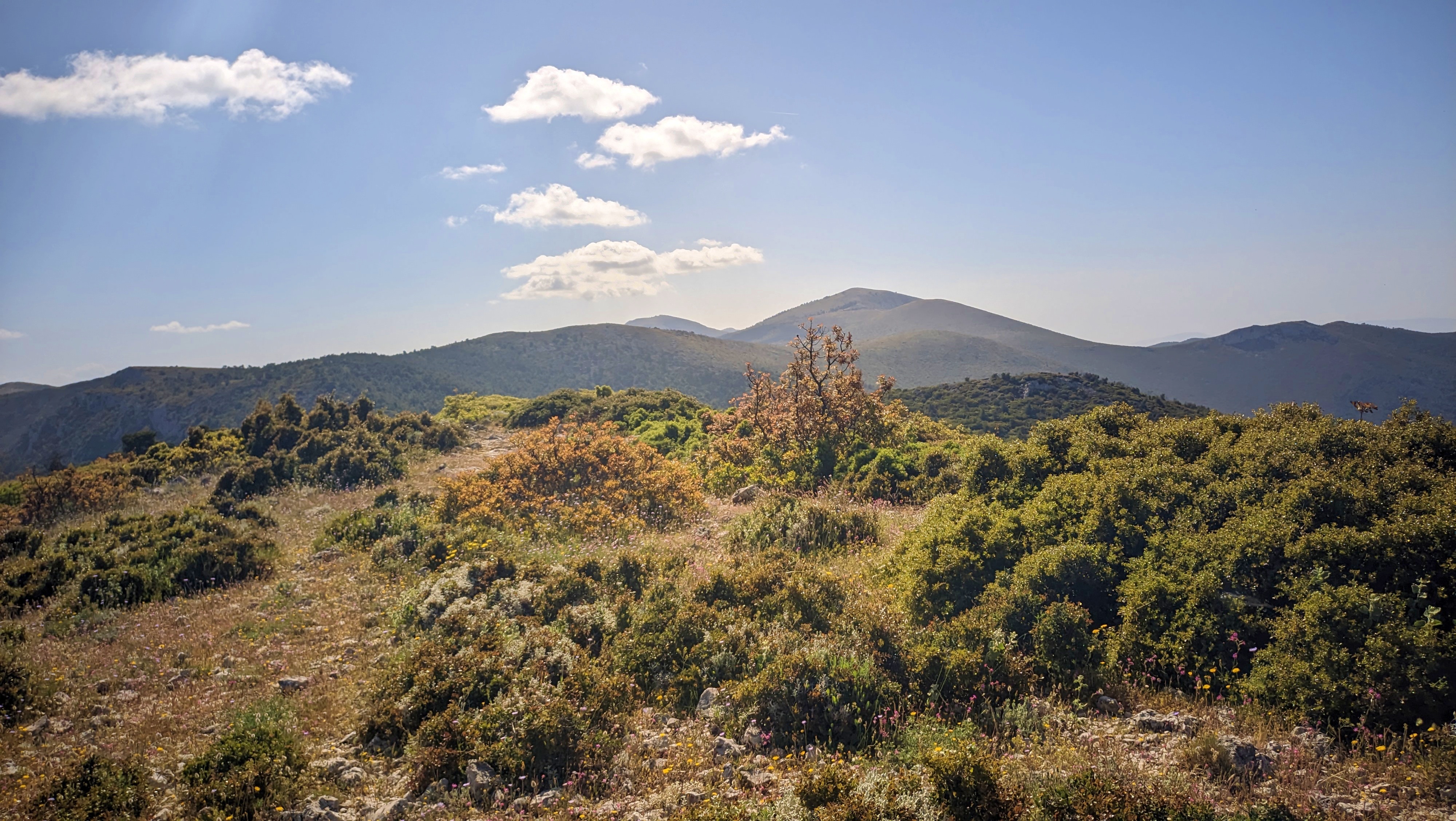
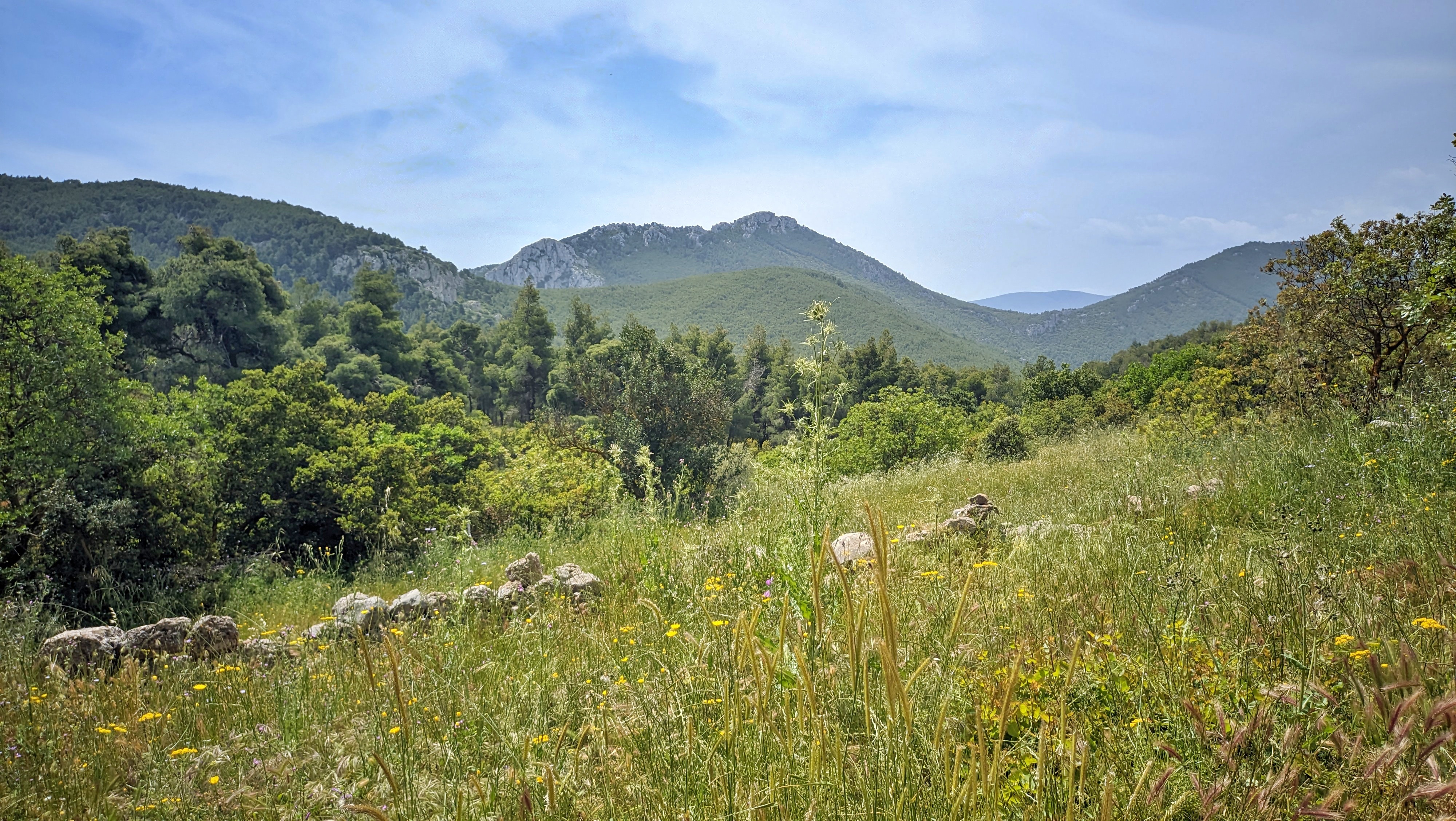
From the summit, we begin our descent heading northwest toward the secluded high-altitude basins of Vathychoria. These geological sinkholes, historically part of the Kryptes (meaning crypts), are entirely invisible from the sea and the Megarian plain, serving for centuries as secret agricultural fields and natural civilian hideouts during foreign invasions. Nestled within this hidden landscape stand the remnants of the ancient Megaris defensive system, built around 343 BC when Megara and Athens allied to fortify the mountain passes against Boeotian invaders. The first stronghold we encounter is the Square Tower near Mikro Vathychori, standing 10 meters tall and 5.5 meters wide, still showcasing its ancient stone water spout and southern entrance.
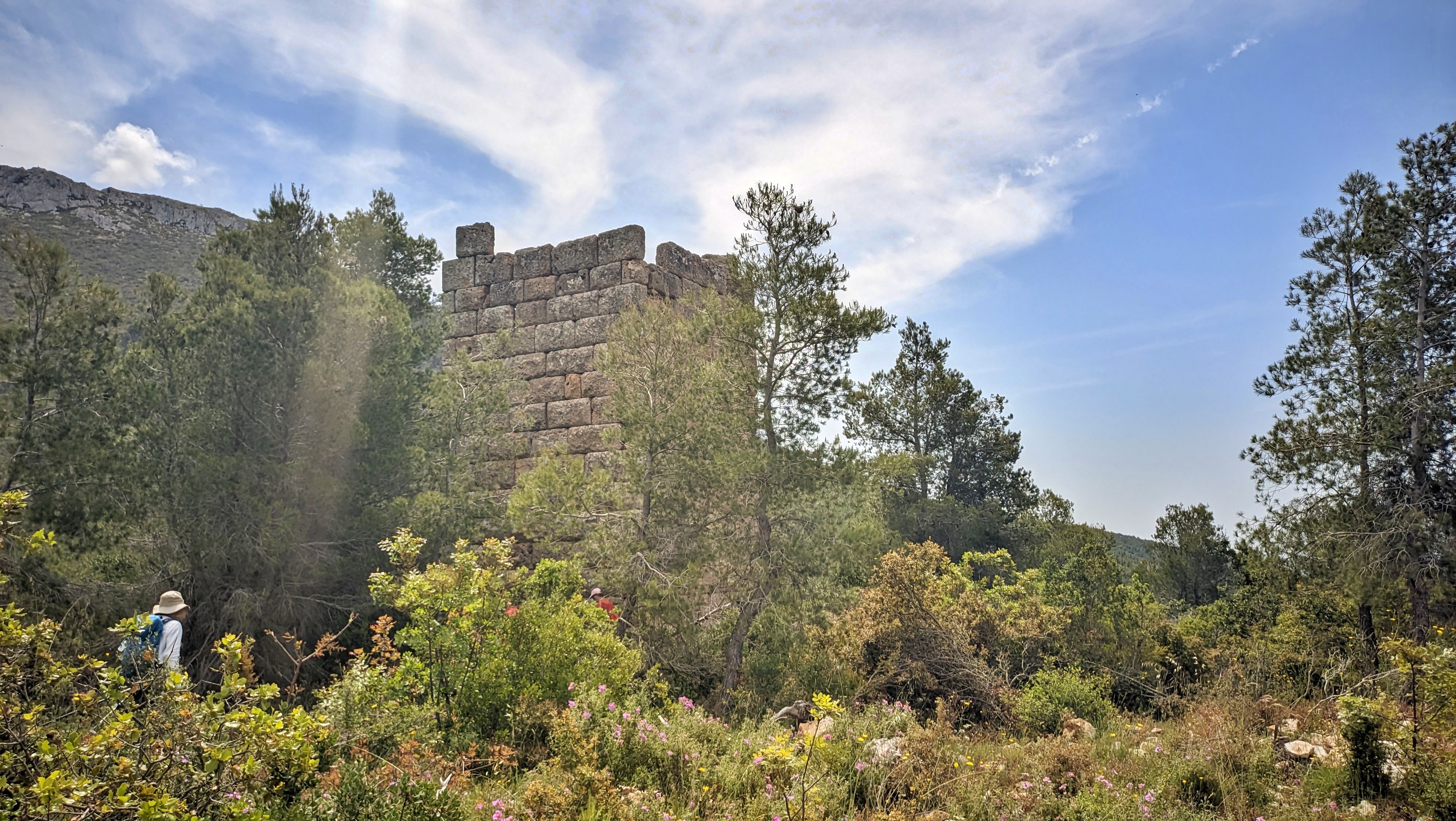
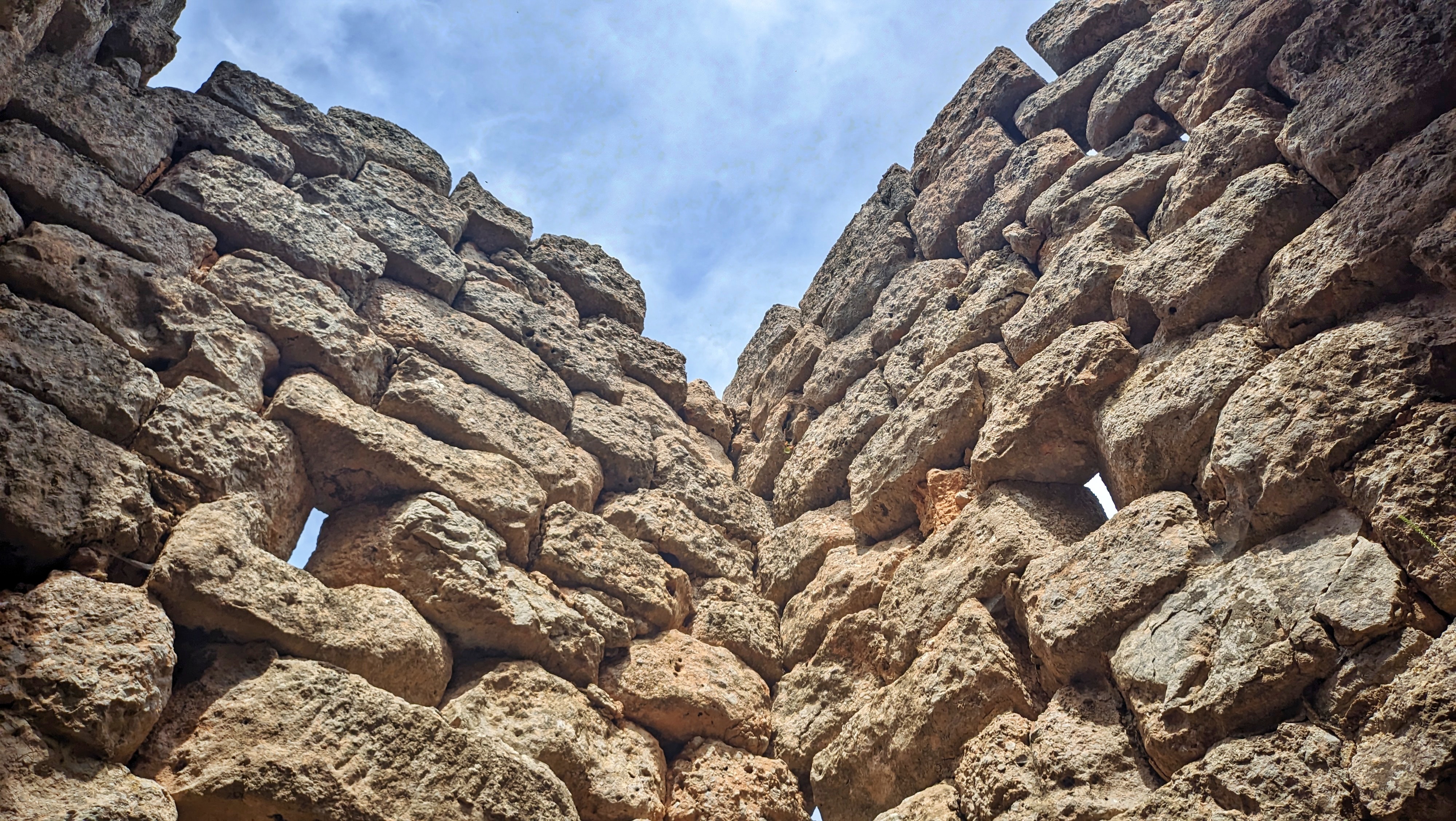
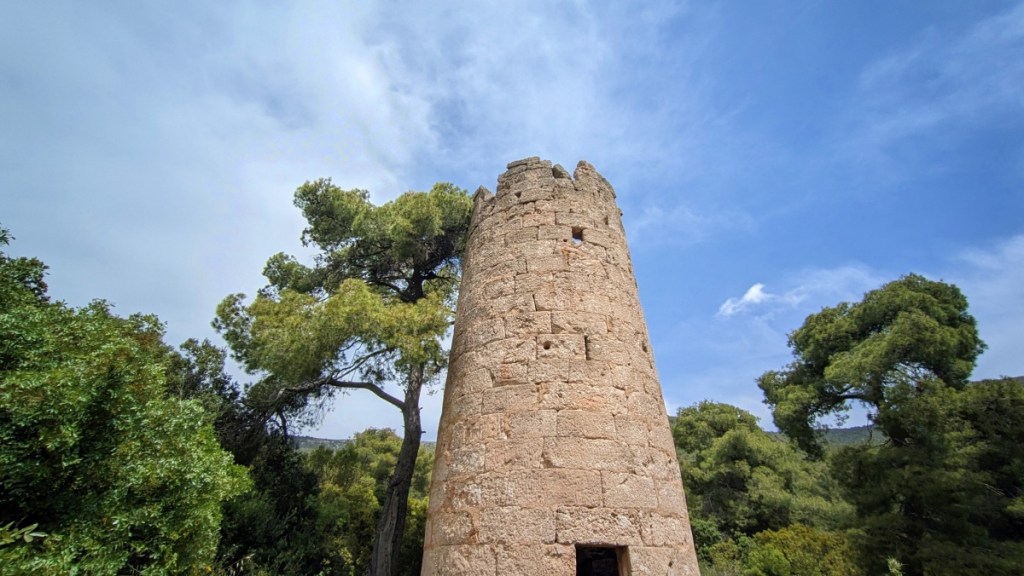
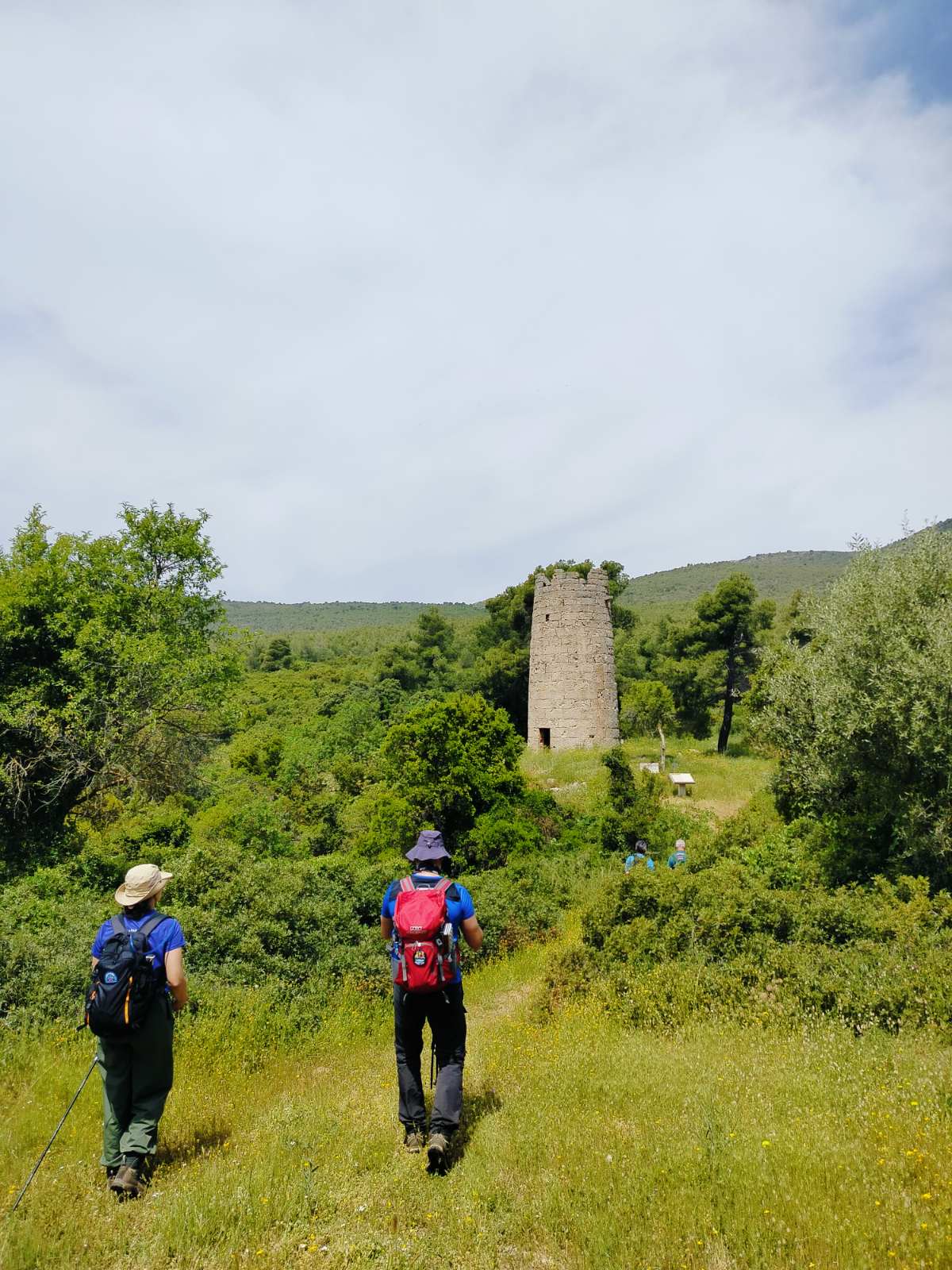
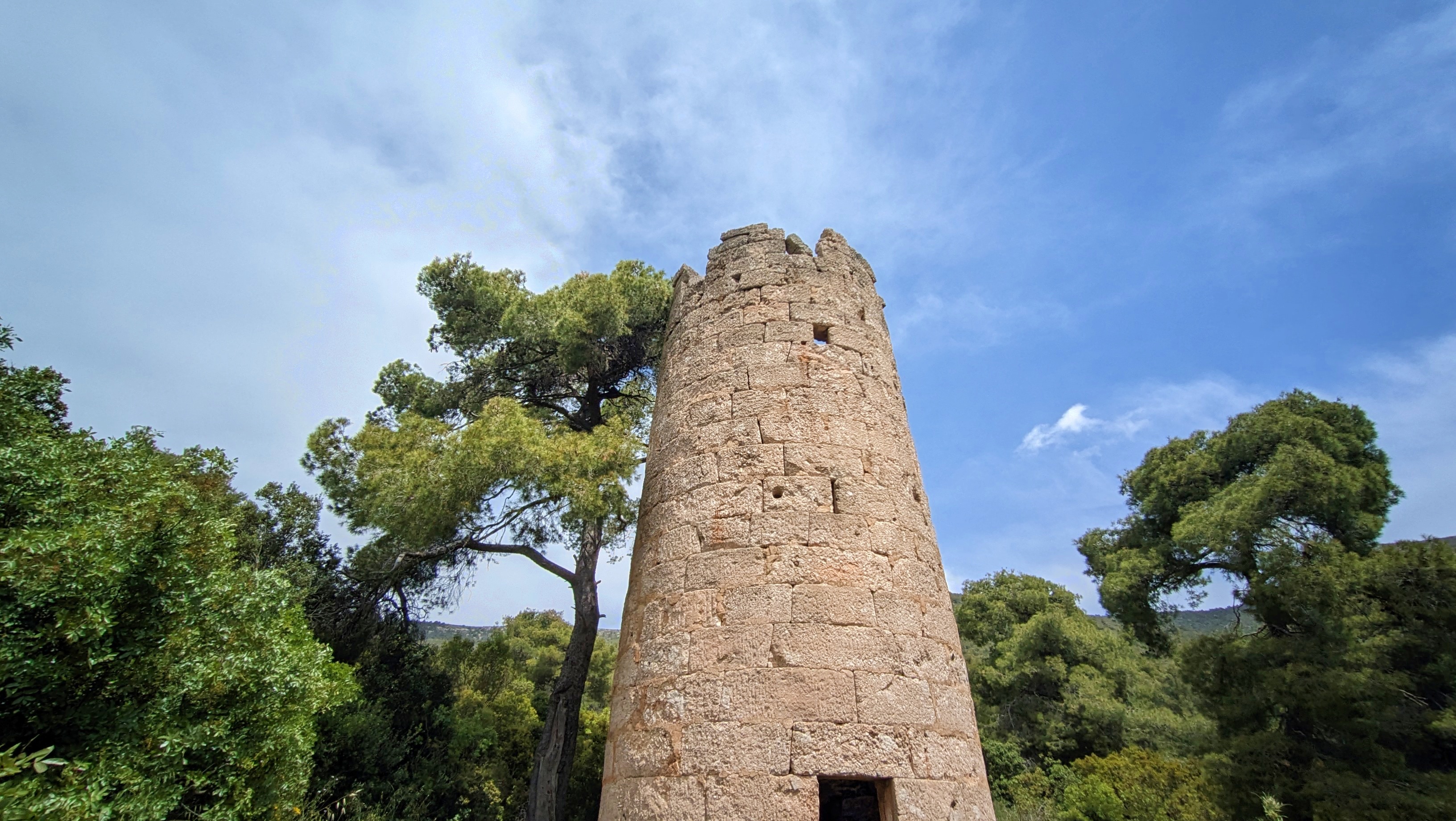
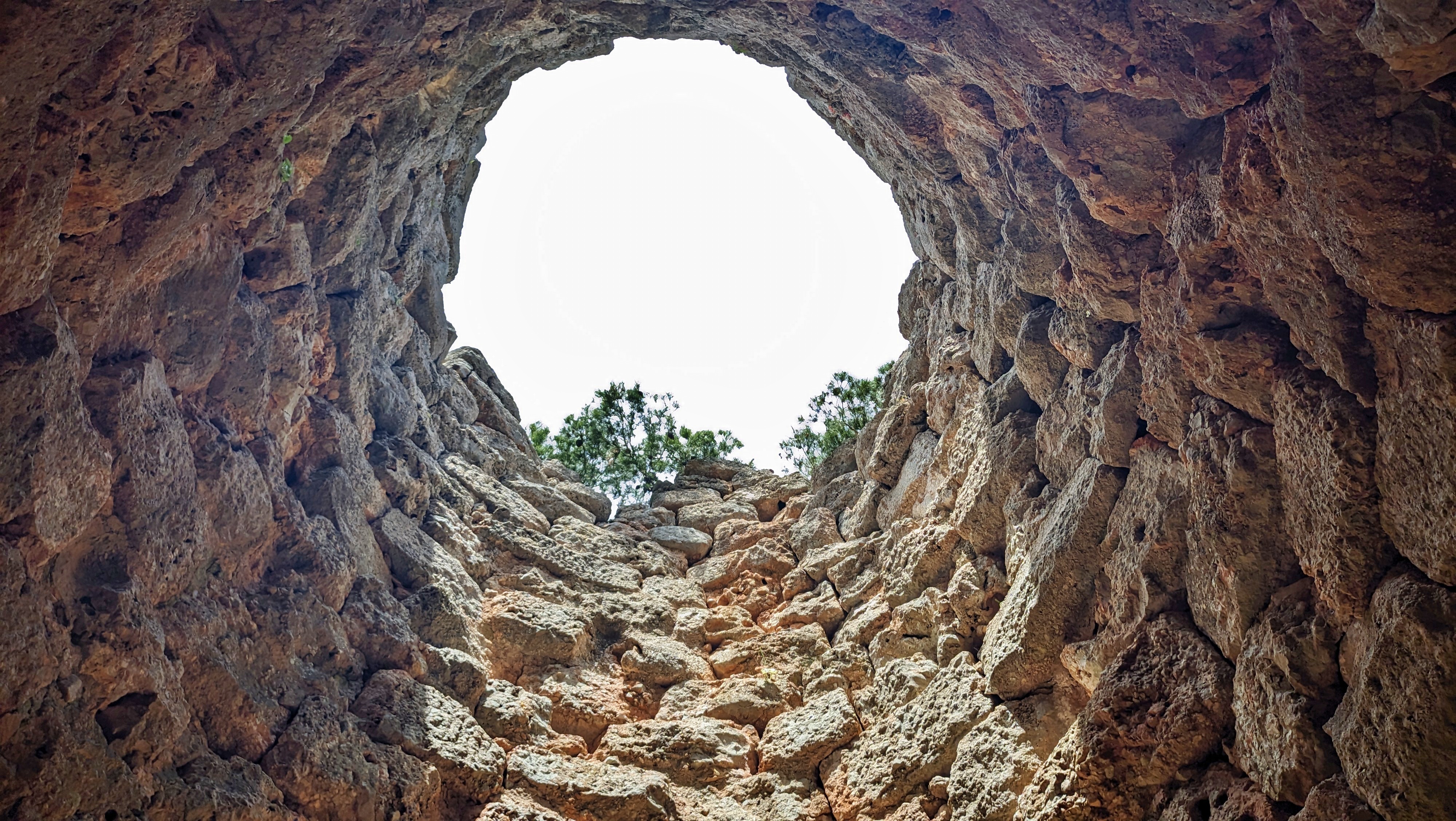
A brief 500-meter walk further northwest brings us to the imposing Circular Tower of Megalo Vathychori. This exceptionally well-preserved 4-story fortress stands 12.5 meters high with a 6.2-meter diameter, featuring internal rows of joist holes and specialized windows originally designed for firing small catapults. Hikers with a taste for deeper exploration can also attempt to find the heavily overgrown, forgotten acropolis of ancient Erenia and its defensive tower.
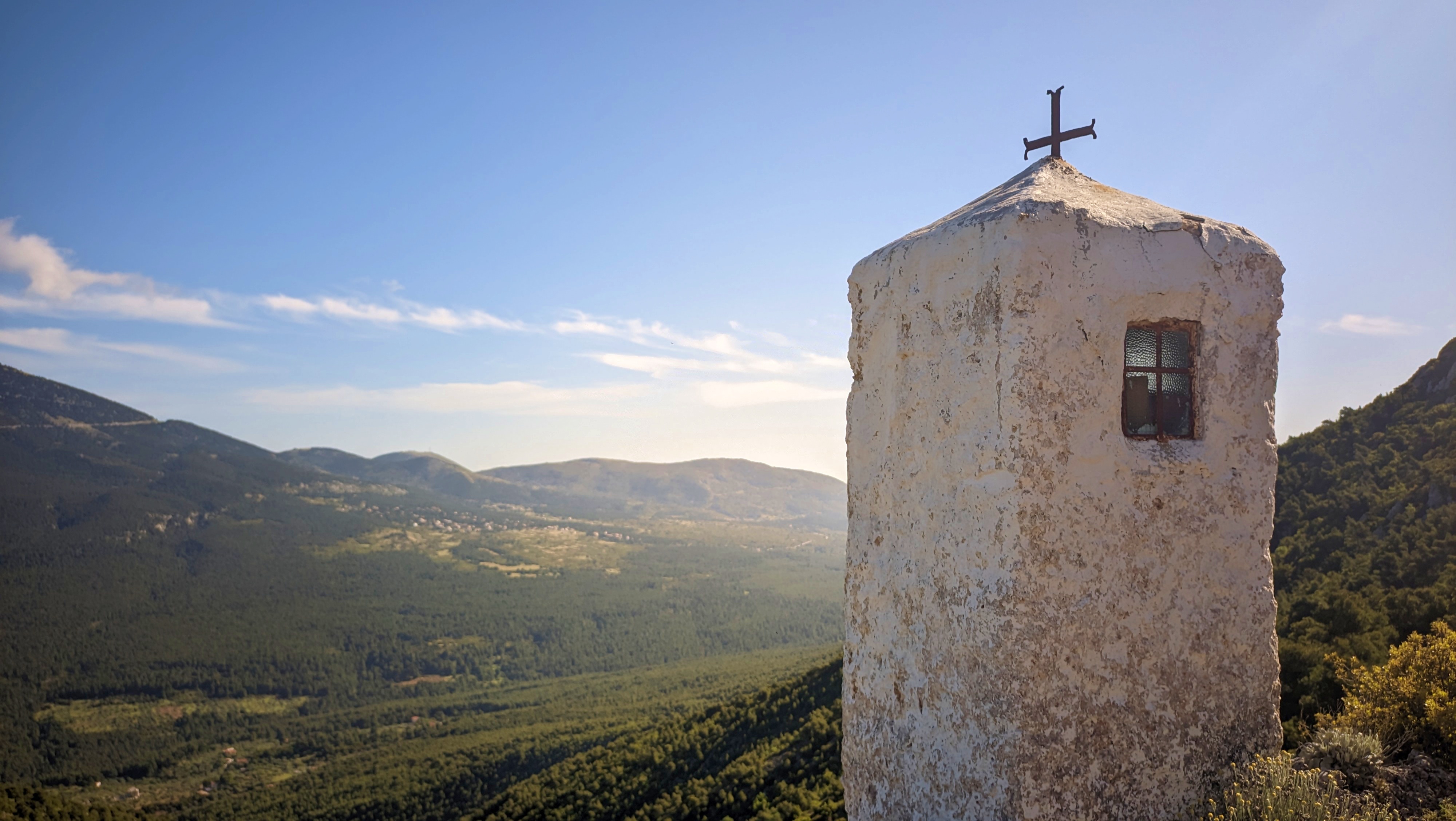
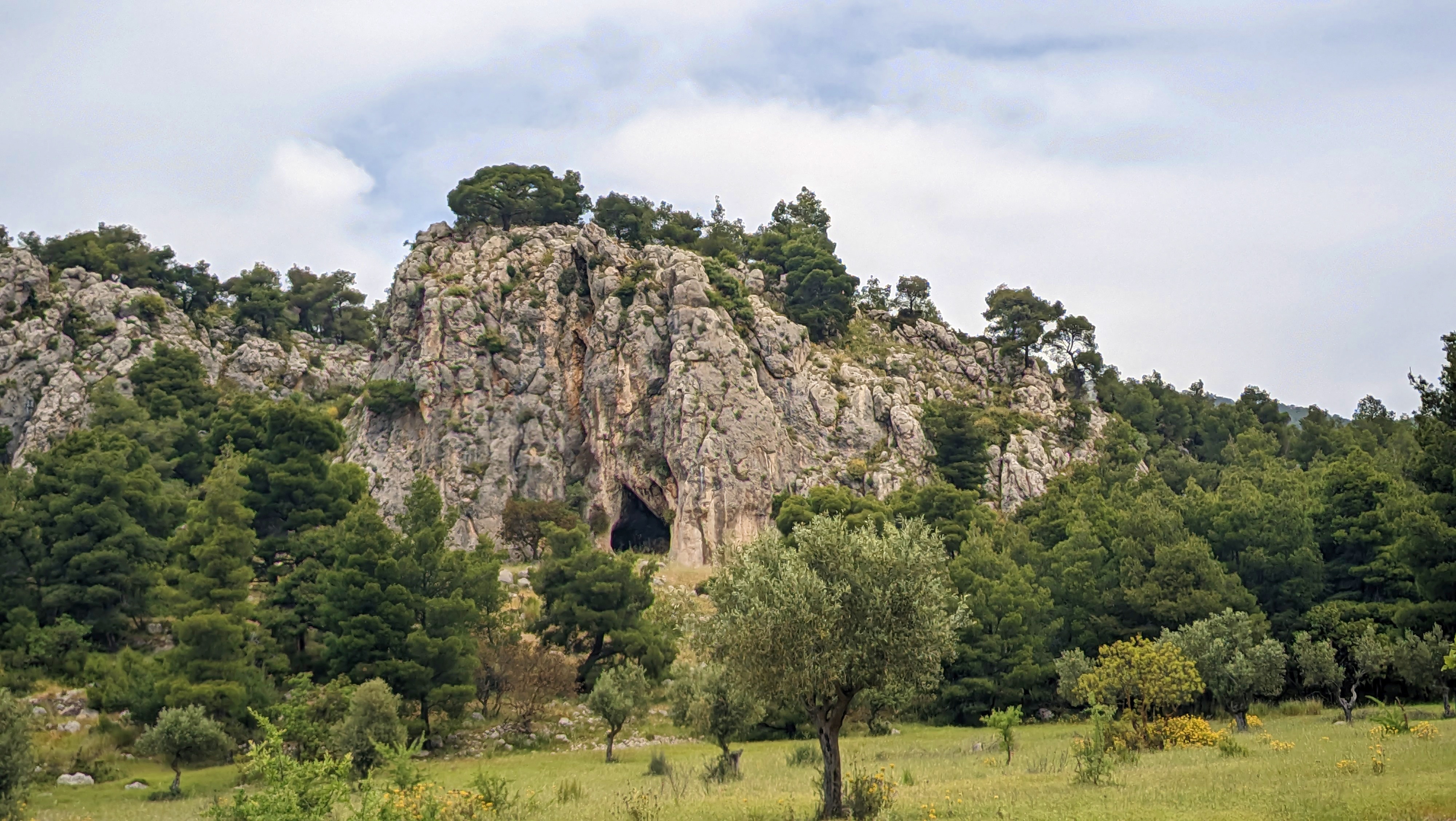
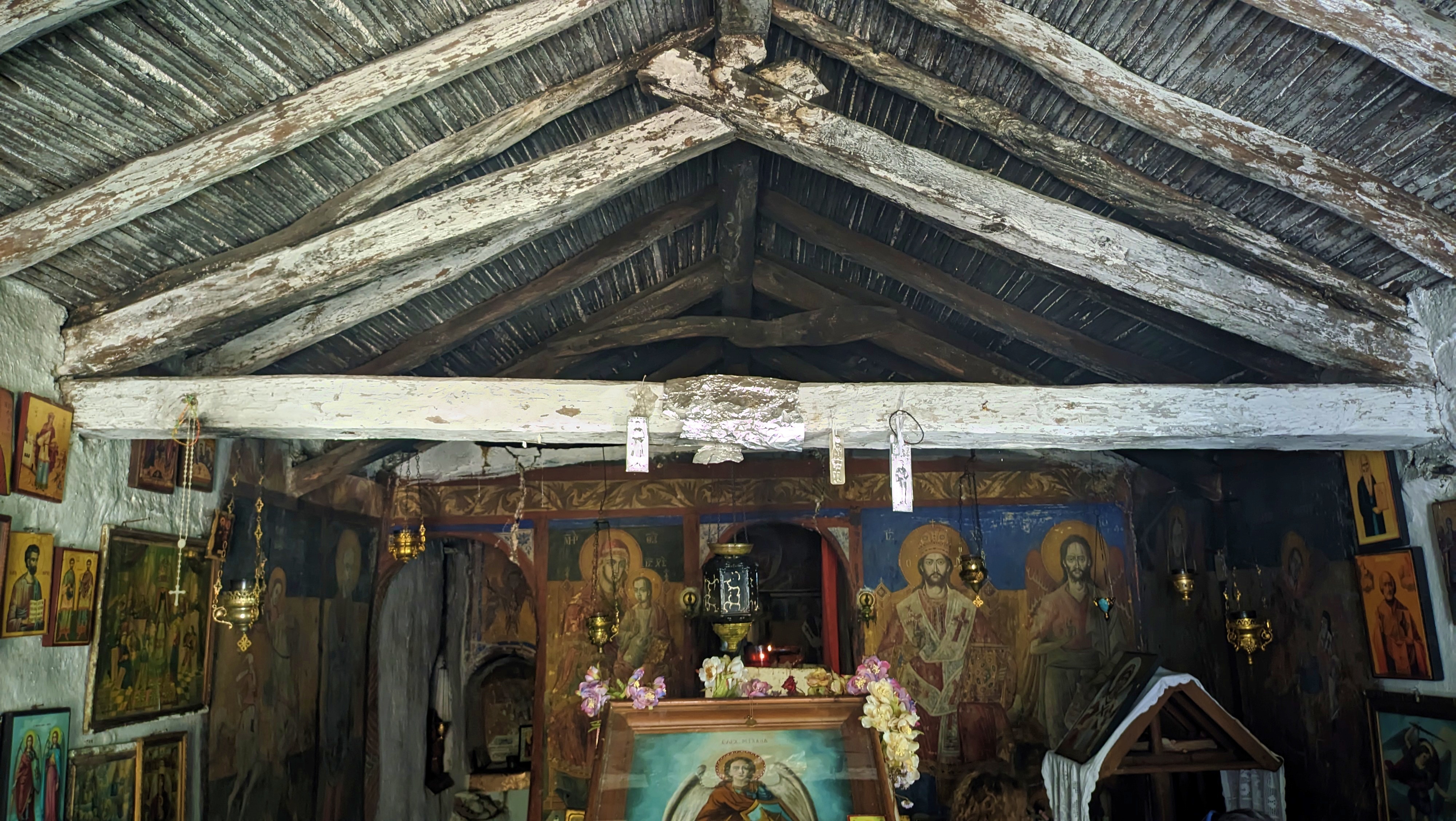
Leaving the ancient forts behind, we follow the dirt road past Spilia Aigas (Goat’s Cave) and make a final stop at the Chapel of Taxiarches (Archangels). The architecture of this post-Byzantine monument is incredibly rare, featuring a double-pitched roof supported by a wooden frame and a traditional reed base. Stepping inside, you can still admire the beautifully preserved frescoes that date back to 1858. I will be honest: they are scary and I’ve never come across such a drawing style in your average orthodox church.
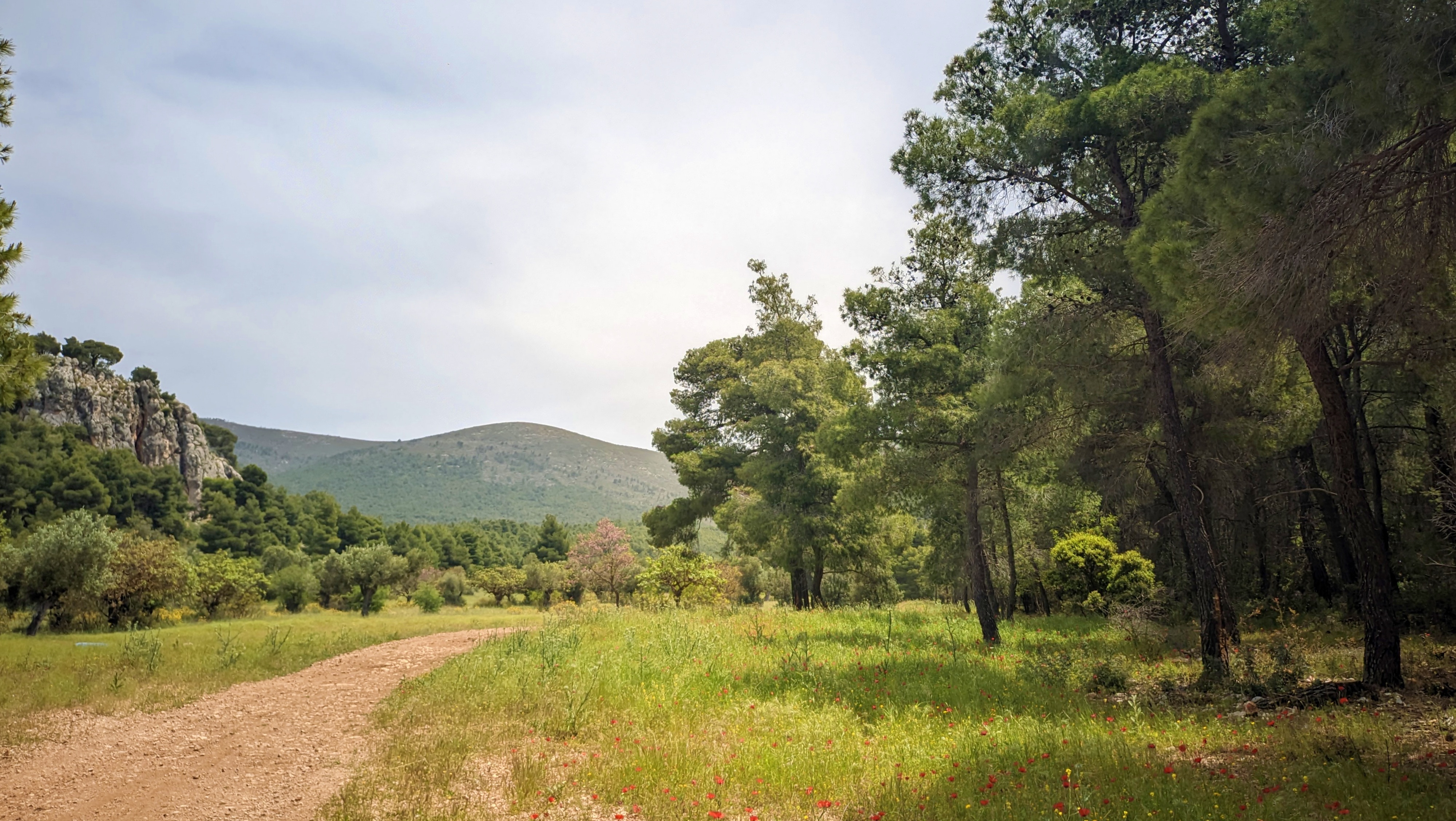
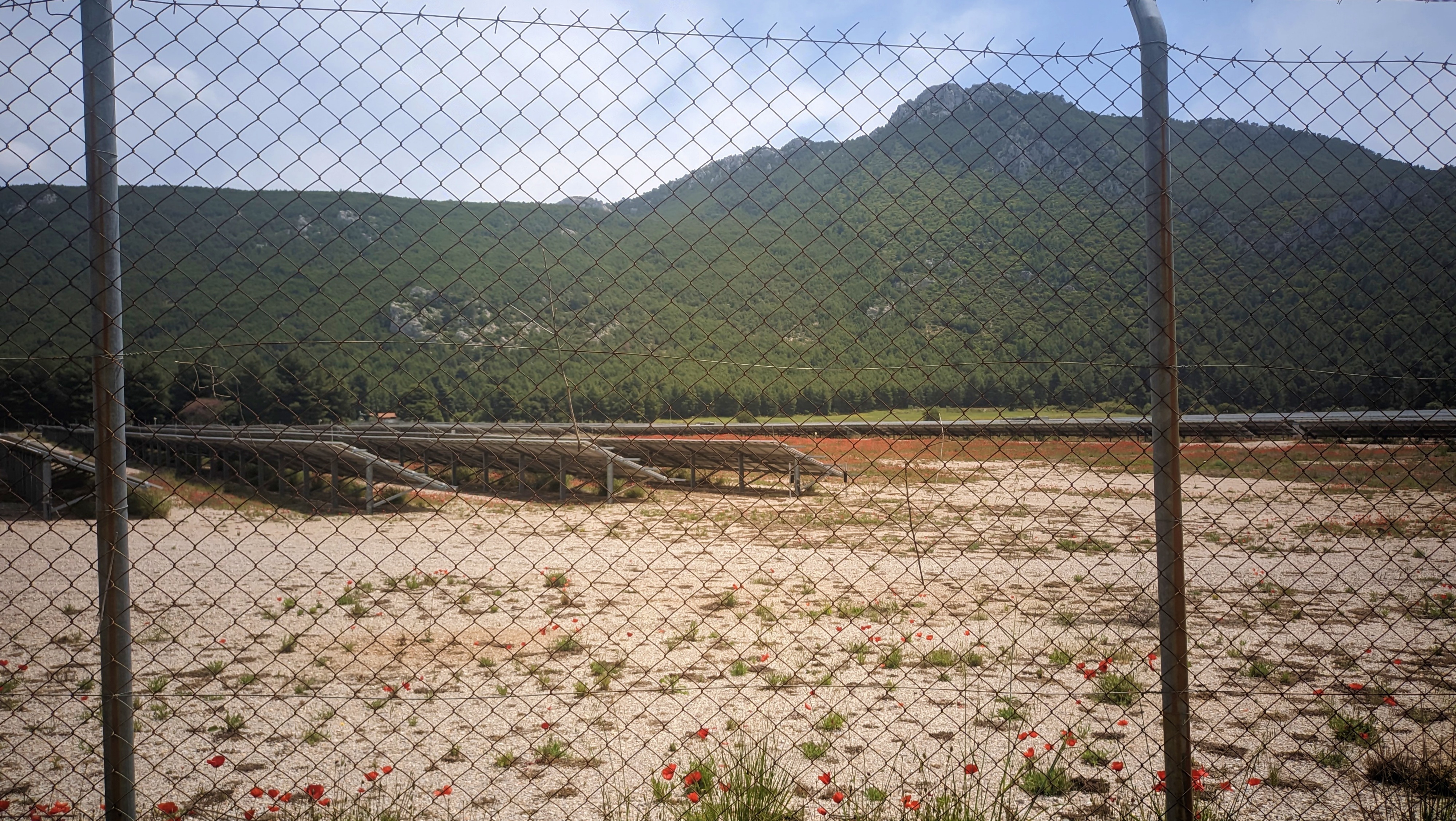
From the chapel, it requires a bit of a search into the fields, in order ease into an old, unmapped but nevertheless relatively well-preserved path that winds gently down toward our pickup point of Malia Psatha.
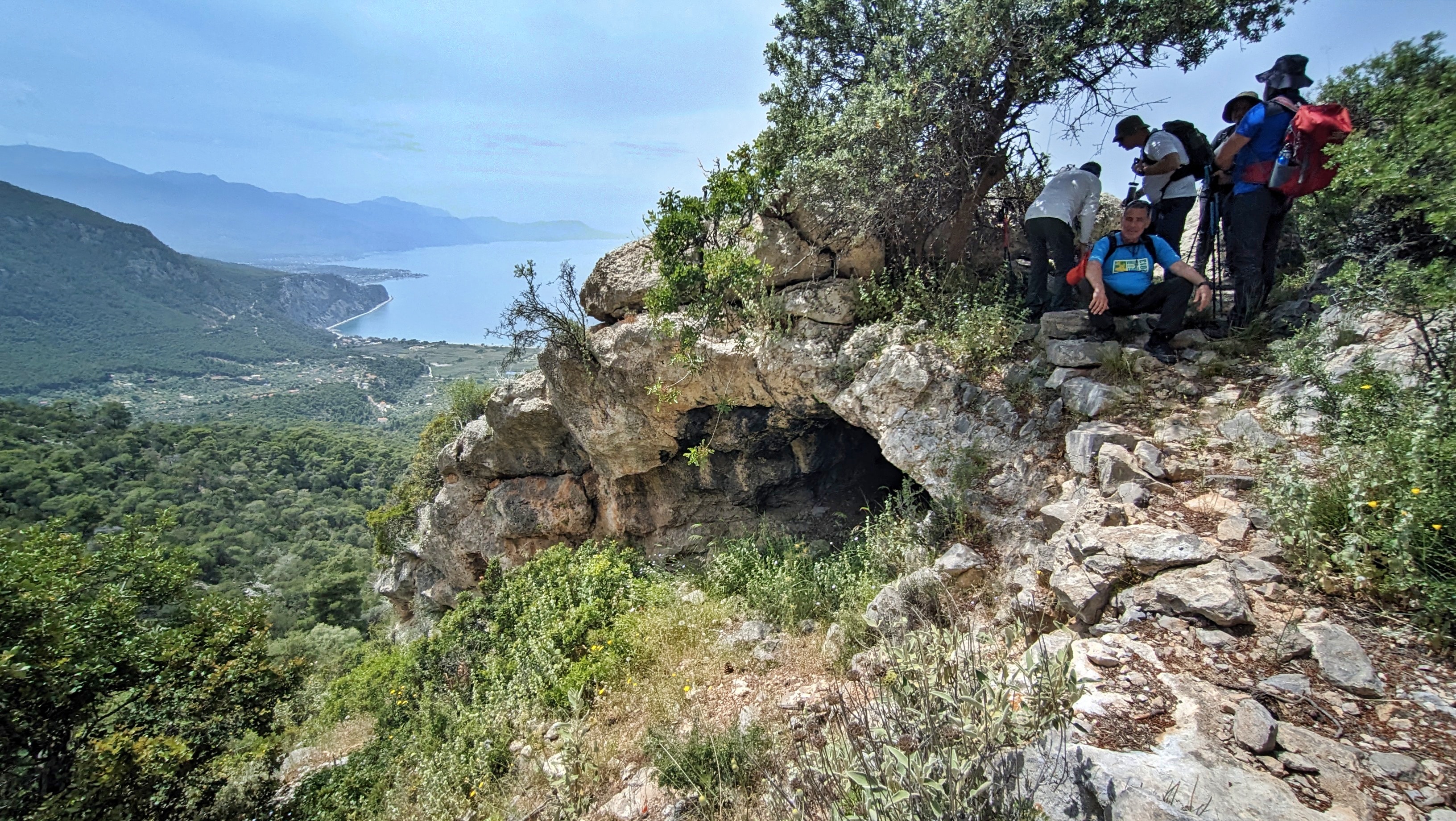
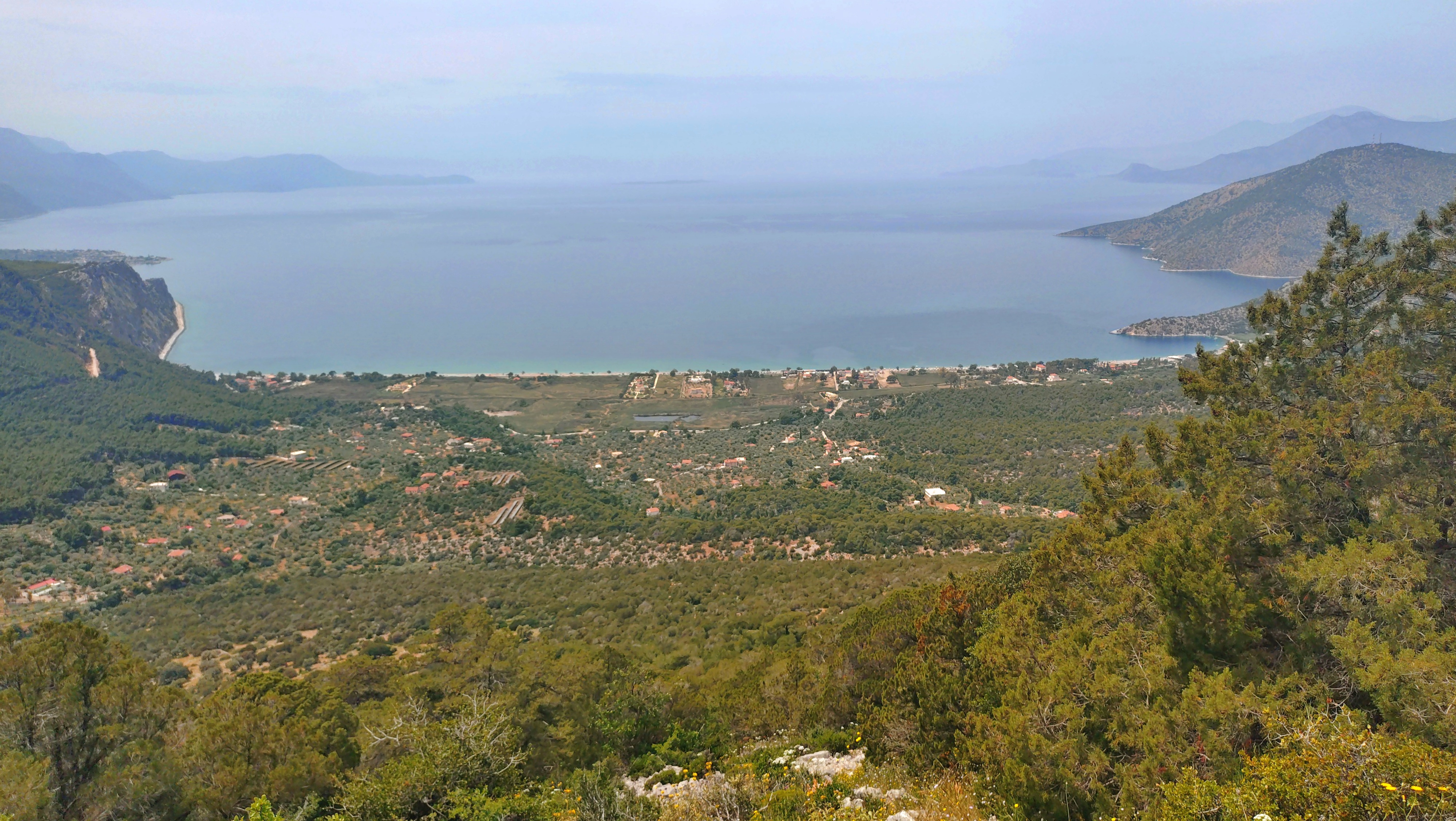
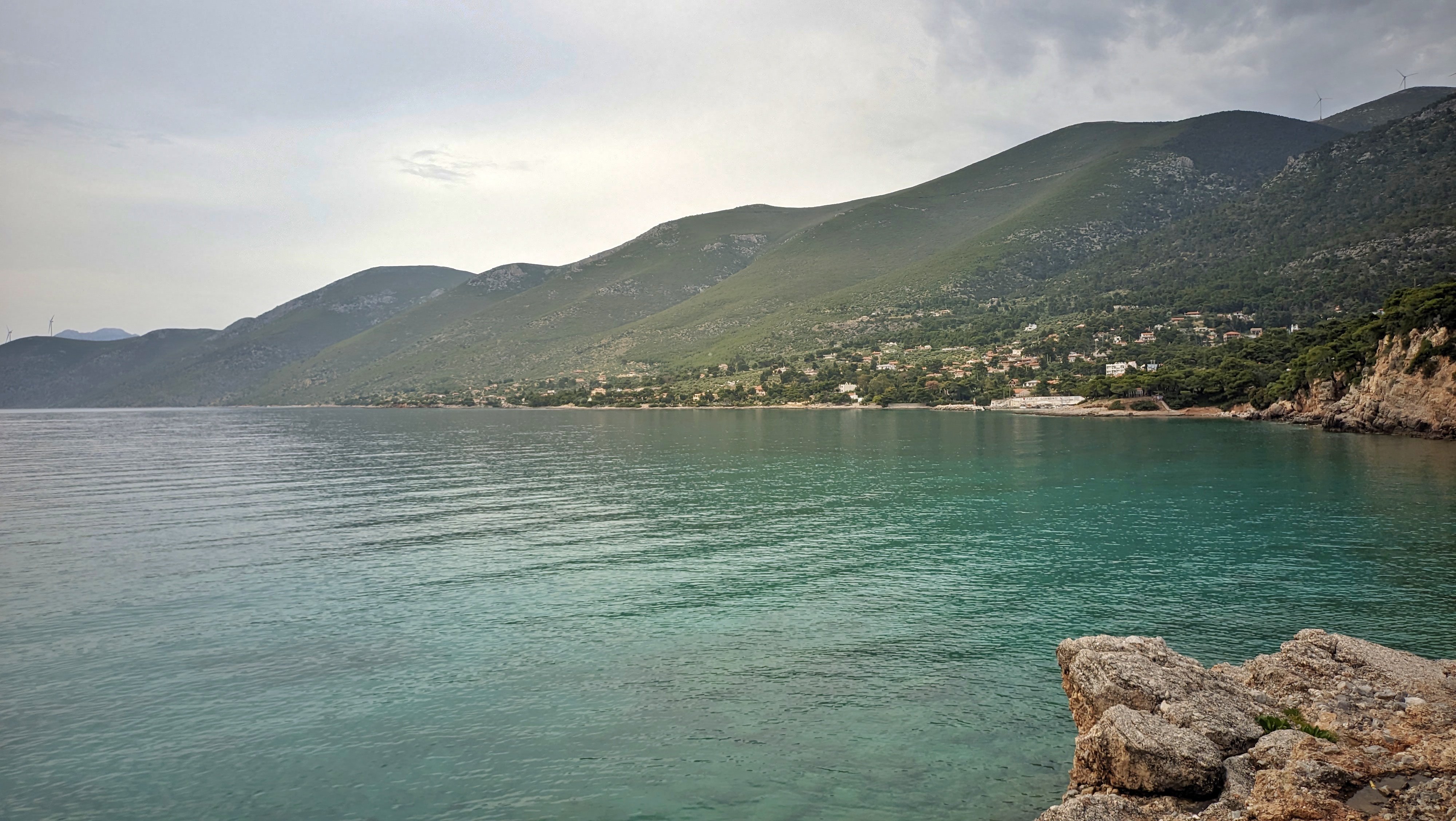
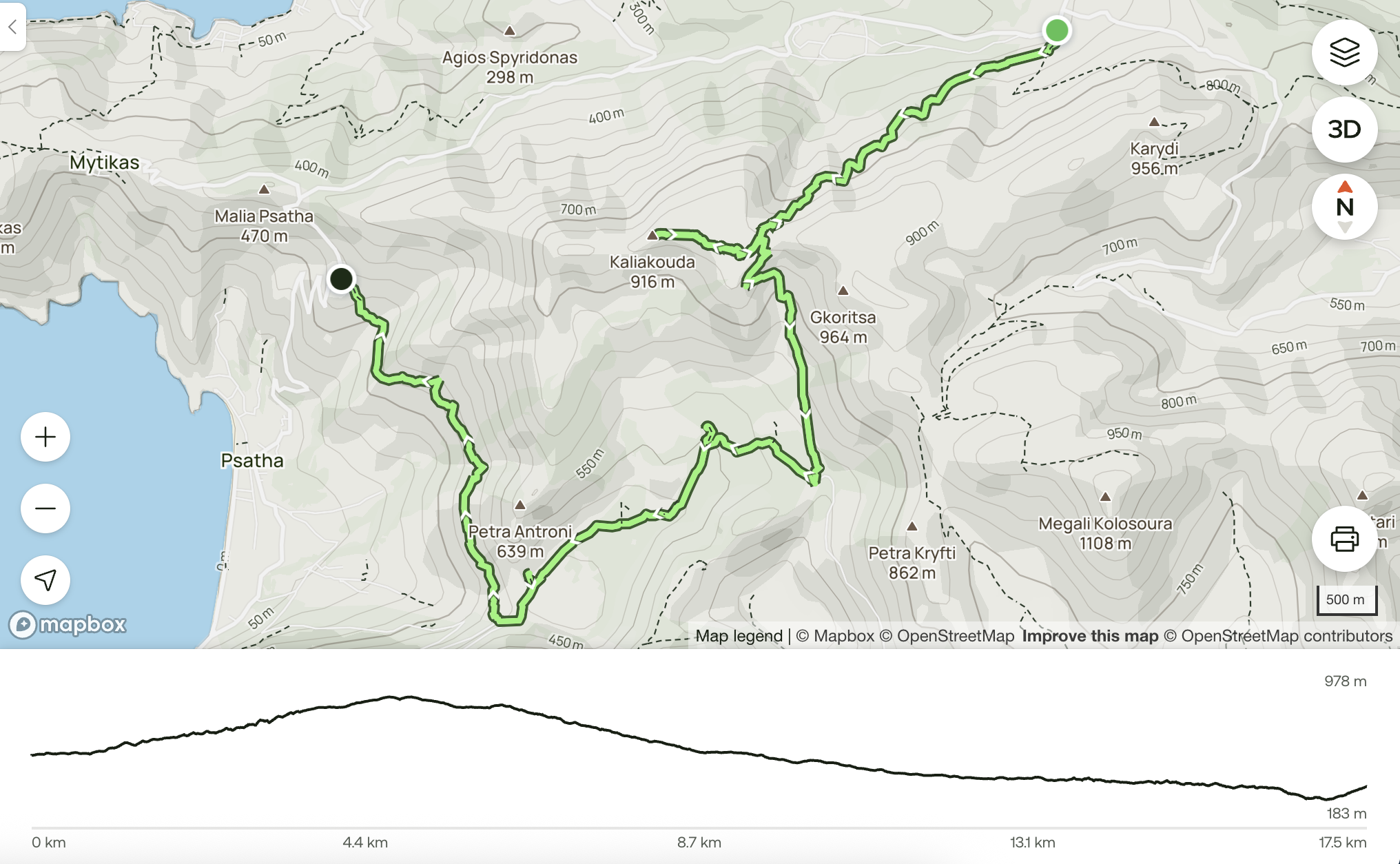
With the 17-kilometer route completed, we head into the car for the short drive down to coastal Porto Germeno. It was known in antiquity as Aigosthena—a name combining the words aiges (powerful waves) and sthenos (strength) due to the massive winter rollers that crash onto its shores. A deep dive in the crystal-clear waters for my sore muscles and a cold beer at a seaside cafe for my sore soul. If you feel like visiting, follow the route in alltrails.
Read more:

Hiking in Greece: The funnels of Mt Parnitha
The metropolis of Athens is surrounded by four mountains: Parnitha, Pentelicus, Hymettus, and Aigaleo. Out of these four,…
Keep reading
One day in Kea
Let’s say you have only one day at your disposal for an excursion in nature while in Athens.…
Keep reading
Mt Pentelicus and Athenian marble
The plains of Athens are encircled by a group of four mountains. Among them is Mount Pentelicus, the…
Keep reading