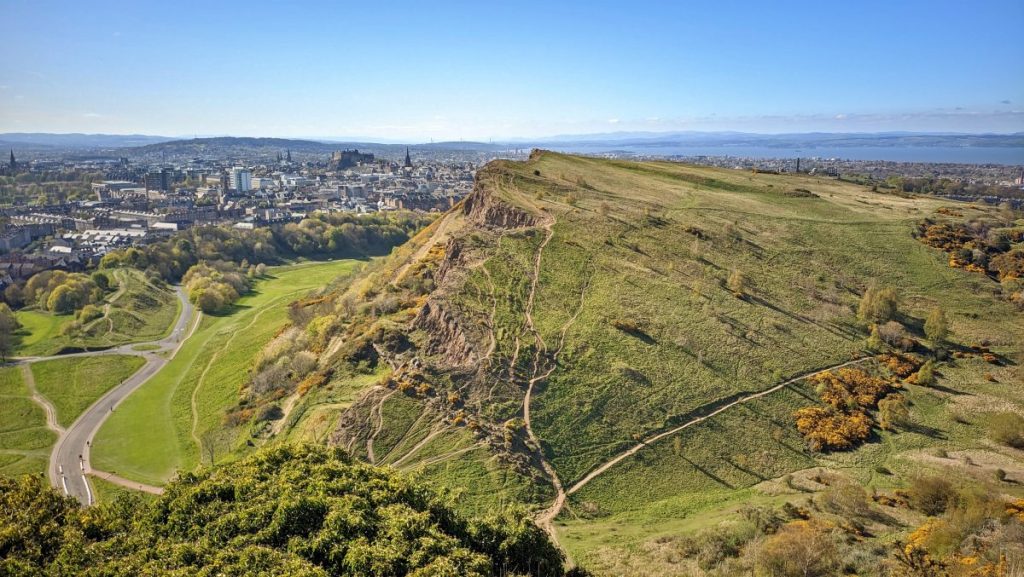
Everyone and their mother knows King Arthur and the legend of the sword. Although he is traditionally a legendary king of Britain, there are many place-names scattered across the entire UK honoring him. One of the most famous lies just a few kilometers from the Old Town of Edinburgh, marking the city’s highest point, even if it falls just short of the psychological 300-meter mark.
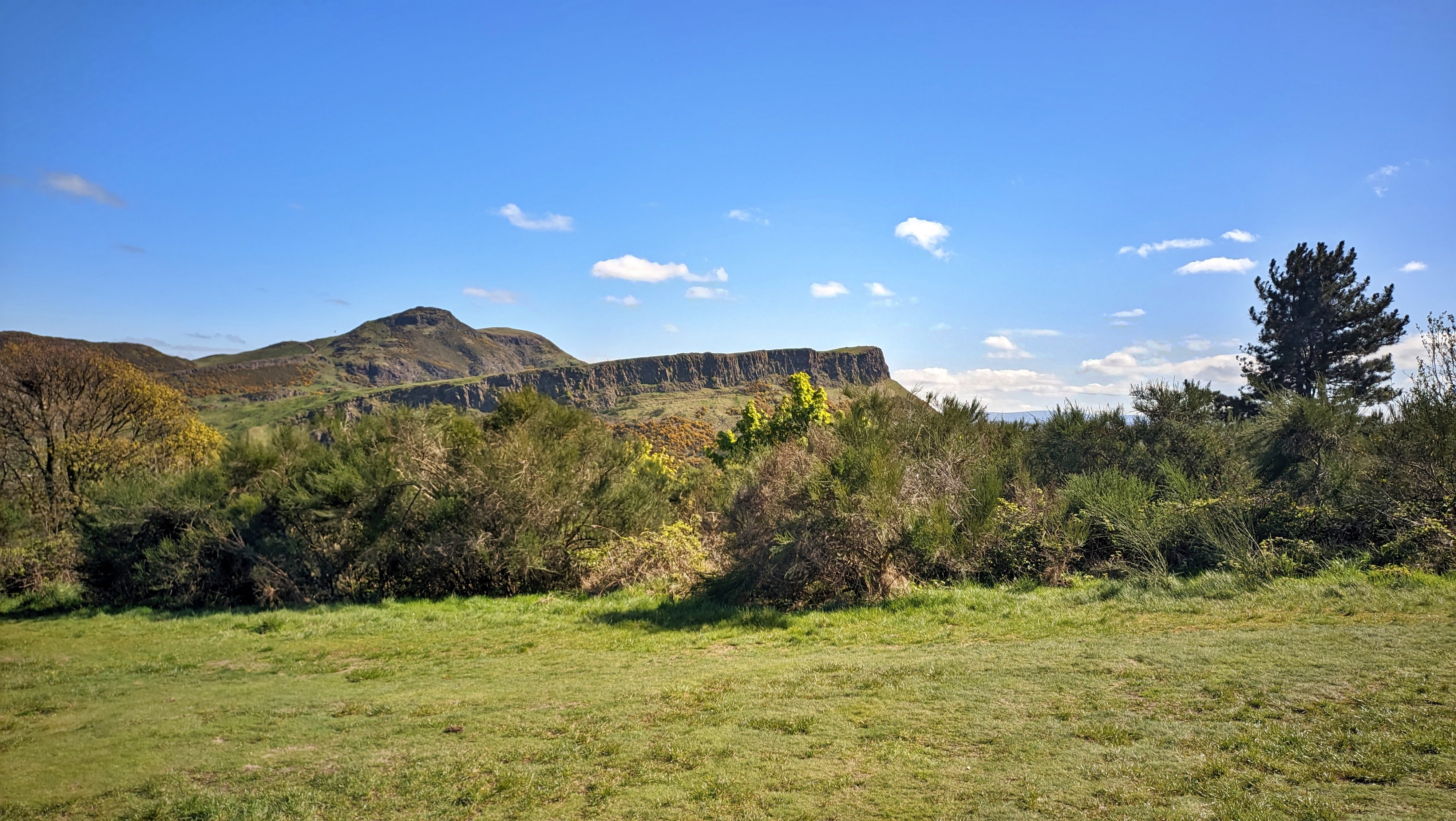
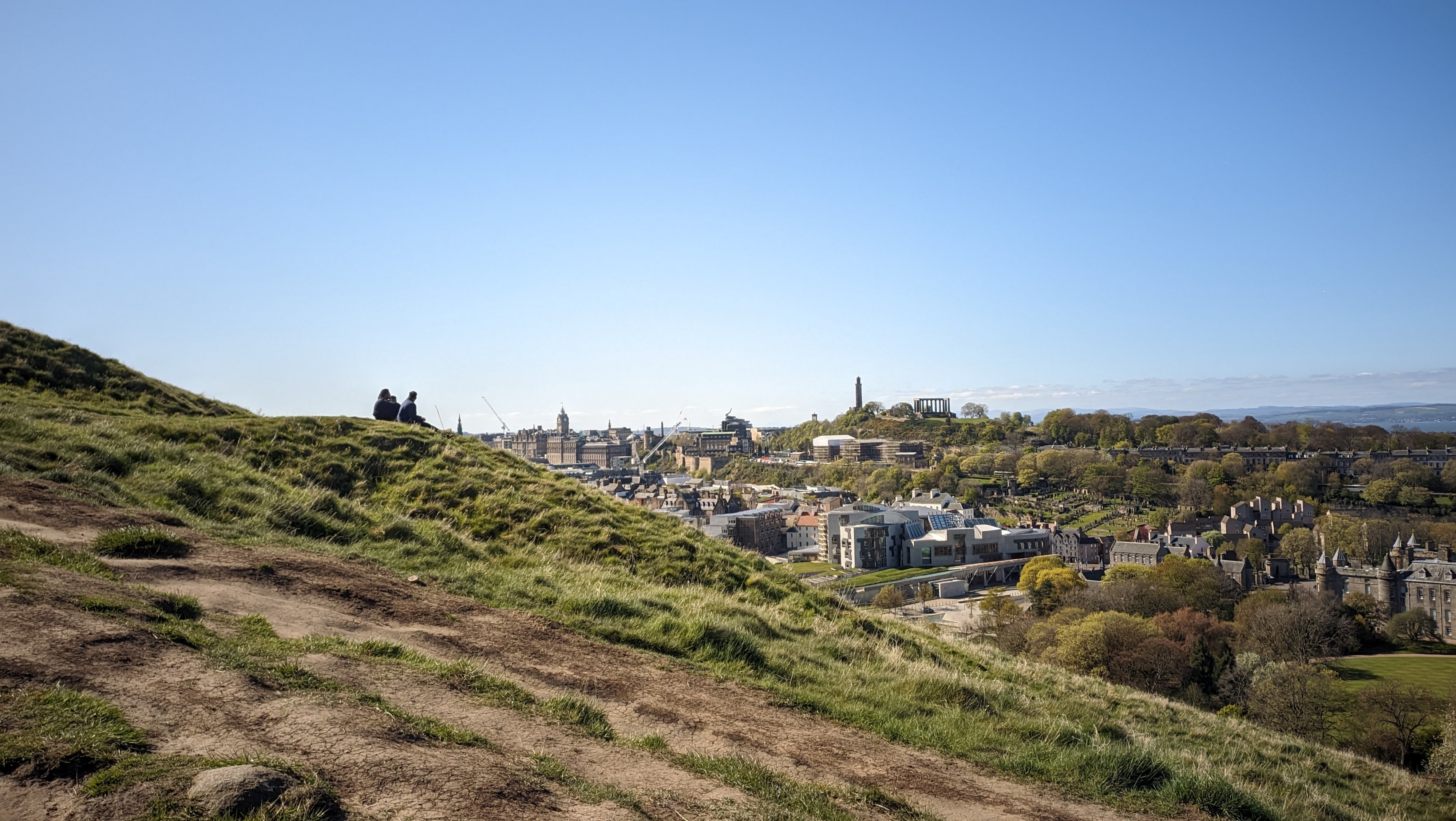

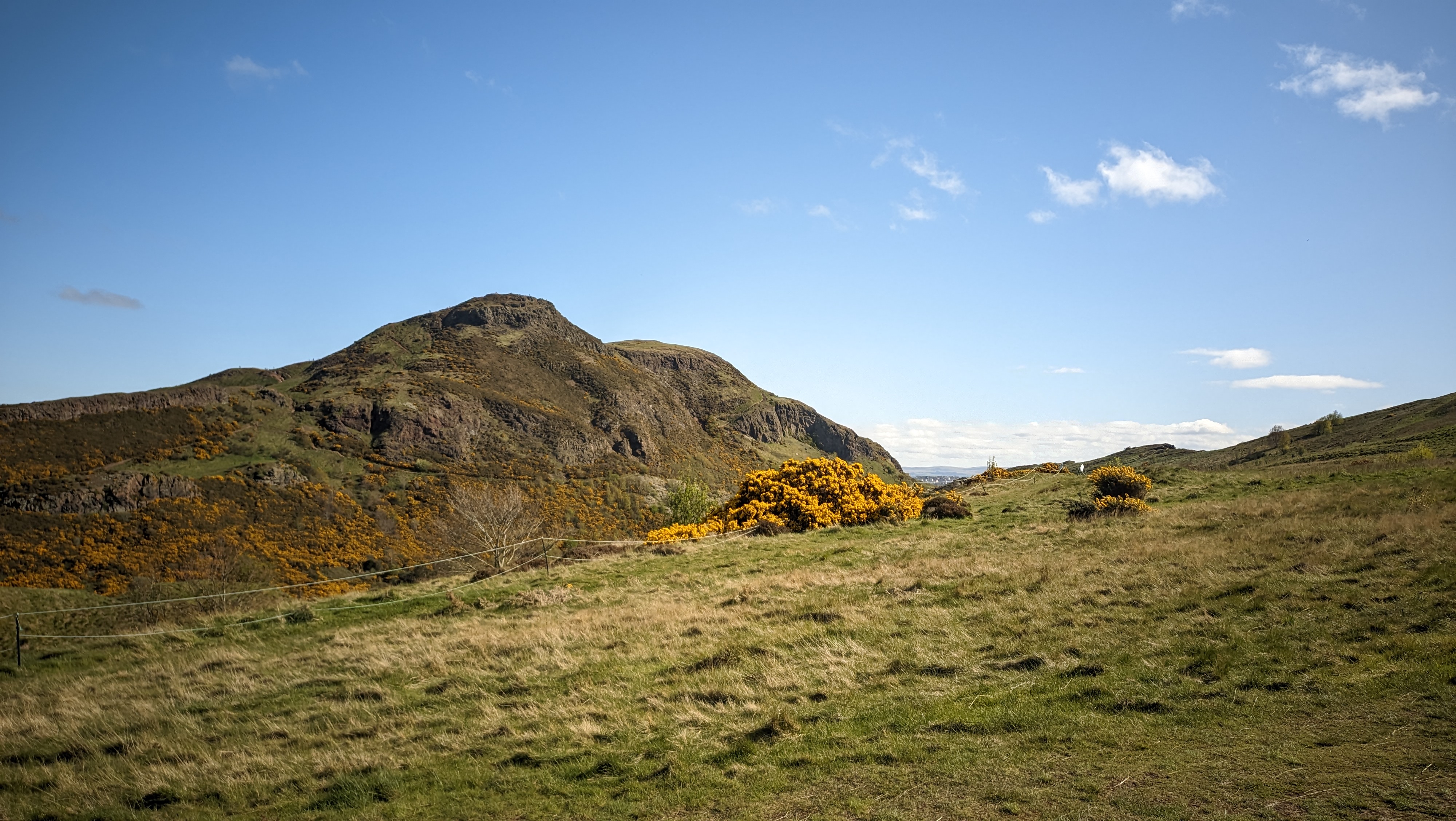
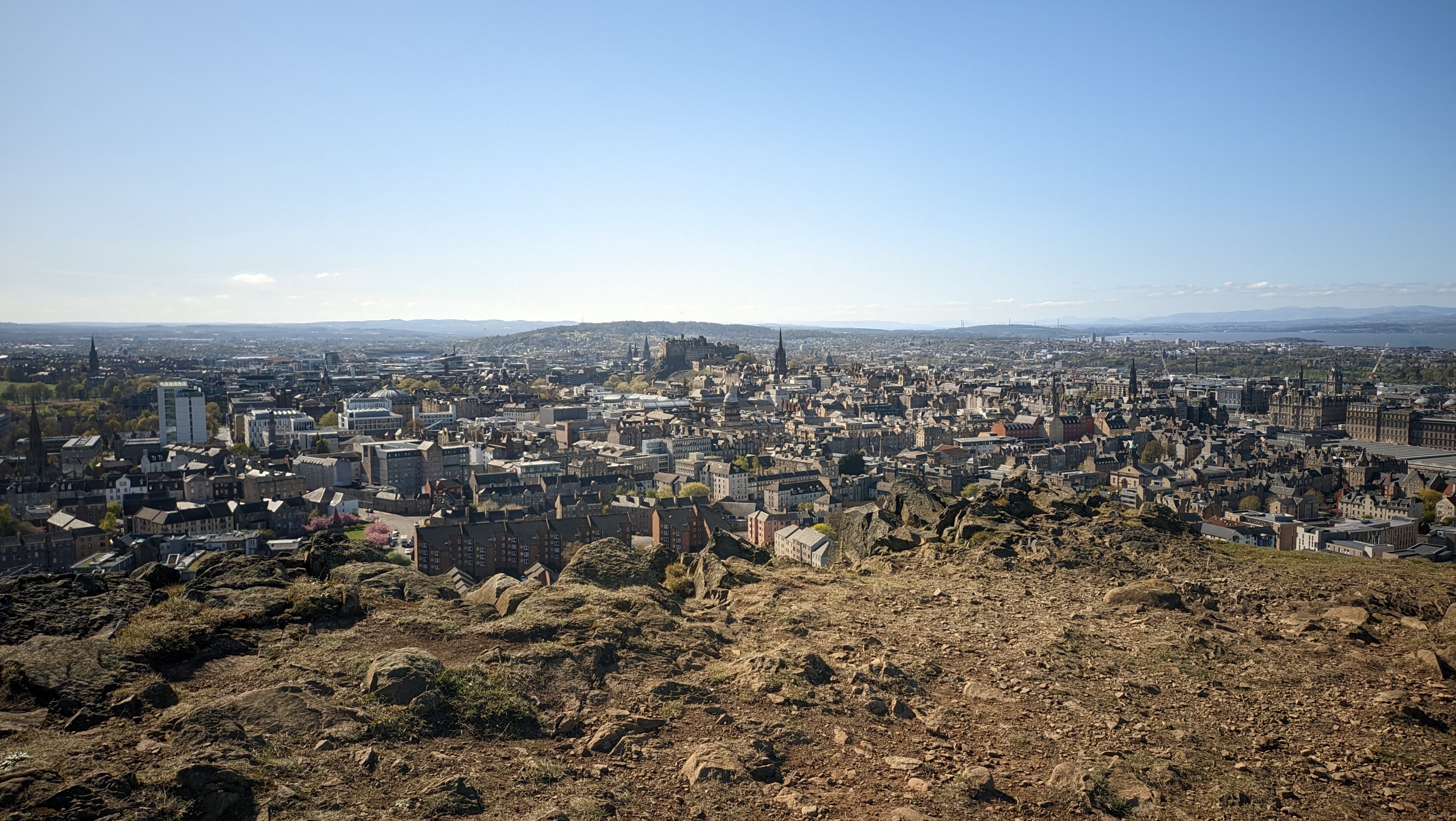
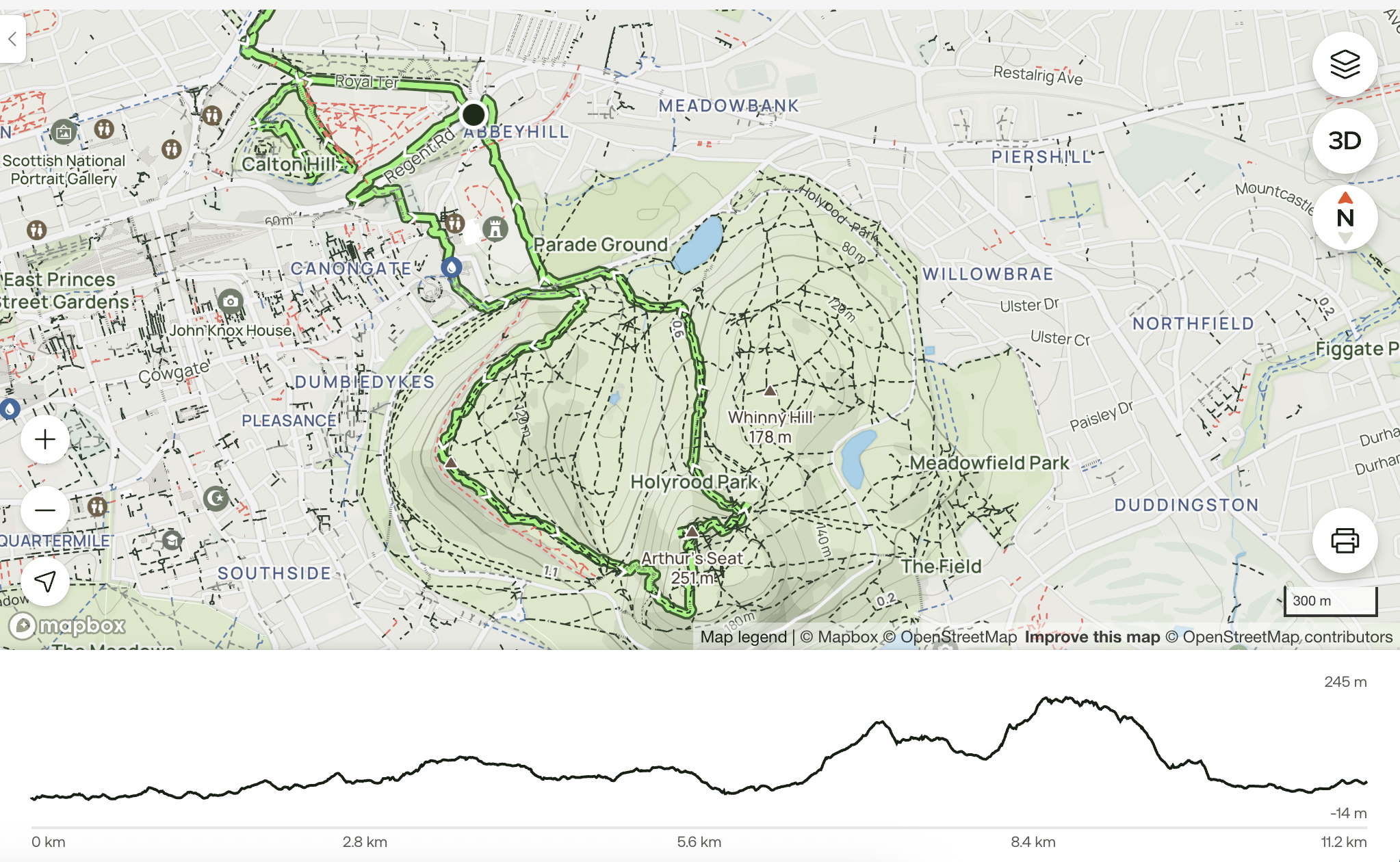
Much of Scottish history revolves around the central power seat of Holyrood. Today, Holyrood Park consists of two main geological features: the hill of Arthur’s Seat and the sheer cliffs of Salisbury Crags. The landscape follows a classic Scottish pattern: smooth, undulating formations shaped by ancient volcanic activity and glacial erosion. There are many routes that take you to the summit. For my trek, I decided on a counter-clockwise loop, starting along the cliffside (173m), moving onto the paved steps, and finishing with a brief scramble to the top.
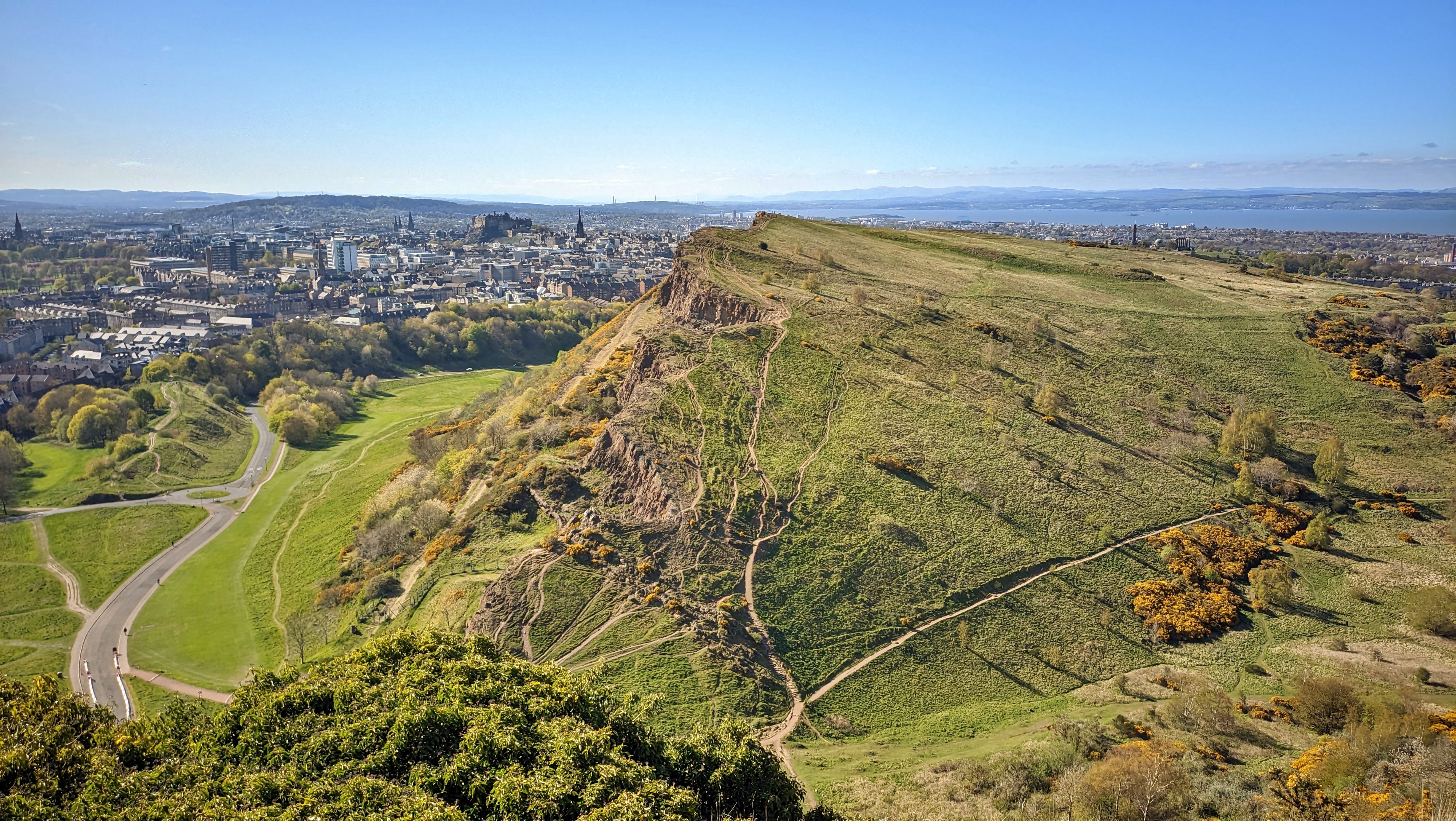
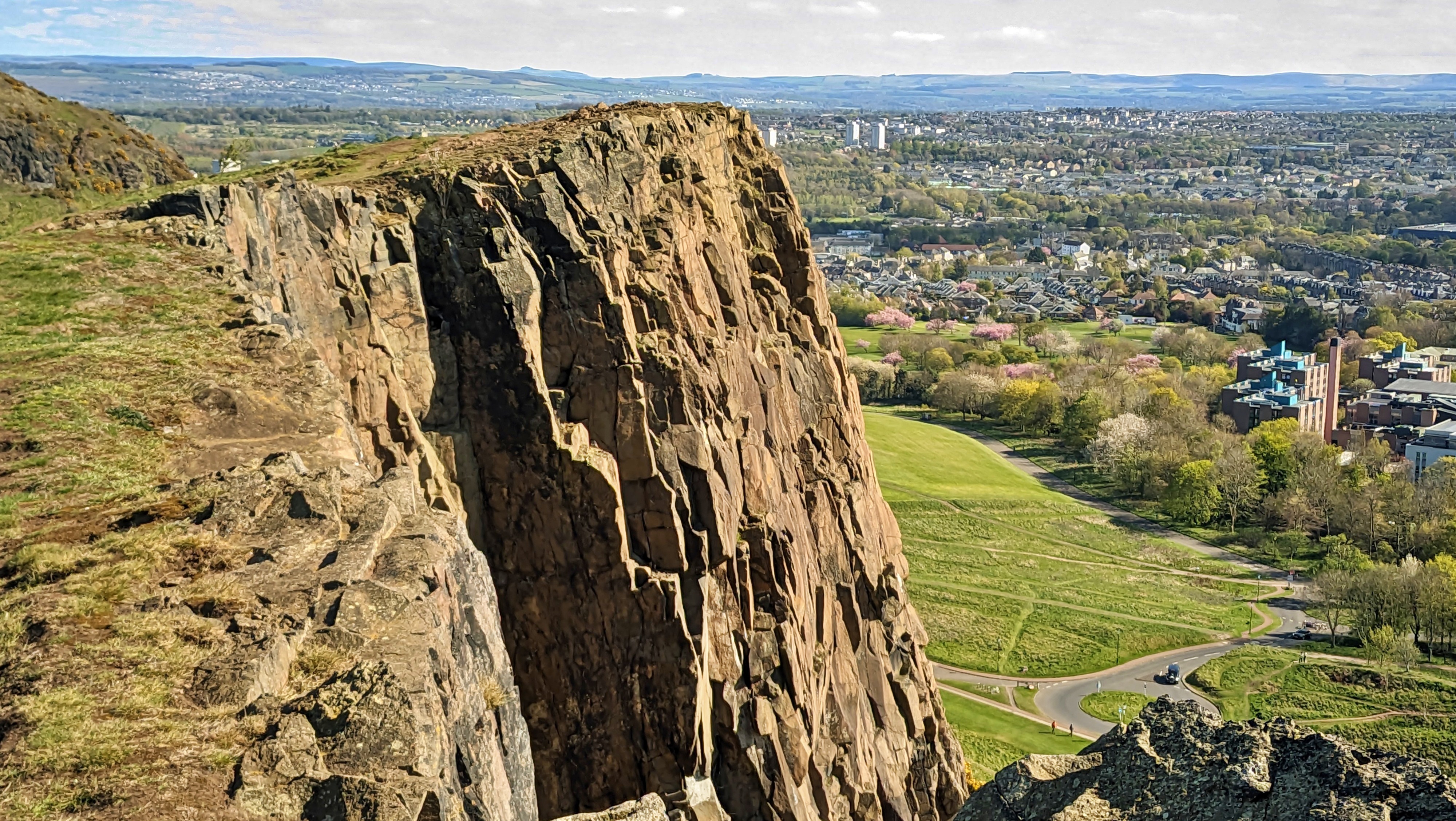
The first time I ever came across the word Salisbury, it was in reference to the popular UK supermarket chain (Sainsbury’s). As it turns out, the term refers to a hilltop fortress. Linguistically, the word stems from the Old English Searobyrg, where searu means “armor” or “weapon” and -burh means “fort” or “stronghold.” One of the most famous Salisburies is none other than the massive dolerite formation of Salisbury Crags inside Holyrood Park, situated very close to the Scottish Parliament building. Unfortunately, much of the dolerite cliff face is unstable and prone to large rockfalls, meaning some sections are fenced off. Still, a comfortable trail runs alongside them, guiding you towards the summit. The area is also a historic hotspot for bouldering and solo climbing, as you can see here.
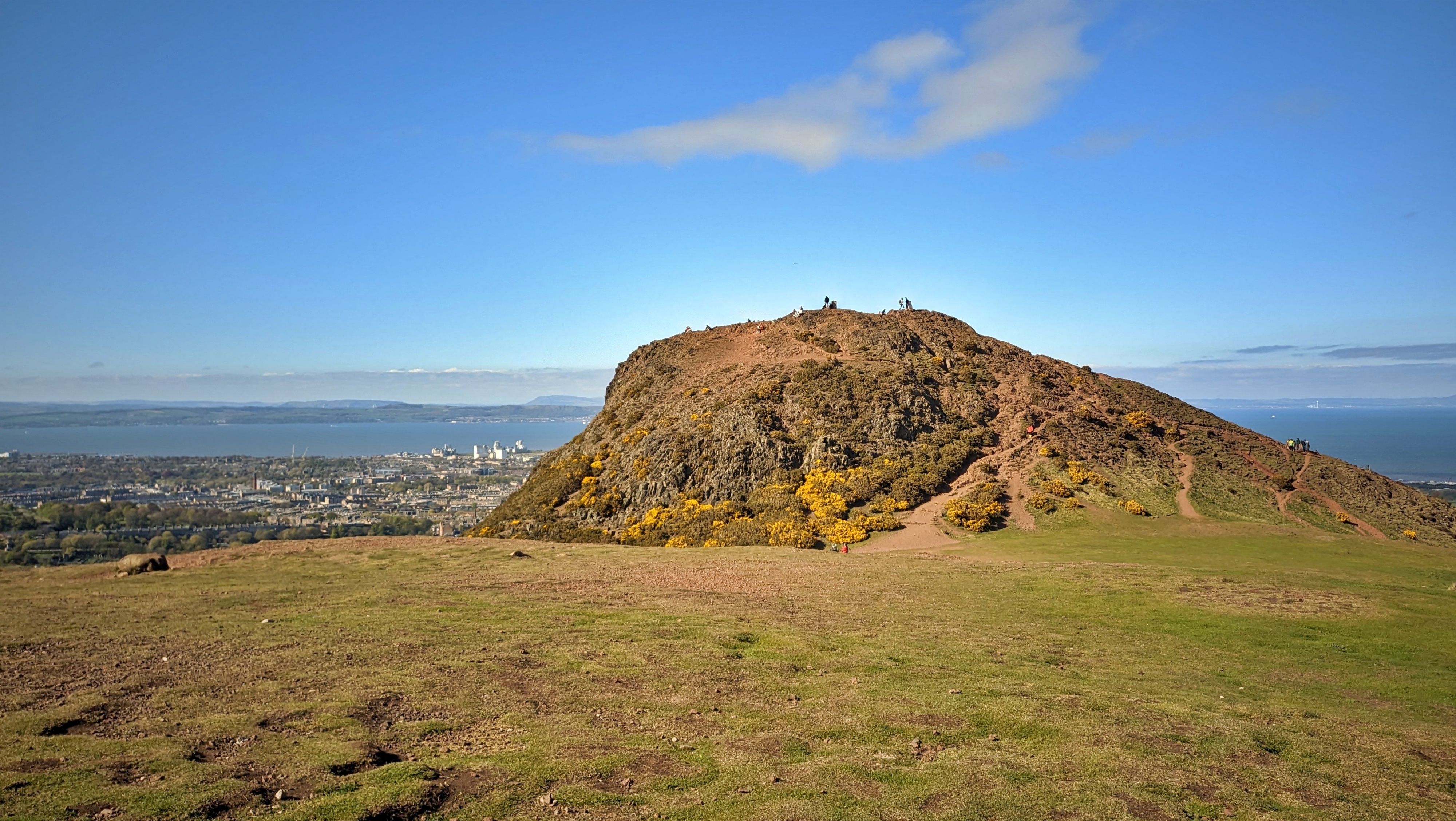
The crags are relevant both in terms of geology as well as for modern history. In the late 18th century, James Hutton, the father of modern geology, used a specific section of the crags to prove his theories about the age of the Earth. In 1836, a group of boys hunting for rabbits on the northeastern slopes found a hidden alcove containing 17 miniature wooden coffins, each with a tiny, individually clothed wooden doll inside. Many historians believe they were built as a symbolic burial for the 17 victims of Edinburgh’s infamous body-snatchers, Burke and Hare. Another detail is a path called the Radical Road. It was paved in 1820 by unemployed weavers following the Radical War, a series of political strikes, and was suggested by the famous author Sir Walter Scott as a form of work relief.
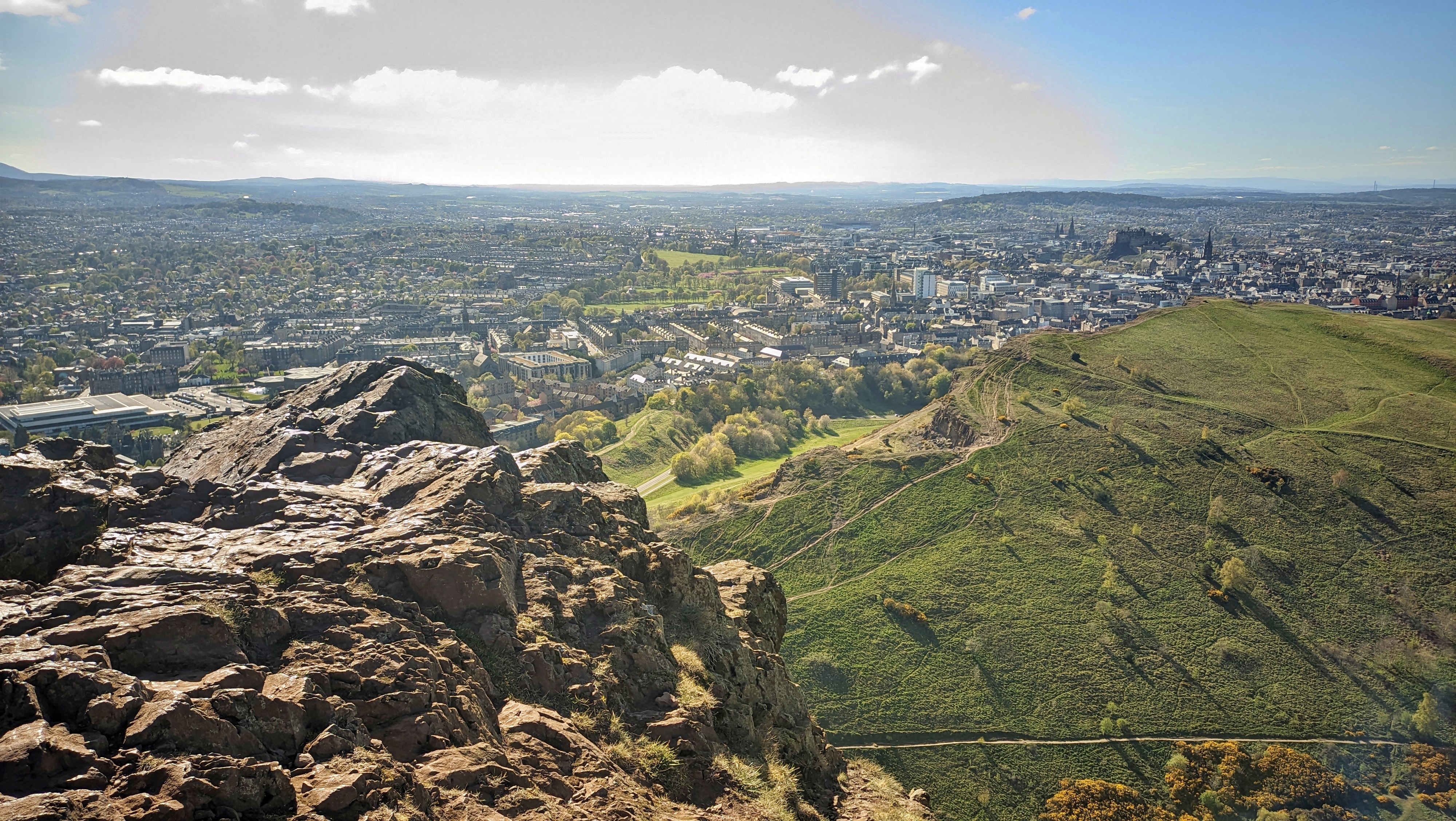
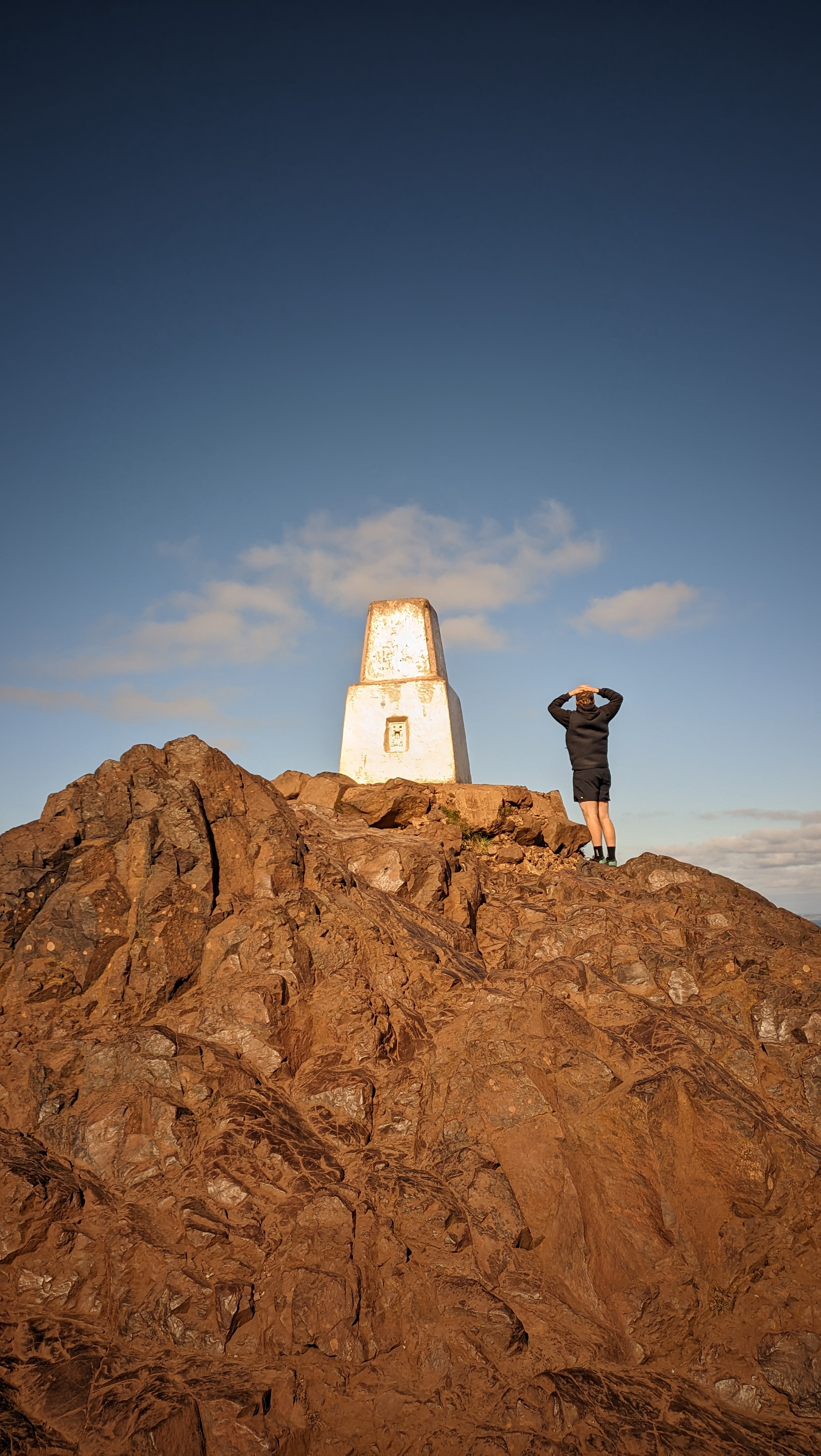
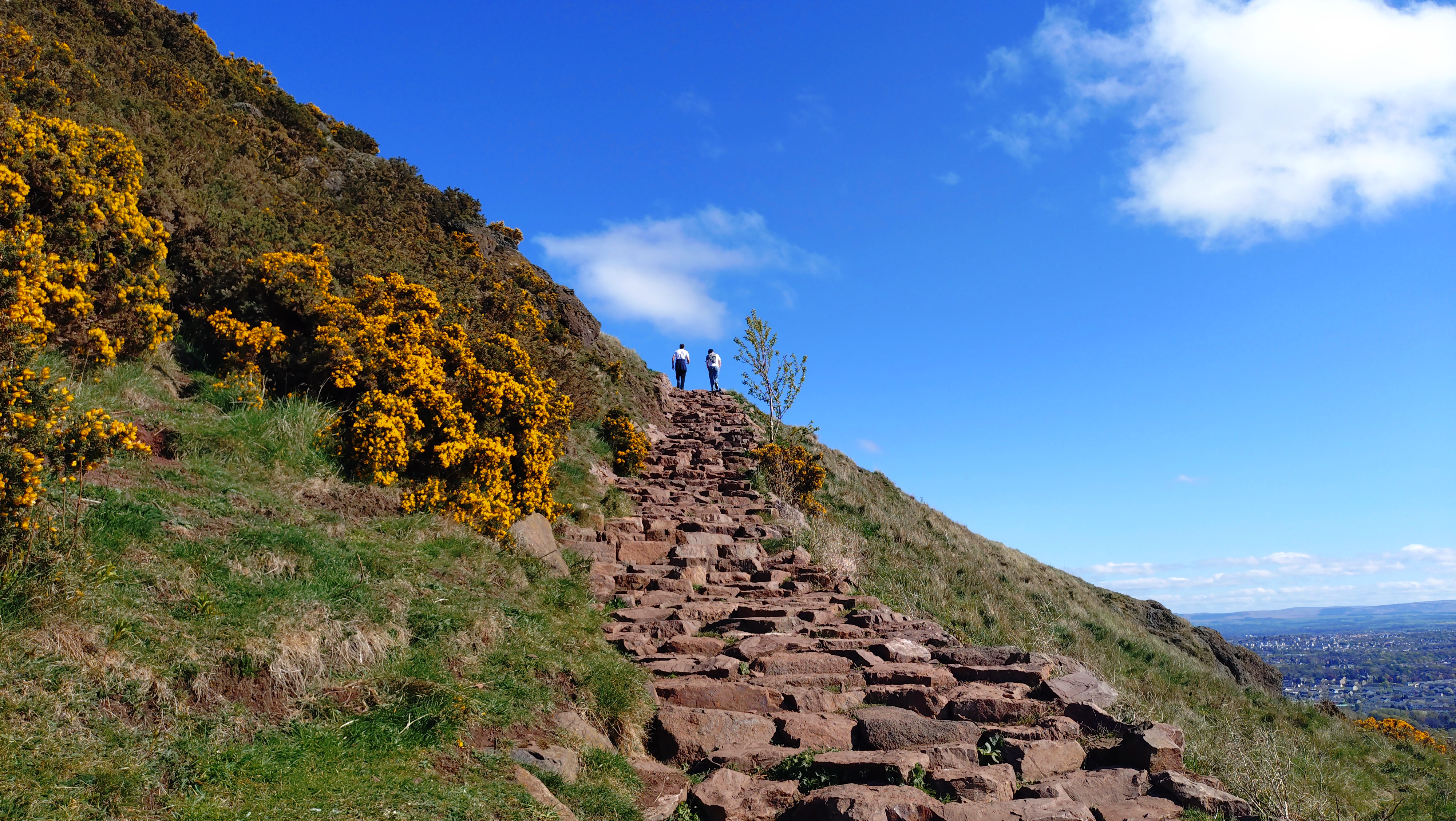
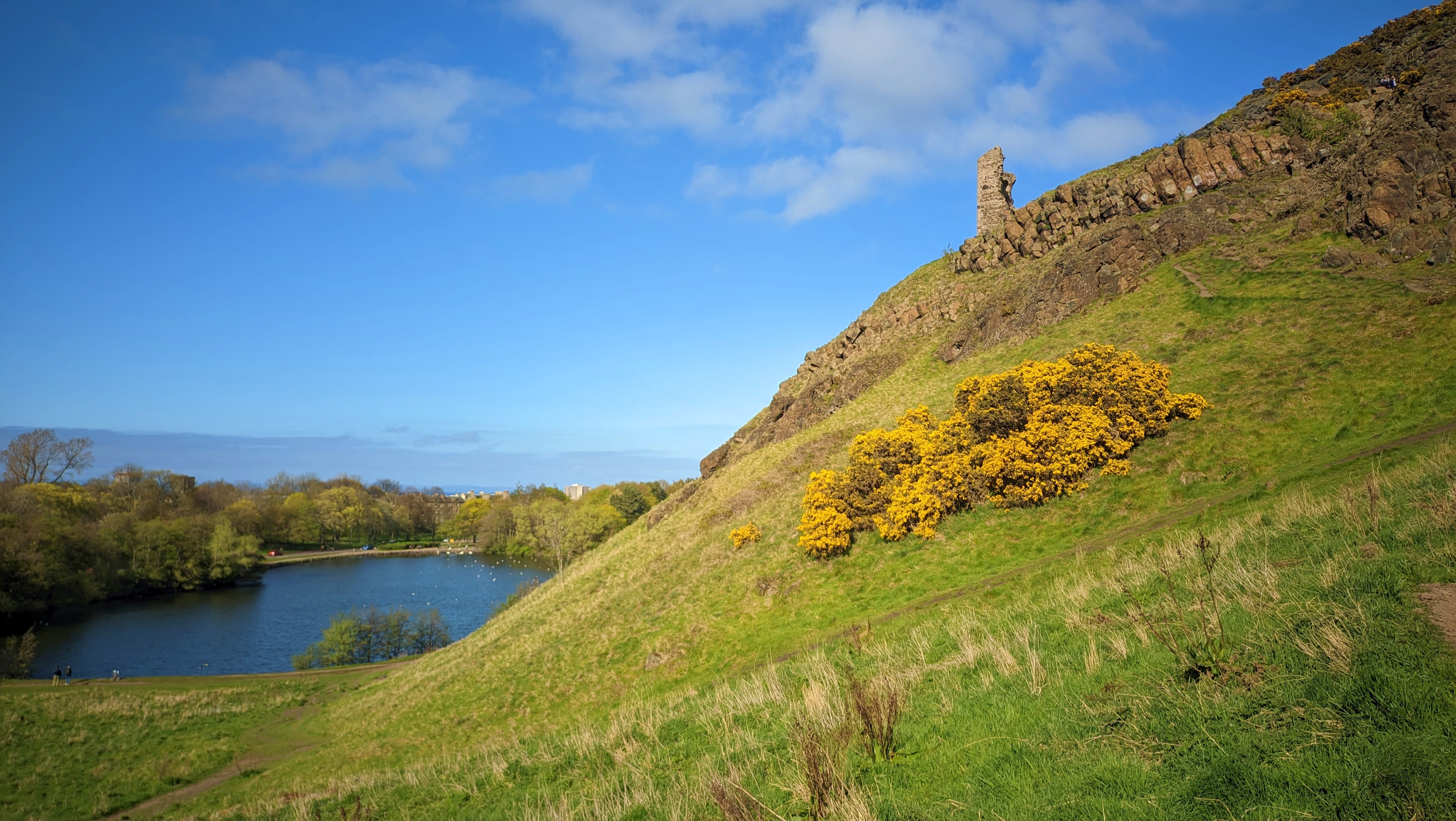
From the crags, the dirt path transitions into paved stone steps. These lead you first to Nether Hill (237m), and finally to Arthur’s Seat (251m). The final stretch requires a bit of a scramble over bare rock, where you can opt-in or out of using your hands for balance. Once you reach the summit, the reward is an unobstructed, 360-degree view of Edinburgh. You can easily spot the historic Old Town, the bustling Port of Leith, Edinburgh’s Parthenon on Calton Hill, and the rest of the hills framing the city. It is almost always incredibly windy up there, regardless of how calm it feels down in the city streets. The rocks at the very top are incredibly polished and slippery, a consequence of thousands of locals and tourists passing through daily for a stroll. For the way down, I took the Dry Dam path, keeping St Margaret’s Loch and St Anthony’s Chapel Ruins on my right-hand side. On the morning of May Day, crowds of local women climb this part at dawn. A centuries-old tradition dictates that washing your face in the morning dew of Arthur’s Seat on May Day brings eternal youth and beauty.
On May-day, in a fairy ring,
We’ve seen them round St Anthon’s spring,
Frae grass the caller dew draps wring
To weet their een,
And water clear as crystal spring
To synd them clean
Caller Water, Robert Fergusson, 1773
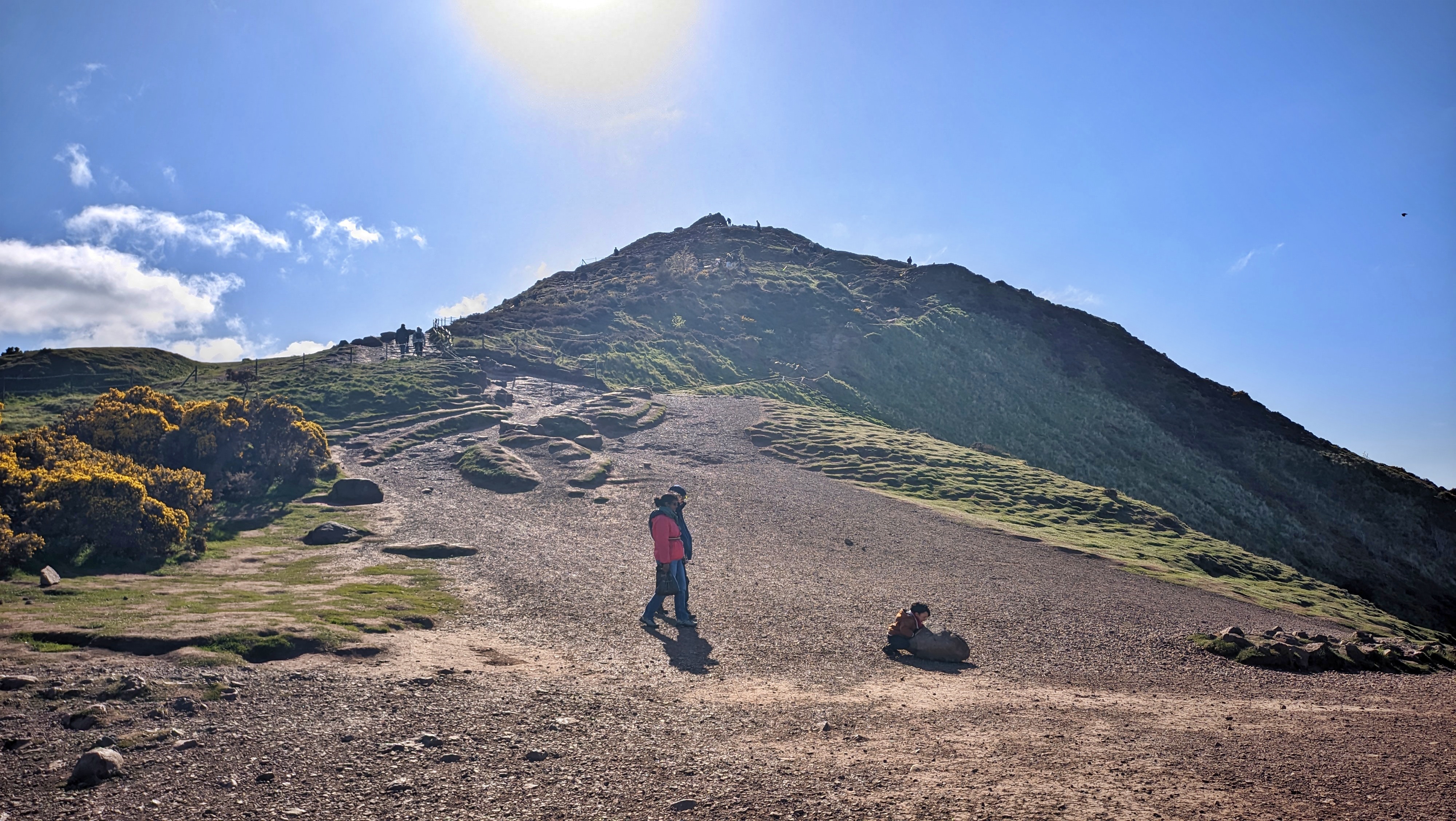
If you feel like hiking up to Arthur’s Seat yourself, you can find and follow my exact route or check out plenty of alternative trails on alltrails.
Read more:
Hiking in Greece: Smolikas finished second
First things come first, but the runner-up also has their charm. After Mt Olympus comes Mt Smolikas, the…
Keep reading
12 Όψεις της Βόρειας Αγγλίας
Μπορεί να γκρινιάζω κάθε φορά που βρίσκομαι στην Αγγλία (hint: η μόνη χώρα στην οποία κατηγορηματικά δε θα…
Keep reading
Walking in the Cotswolds
There’s something truly special about exploring the English countryside on foot, especially when it’s in the picture-perfect region…
Keep reading
 belleelene
