It was a casual Saturday night, and we were passing the time at an uneventful singles’ gathering by the seafront. A close friend was about to leave Greece for a research position in Northern Europe, and we were discussing ideas for one last island escape. One final dose of the Aegean sun before her departure.
At some point, someone mentioned Nisyros.
“I’ll be there next week,” he said. “We’re installing a new seismic monitoring network. It’s a beautiful island, easy to reach via Kos, and it’s also the only volcanic crater I’ve ever actually walked inside during my career as a seismologist.” That sentence alone was enough. We booked our tickets the next day.
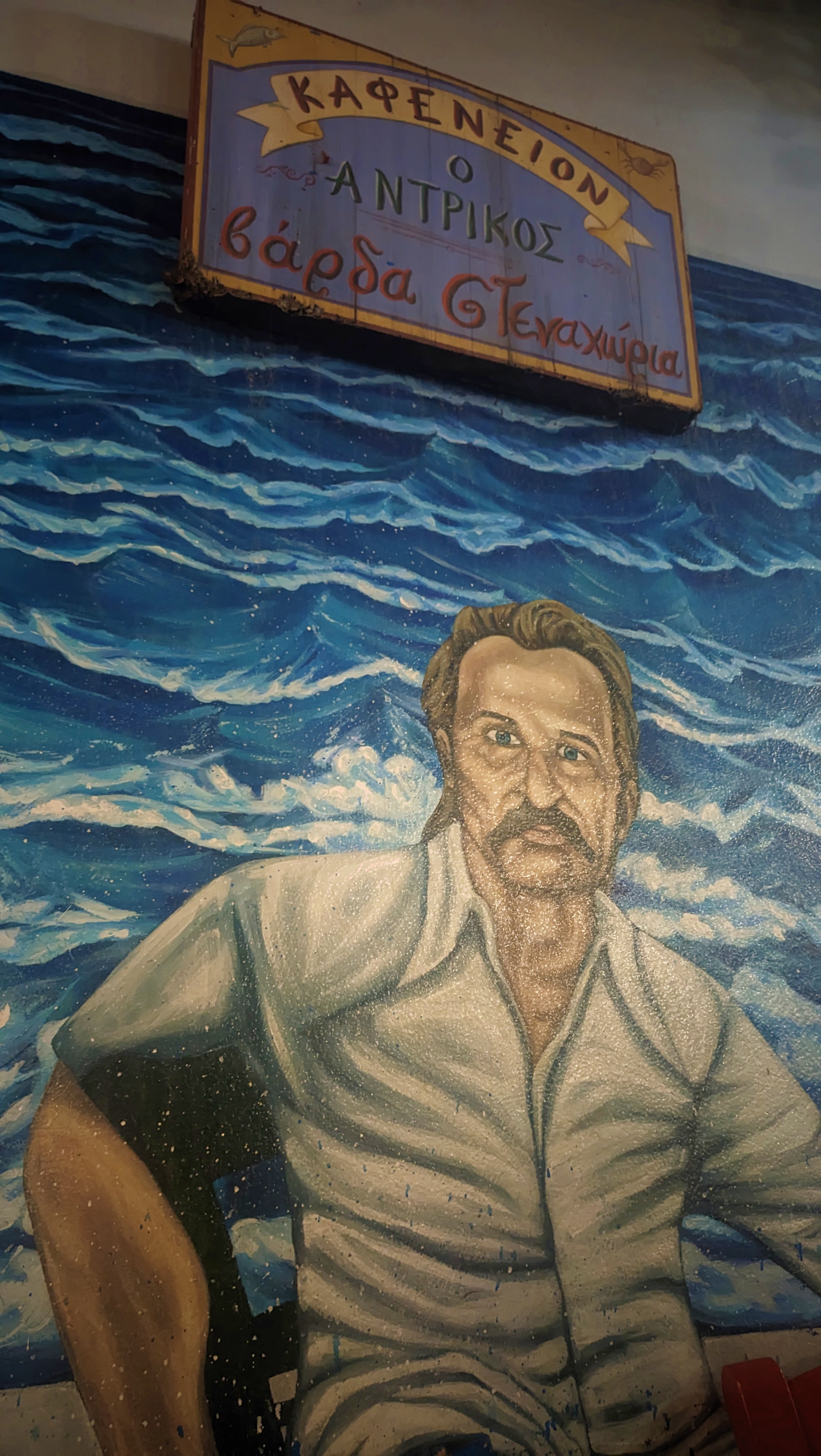
Most Greeks associate the Dodecanese with wealthy Greek-Americans and kitschy summer resorts. Large islands, yes, but somehow lacking the blue-and-white charm of the Cyclades, the dramatic coastline of the Peloponnese, or the rich cultural heritage of the northern Aegean islands. Most visitors come for all-inclusive holidays, or so the stereotype goes. Nisyros, however, is a completely different story. Sitting directly opposite Kos, it has somehow managed to remain wonderfully unspoilt. Maybe that’s because the island is disarmingly simple: two mountain villages (one abandoned and the other rebuilt over the years by the Greek community of Astoria, allegedly), one main port and one abandoned harbour, five beaches, nine craters, and a single circular road. The volcano changes everything.
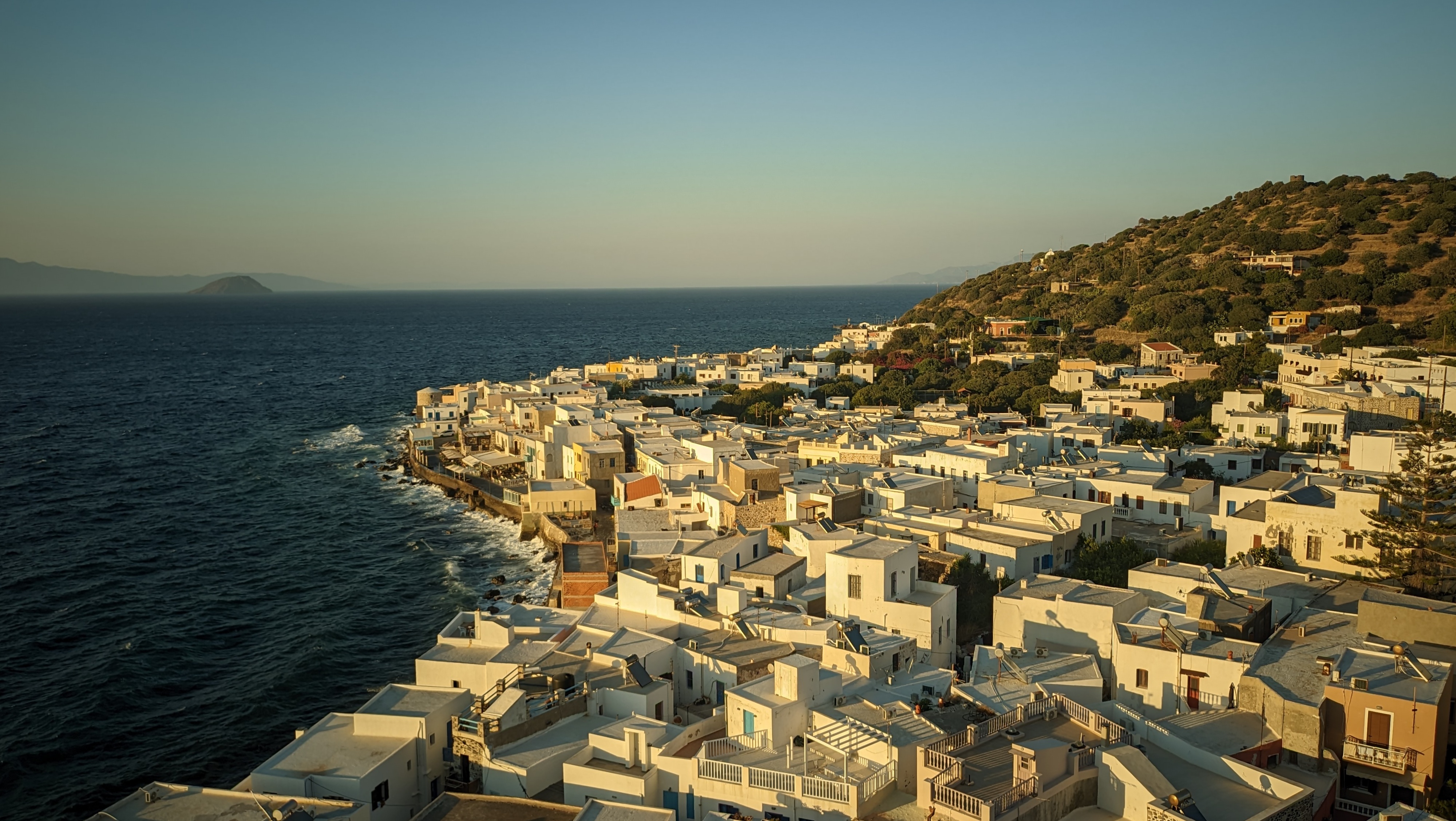
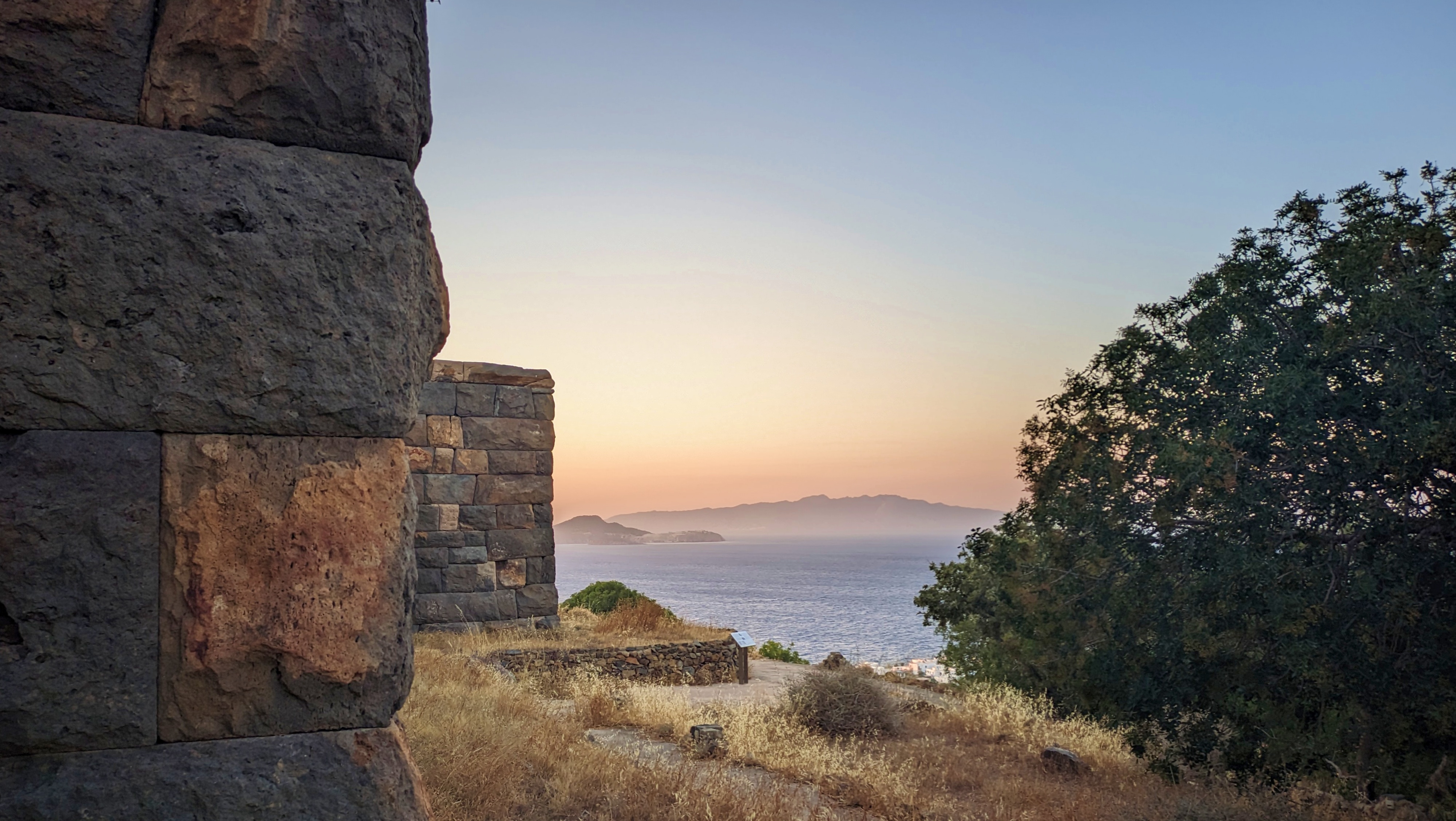
Mandraki is the island’s main port, and its undisputed landmark is the hilltop Monastery of Panagia Spiliani, built within the walls of a medieval castle. Not far away lie the remains of Palaiokastro, constructed from enormous blocks of volcanic basalt. Standing there, with Kos visible across the water, it’s easy to understand why Nisyros spent much of its history in the shadow of the powerful kingdoms of Kos and Rhodes.
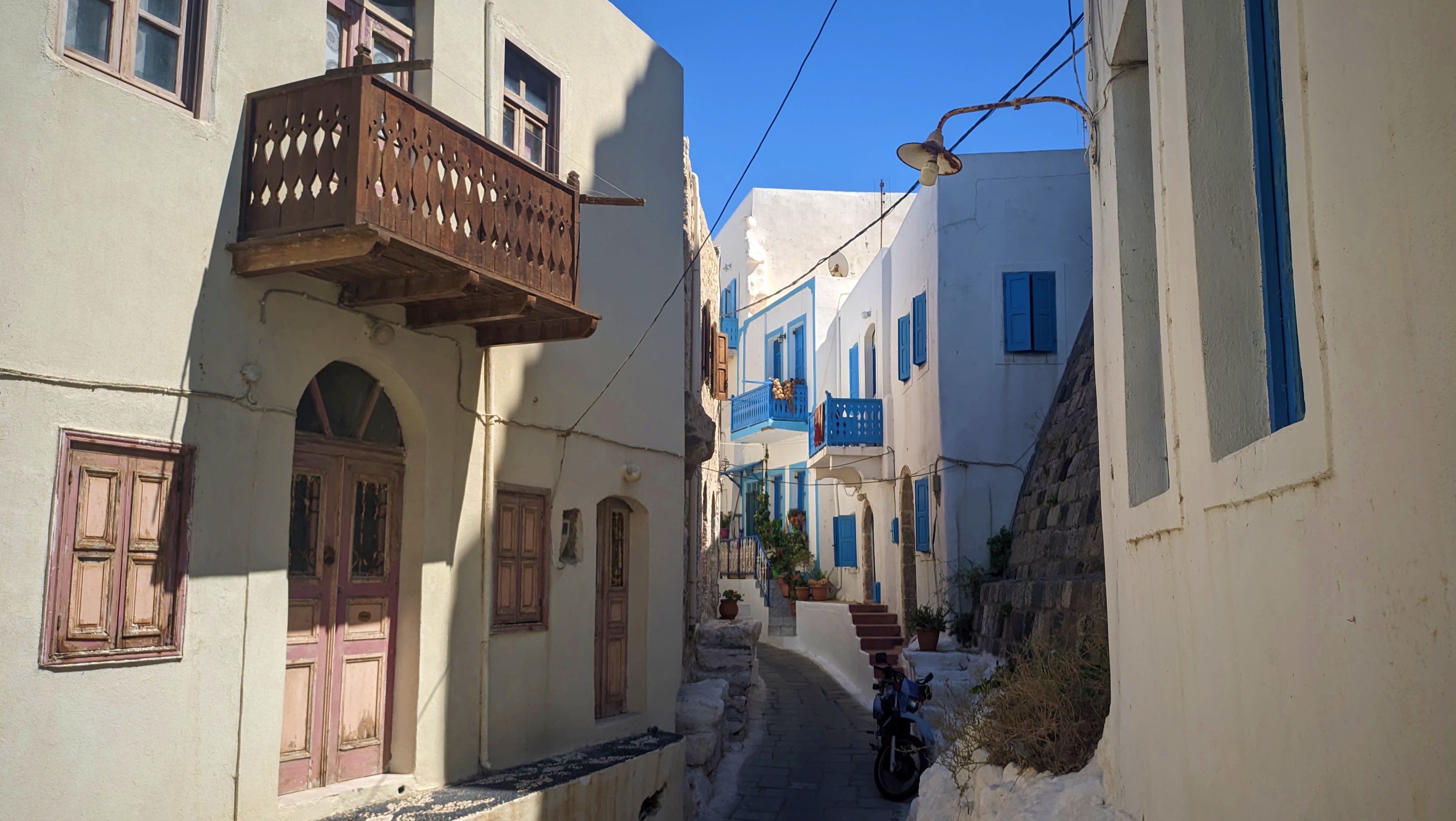
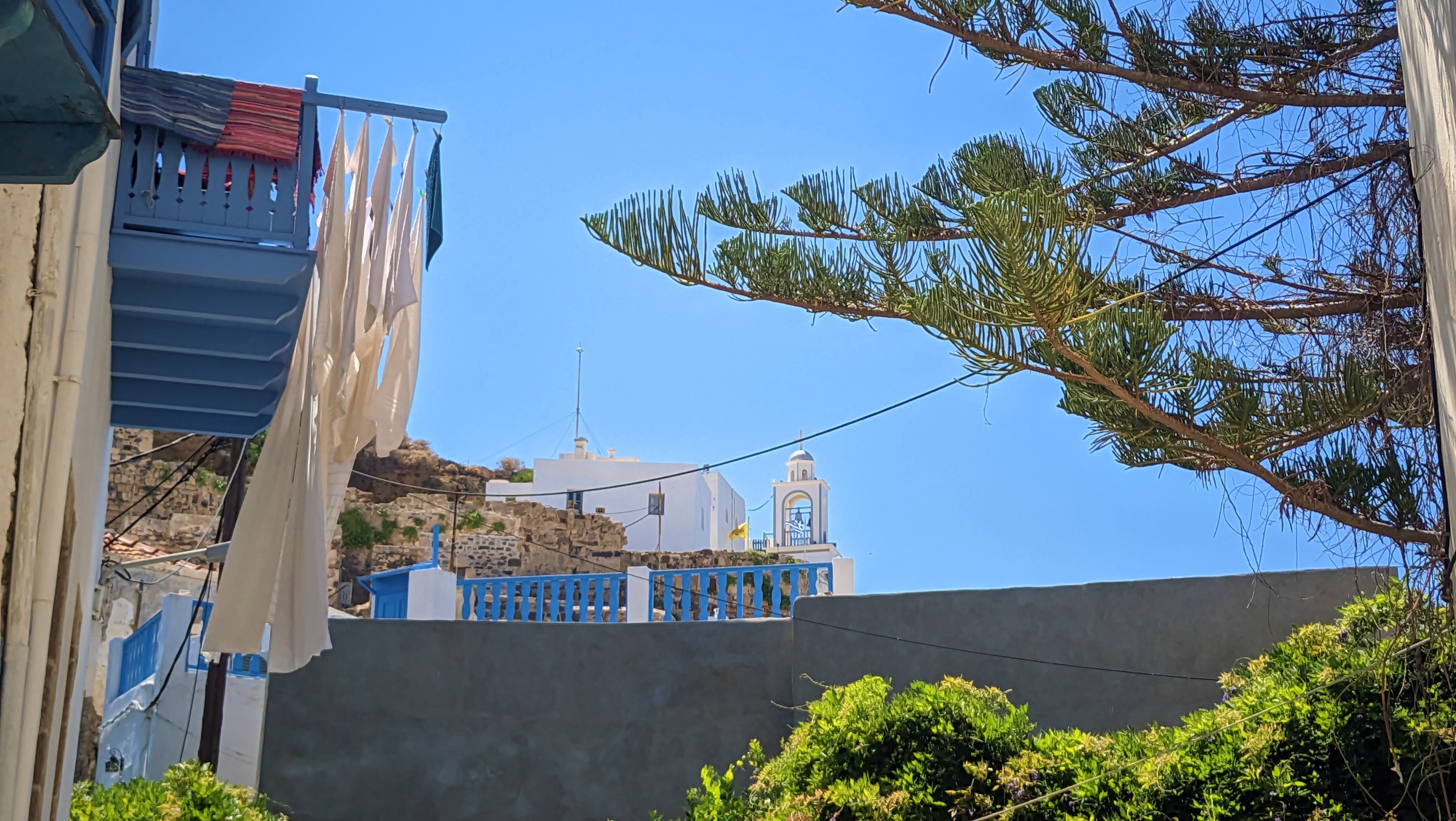
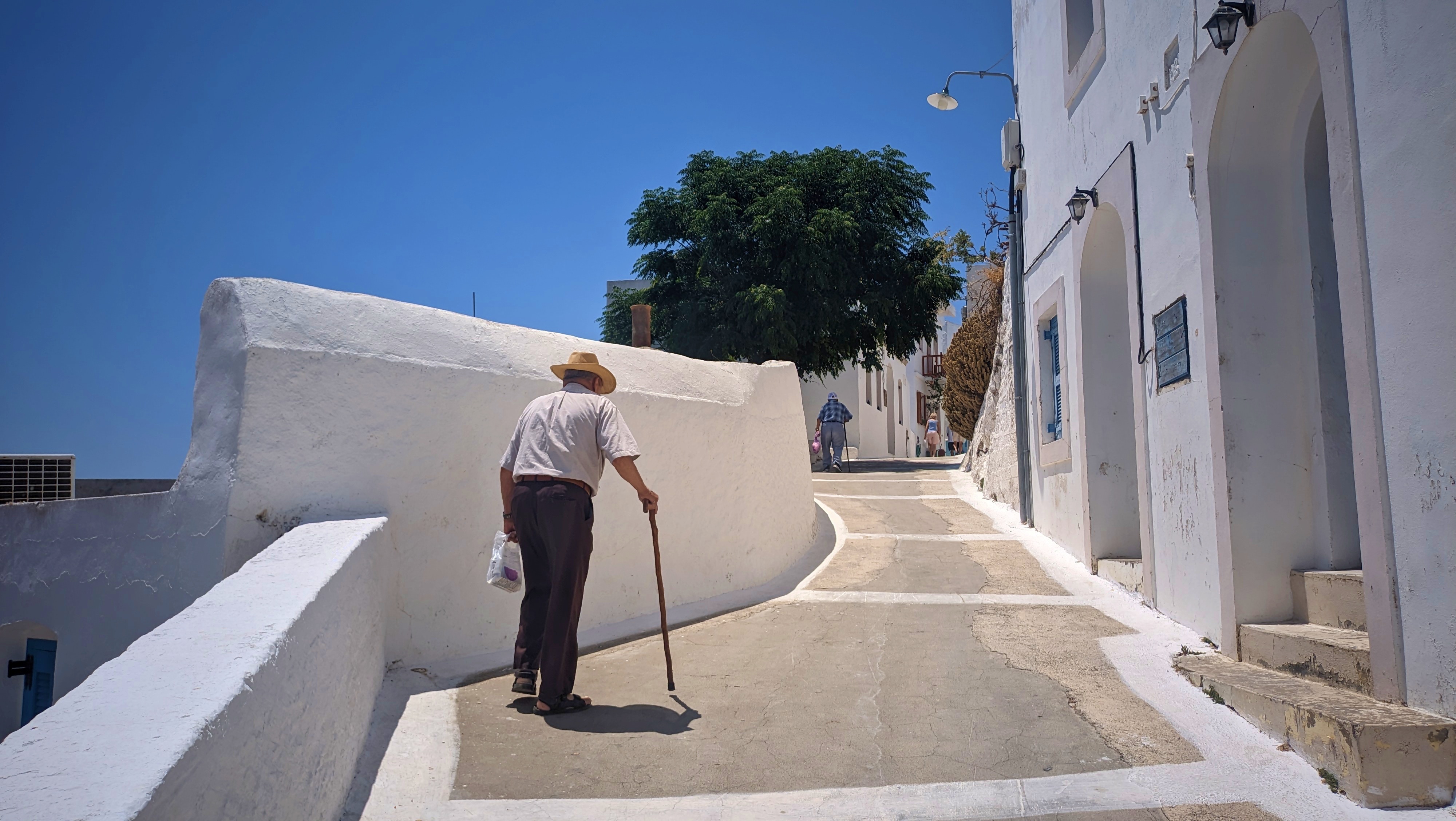
Perched precariously on the rim of the caldera, Nikia is often described as one of the most beautiful villages in the Aegean. Its freshly painted white houses stand in striking contrast to the dark volcanic landscape below. The elderly residents (I counted about five) still gather in the village square, carefully choosing the hours when the large Dutch and Scandinavian day-tour groups from Kos aren’t around. That’s usually any time outside the 12:00–15:00 window. Don’t skip the Volcanological Museum. It’s surprisingly good and offers an excellent introduction to both the island’s geology and the wider volcanic arc of the Aegean.
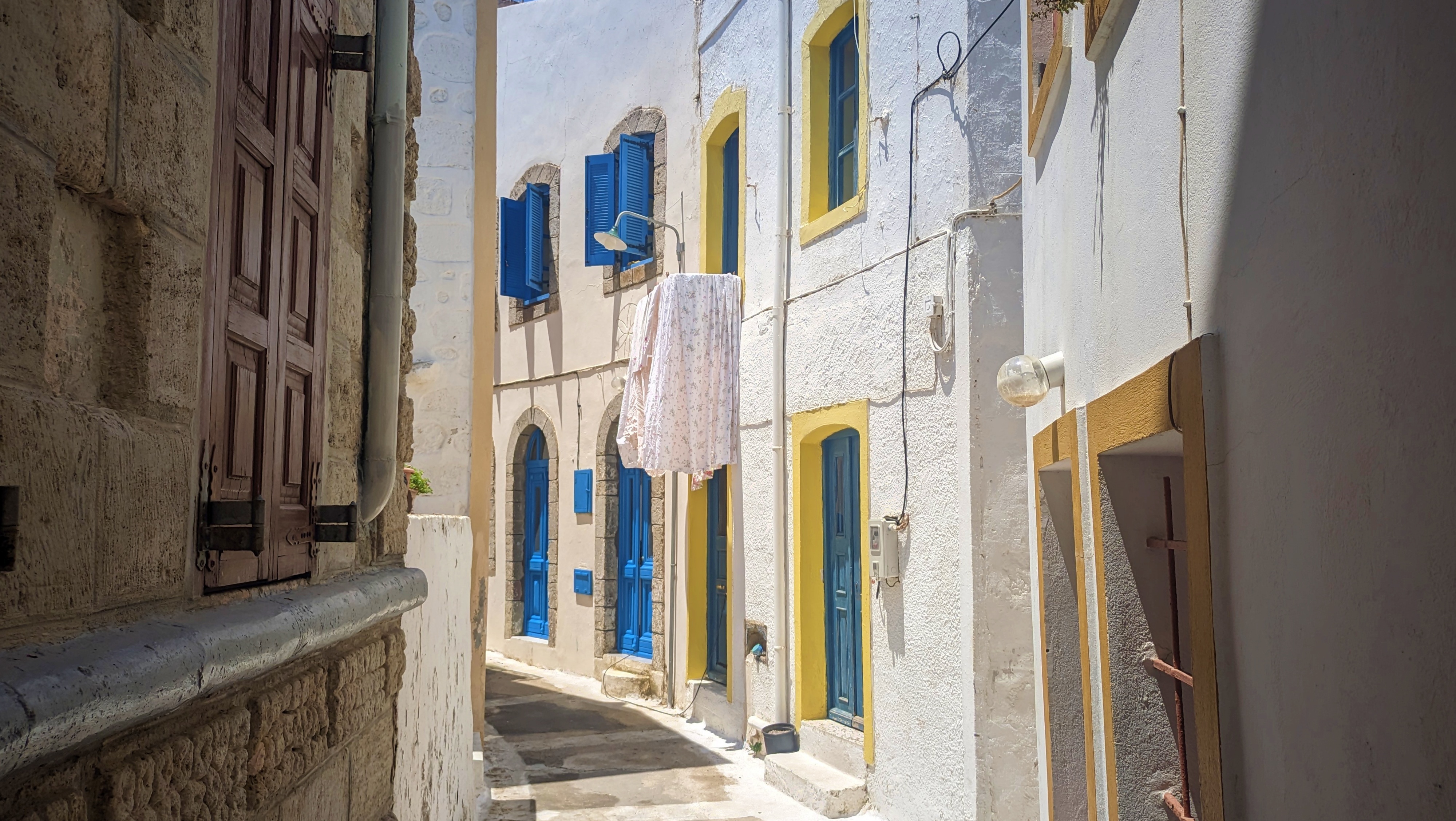
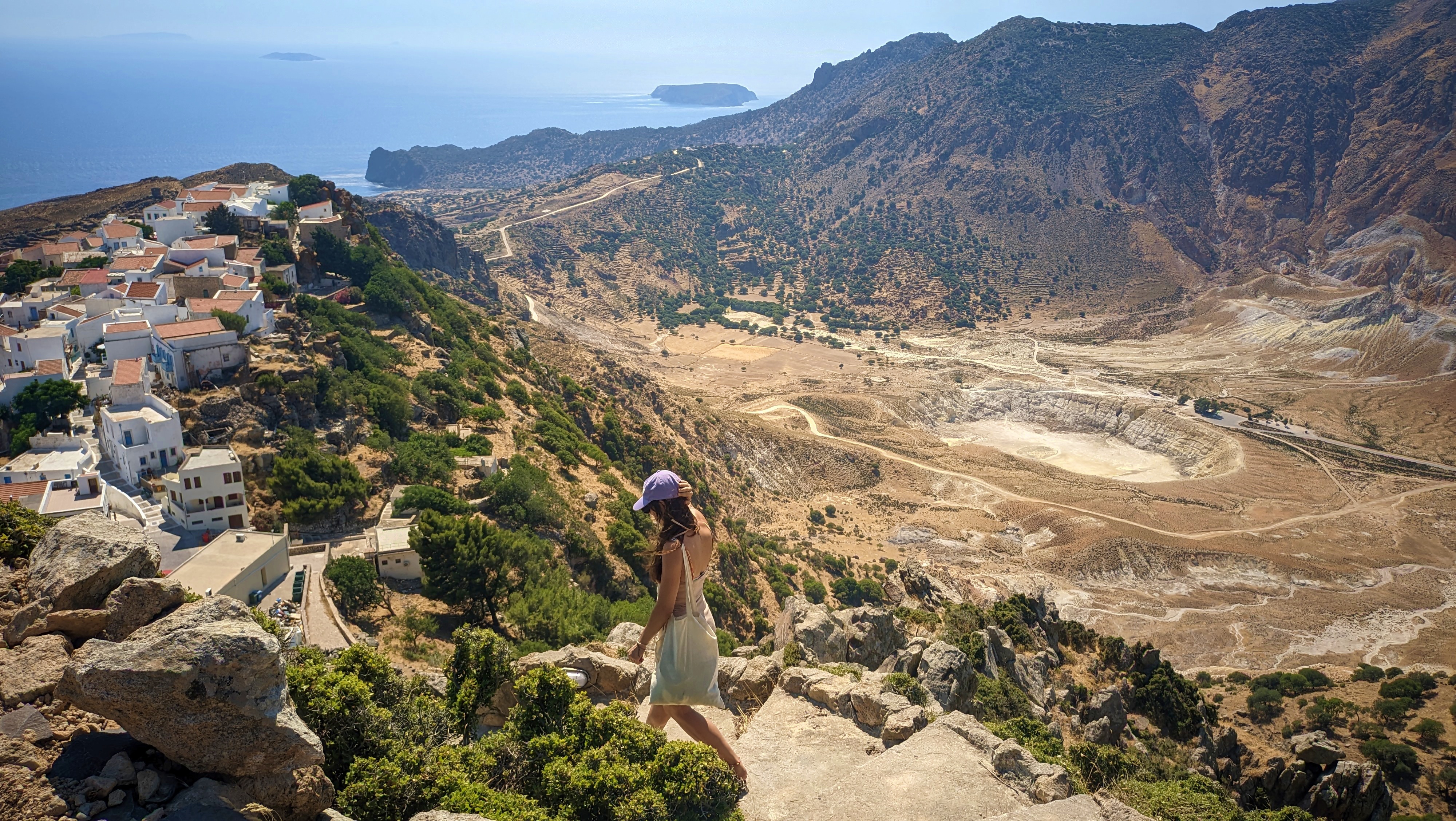
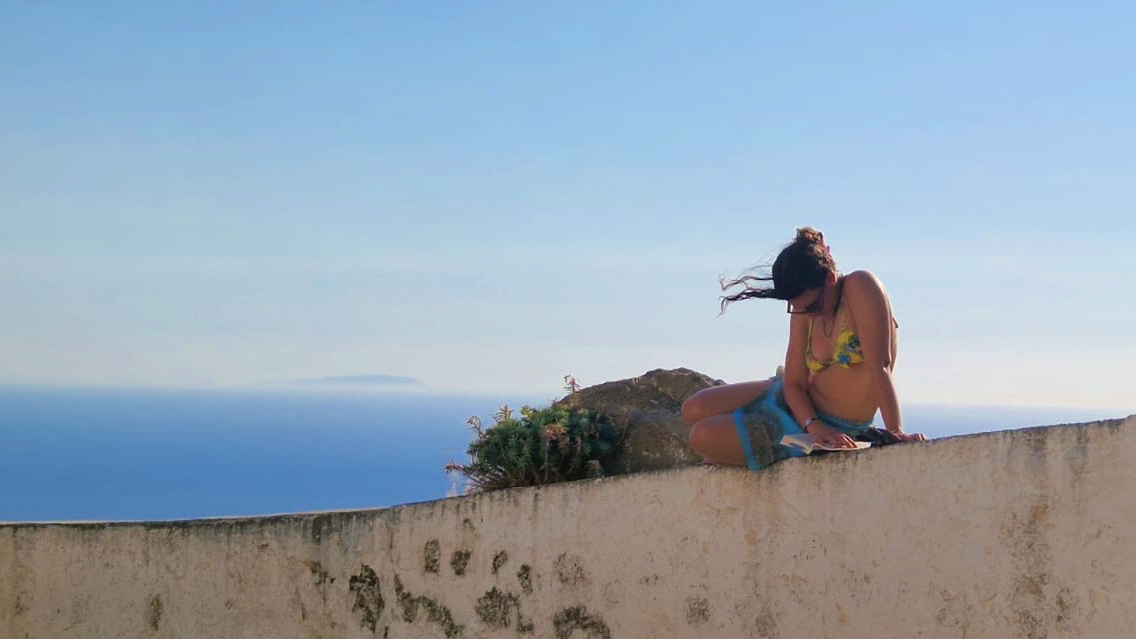
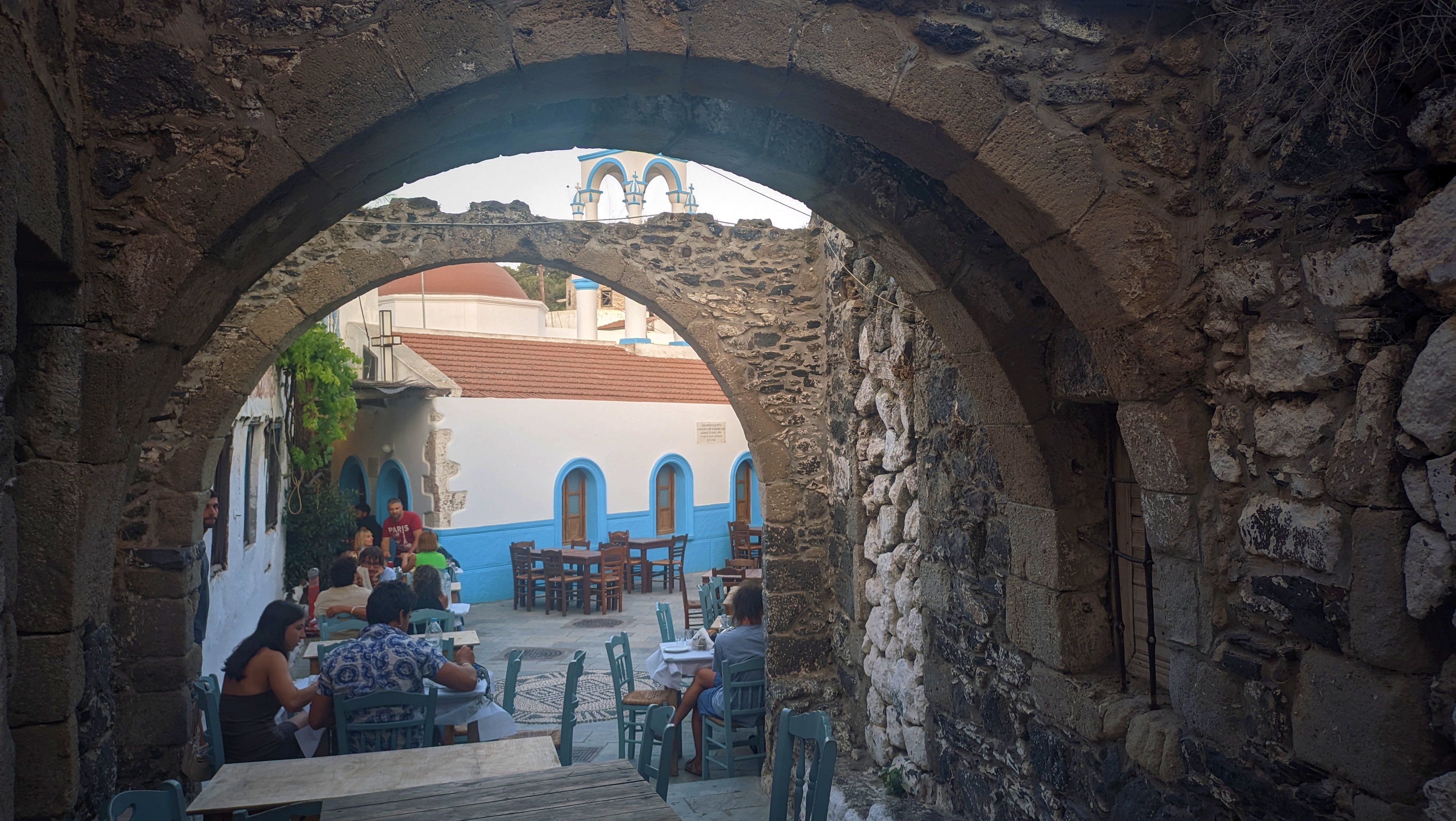
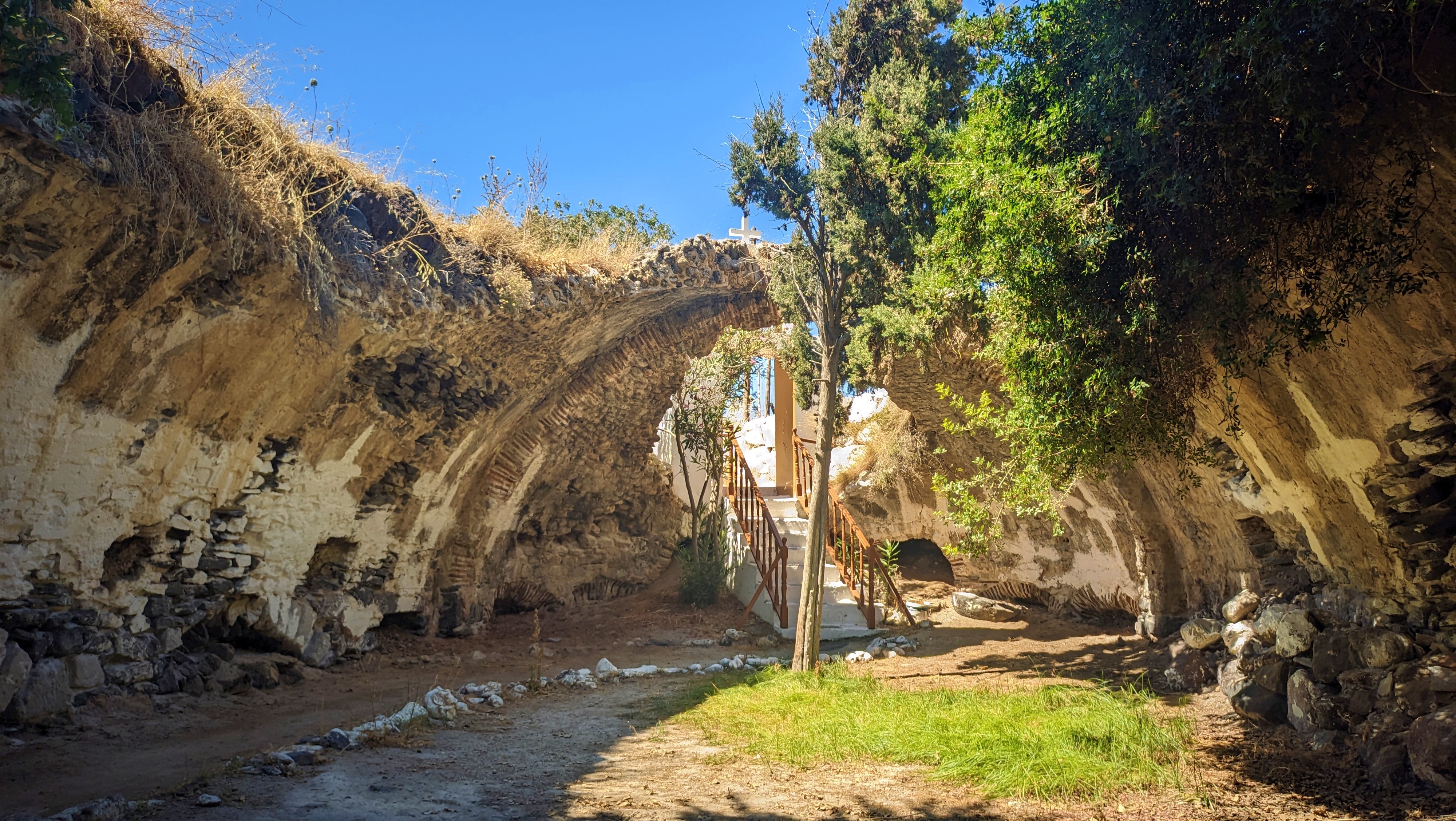
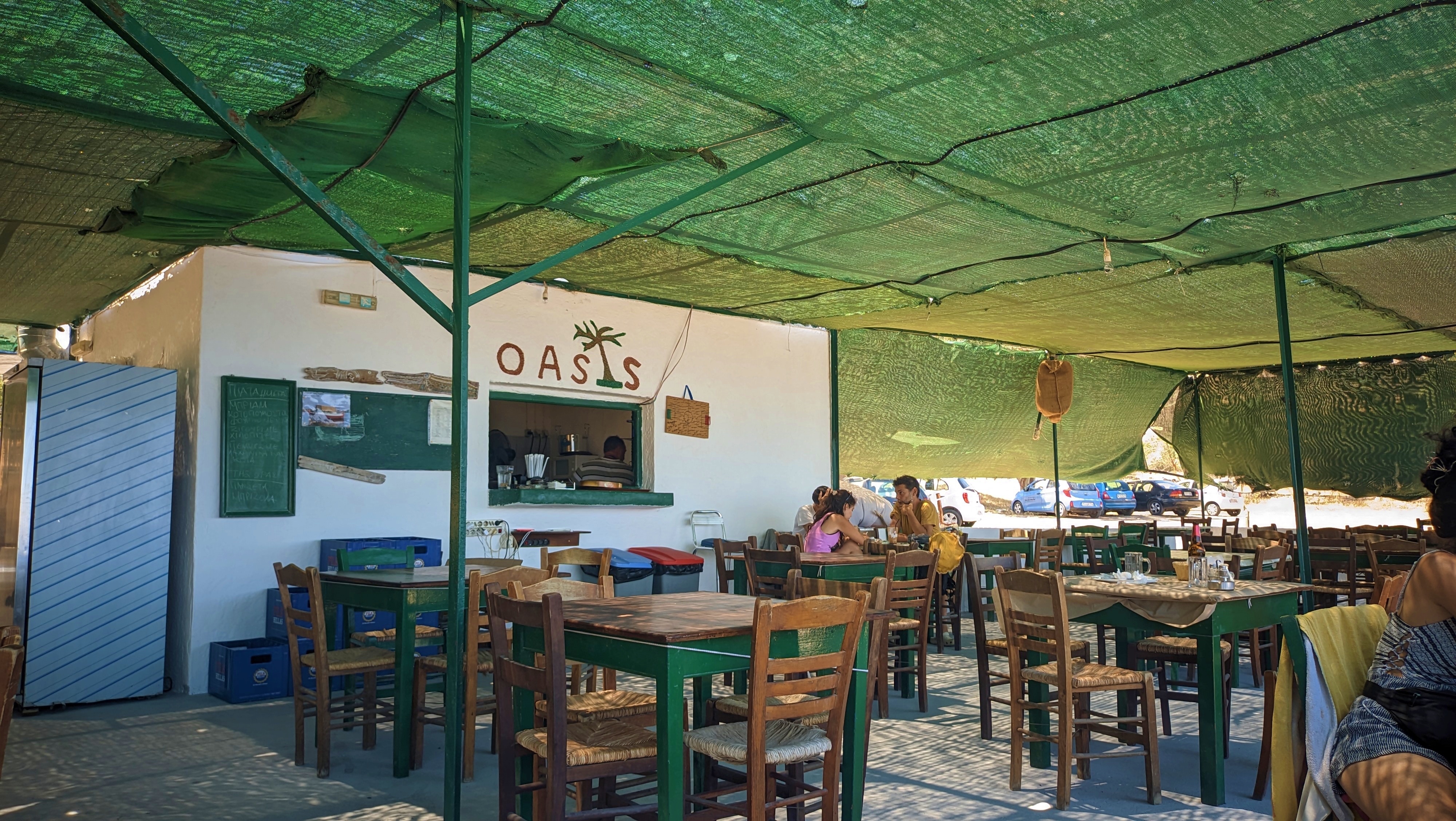
Here’s the case with Emporios. Most of its houses have stood abandoned since a devastating earthquake in the last century. While affluent Greek-Americans have lovingly restored homes in Nikia, Emporios remains rough around the edges. Ironically, some of the island’s best tavernas and its best bar are tucked among these derelict buildings. Nothing beats that balcony view over the caldera. Hidden beneath one of the old houses lies a naturally heated cave, where volcanic gases and geothermal heat create what locals call a natural sauna.
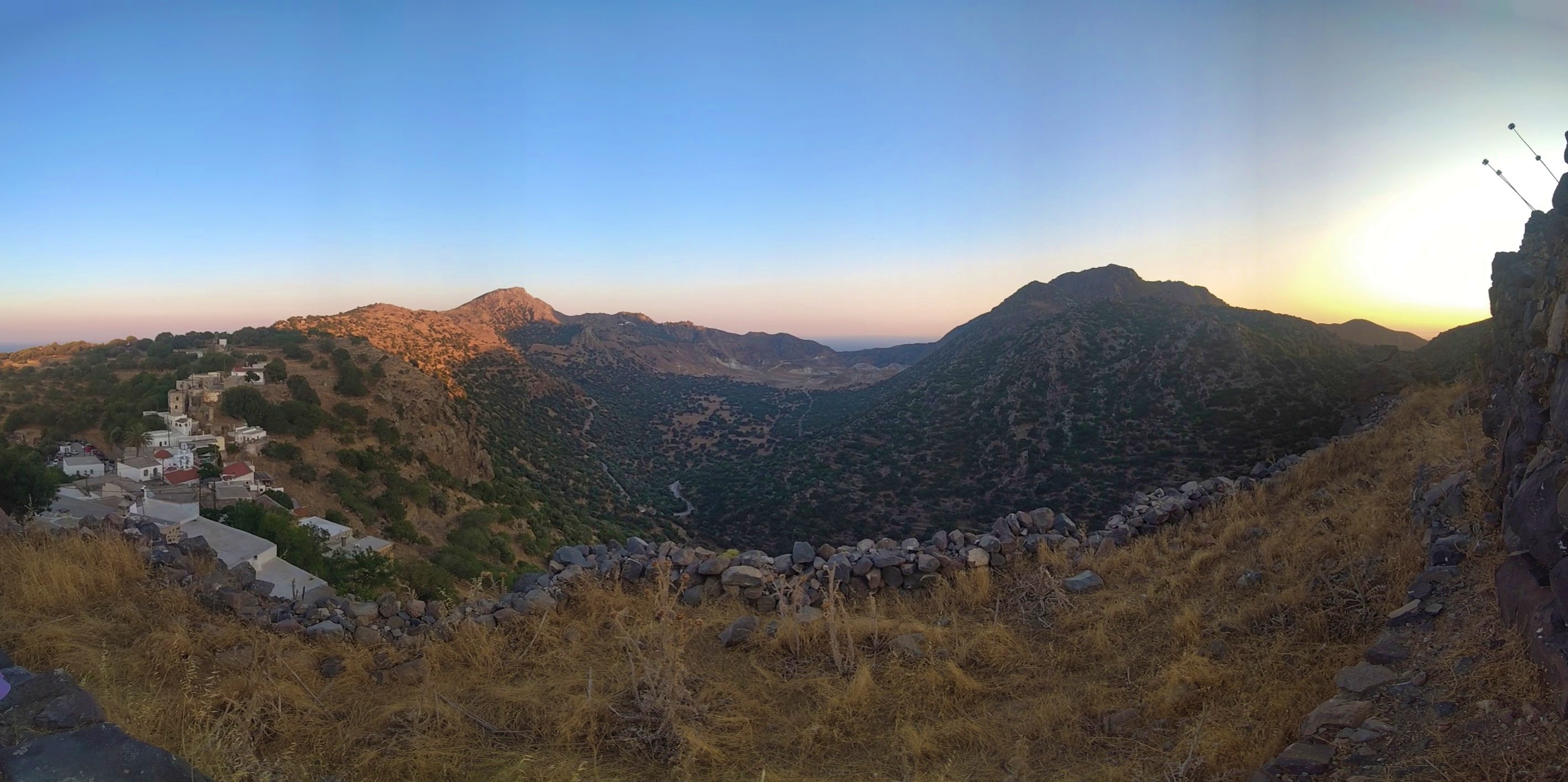
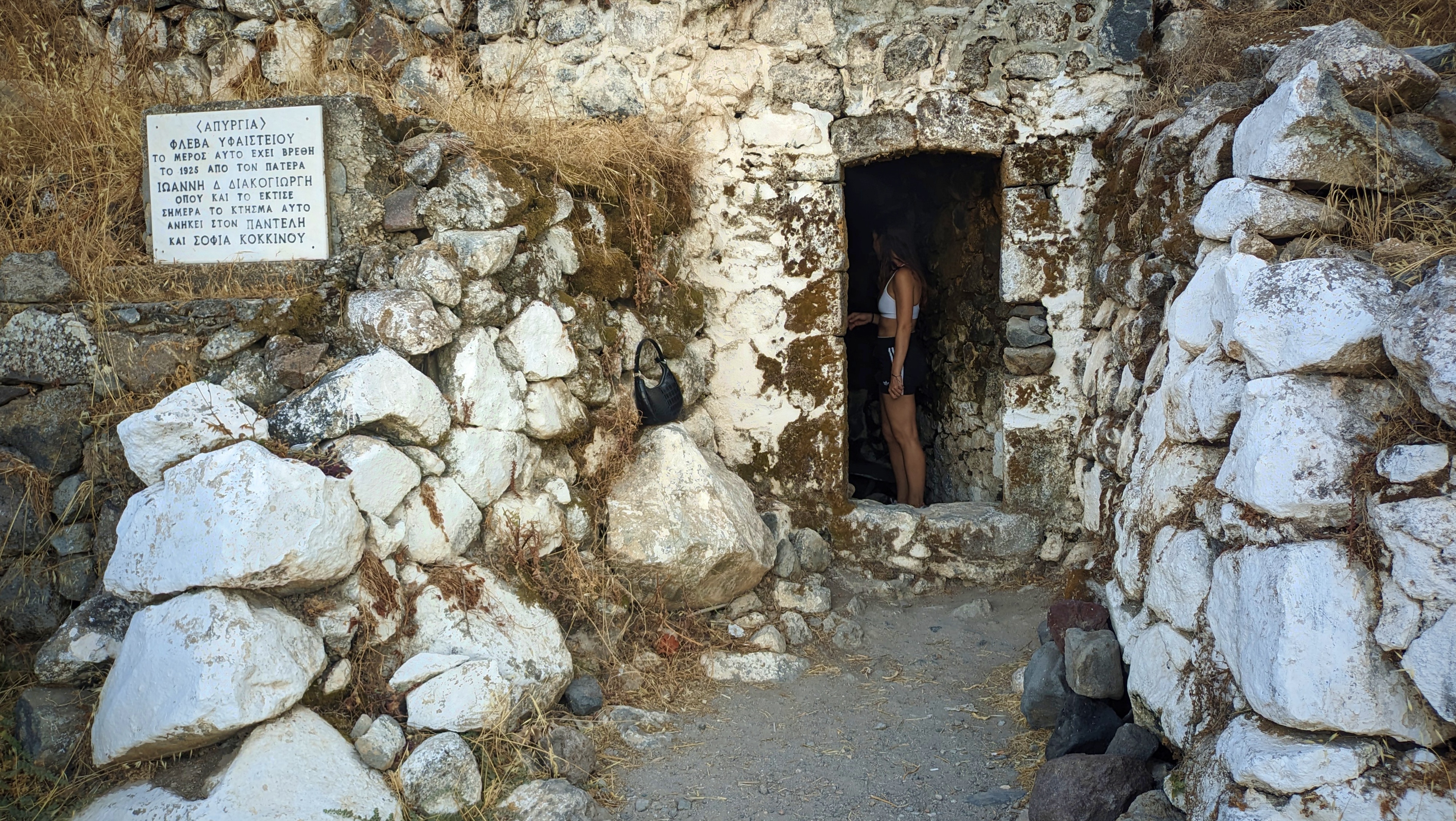
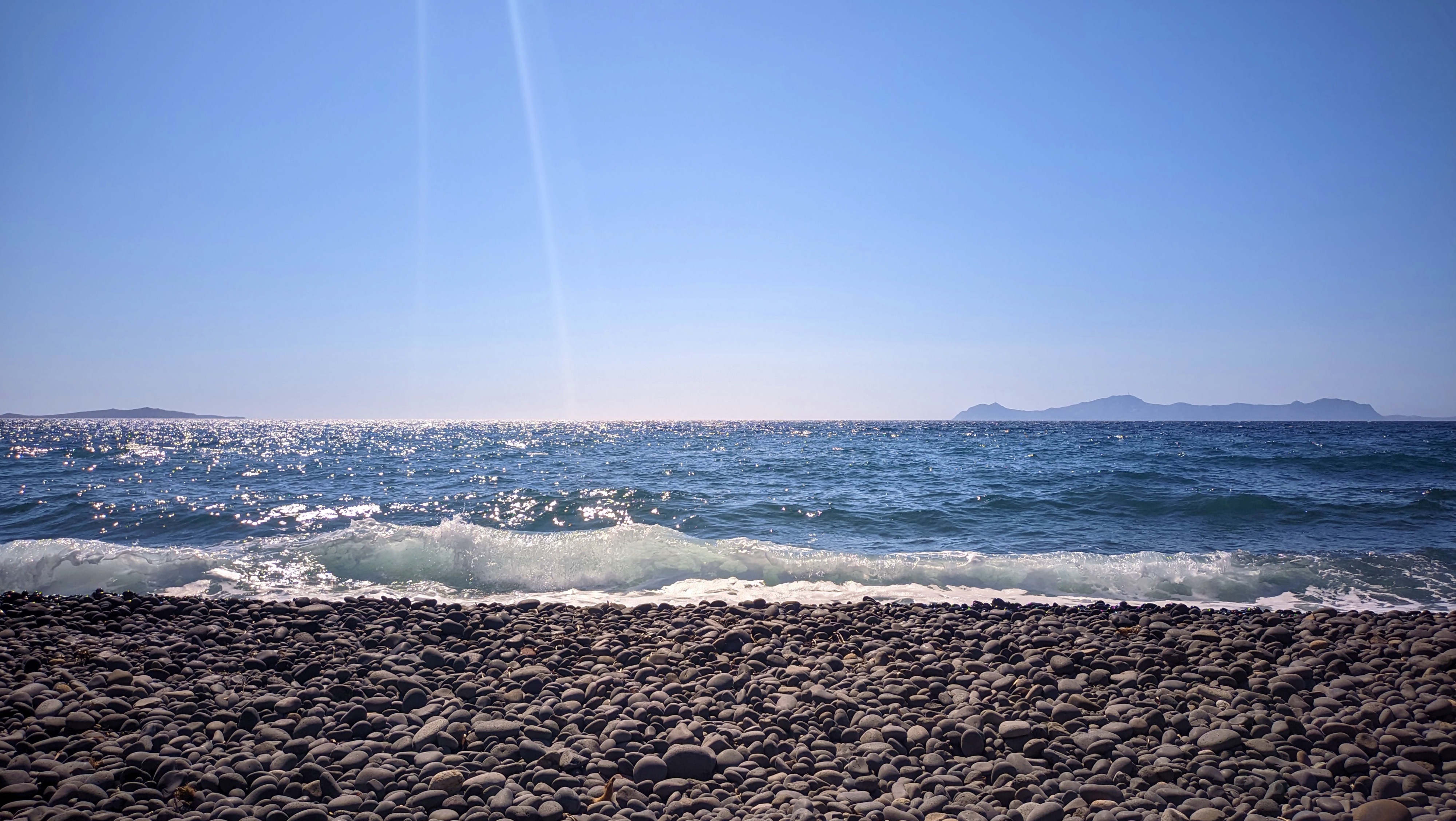
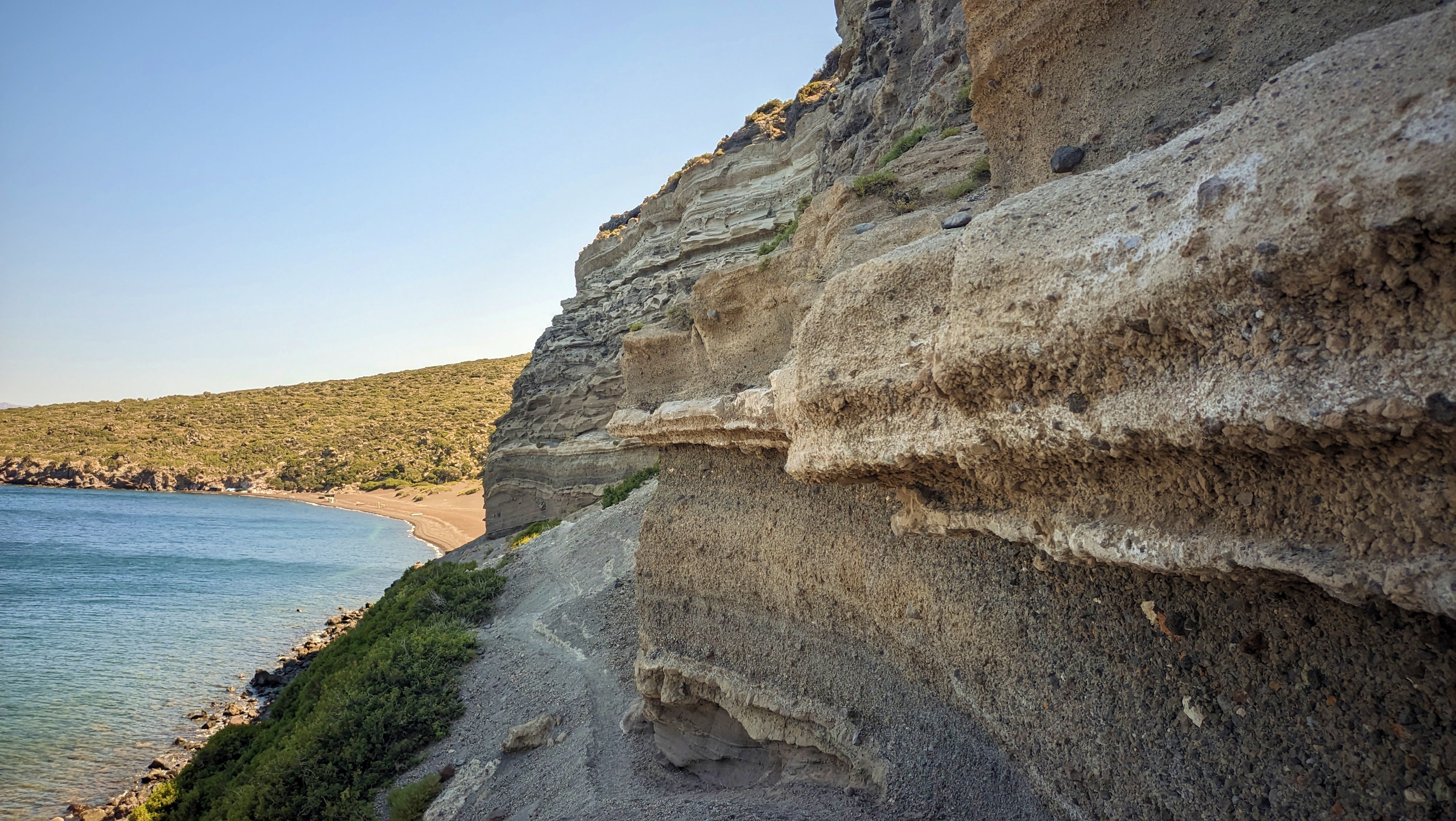
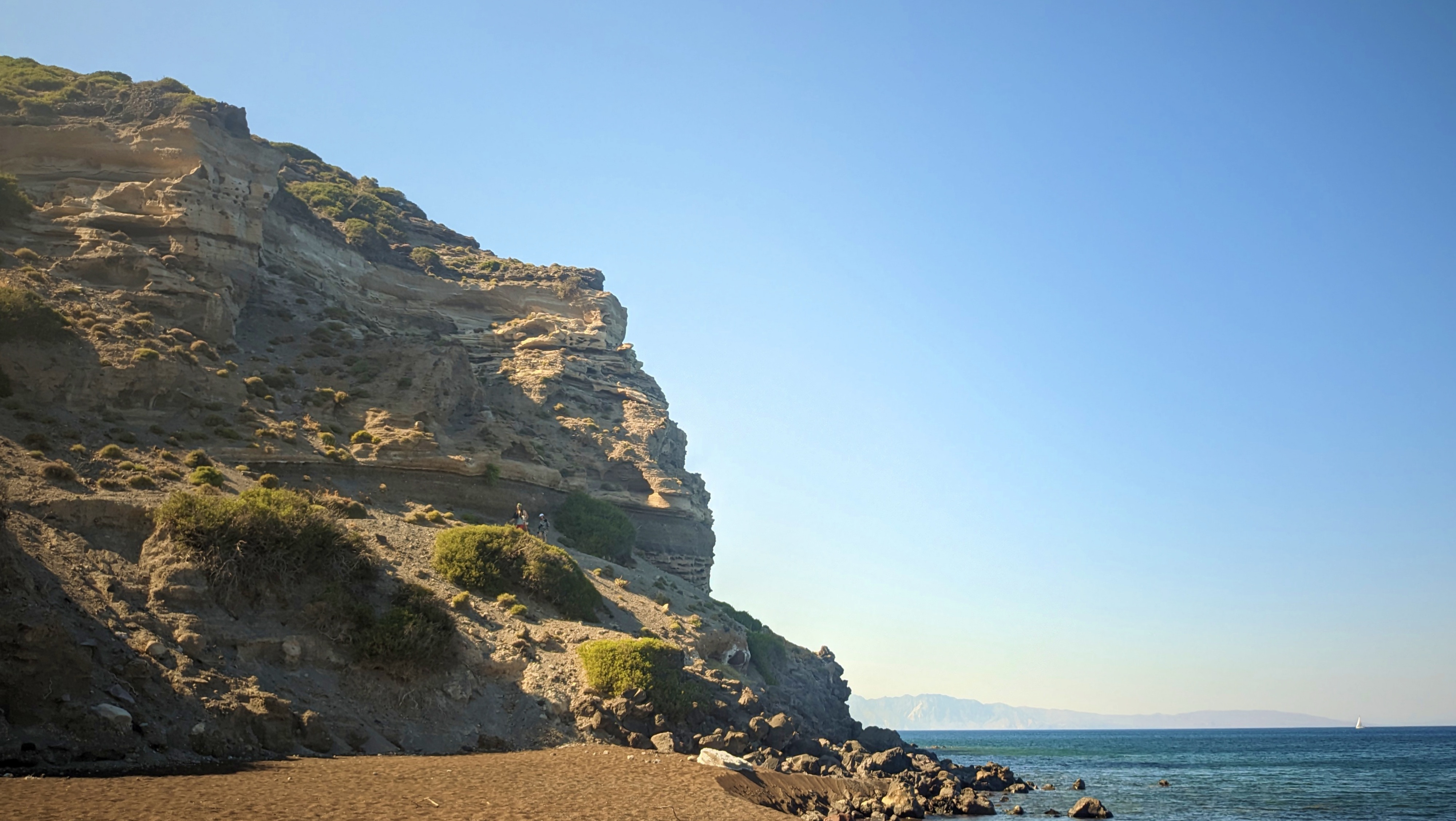
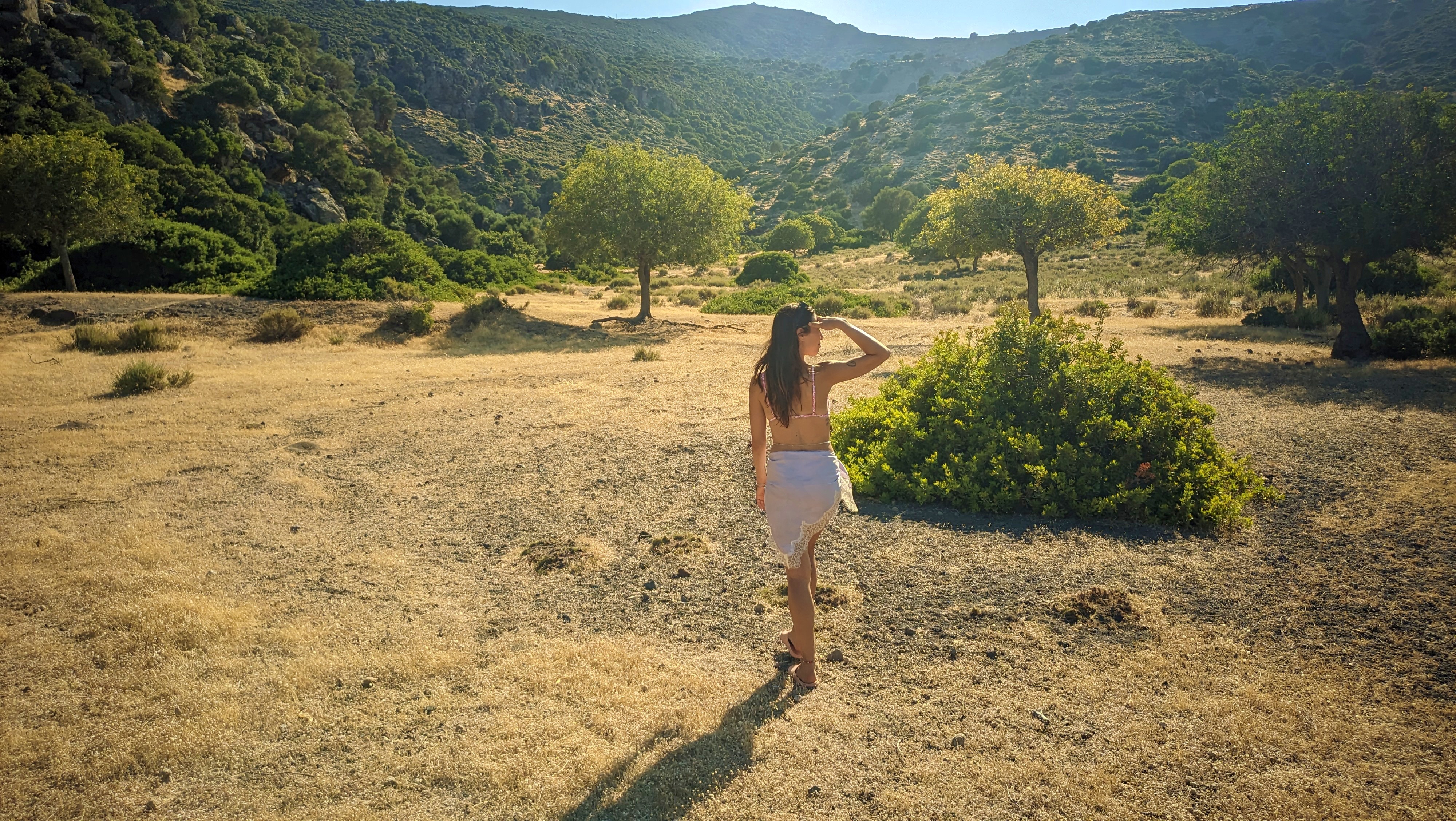
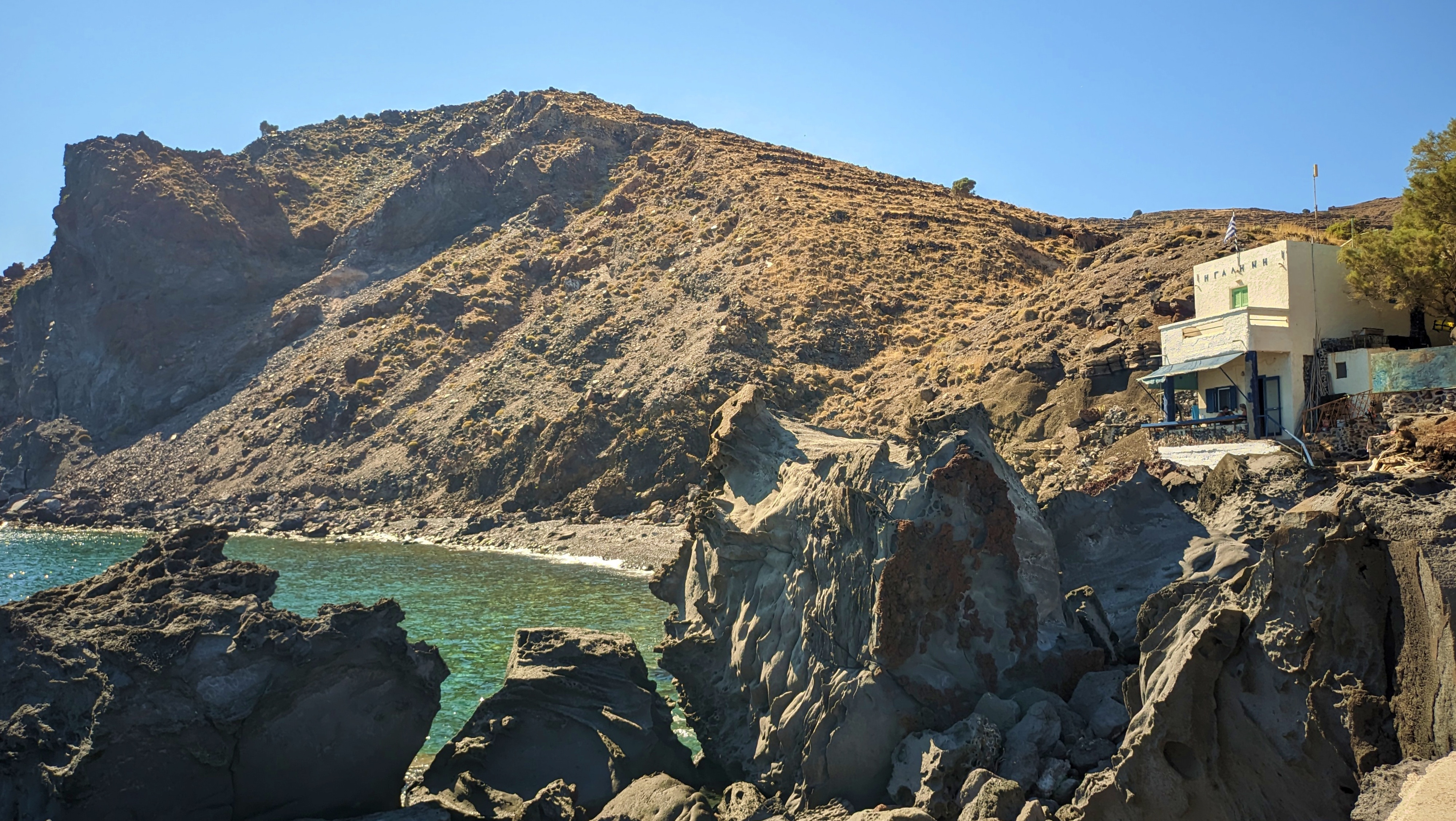
ompared with other Greek islands famous for endless sandy beaches, Nisyros doesn’t exactly dazzle at first glance. It makes up for what it lacks with black volcanic pebbles, dramatic lava formations, secluded coves, and surprisingly lush pockets of vegetation for what is essentially a volcanic desert. At Chochlaki Beach, just a short walk from Mandraki, every wave produces a distinctive buzzing sound as it rolls over the large black pebbles. Reaching Pachia Beach requires a scenic walk through volcanic terrain before suddenly arriving at turquoise waters framed by steep cliffs and a small gorge that has become a favourite among free campers. Hot springs appear along the coastline in unexpected places. Nearby, the roofless church of Panagia Thermiani stands above naturally flowing thermal waters. Look closely at the base of its walls and you’ll notice it was built directly on top of ancient Roman baths. The abandoned harbour of Avlaki tells the story of the island’s changing fortunes, while geothermal springs still emerge among the black volcanic puffs.
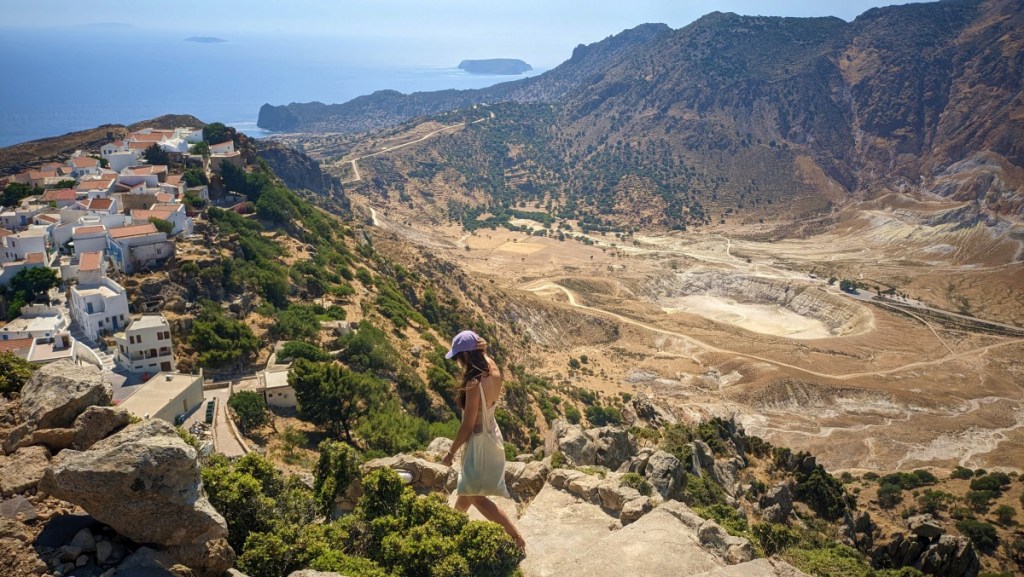
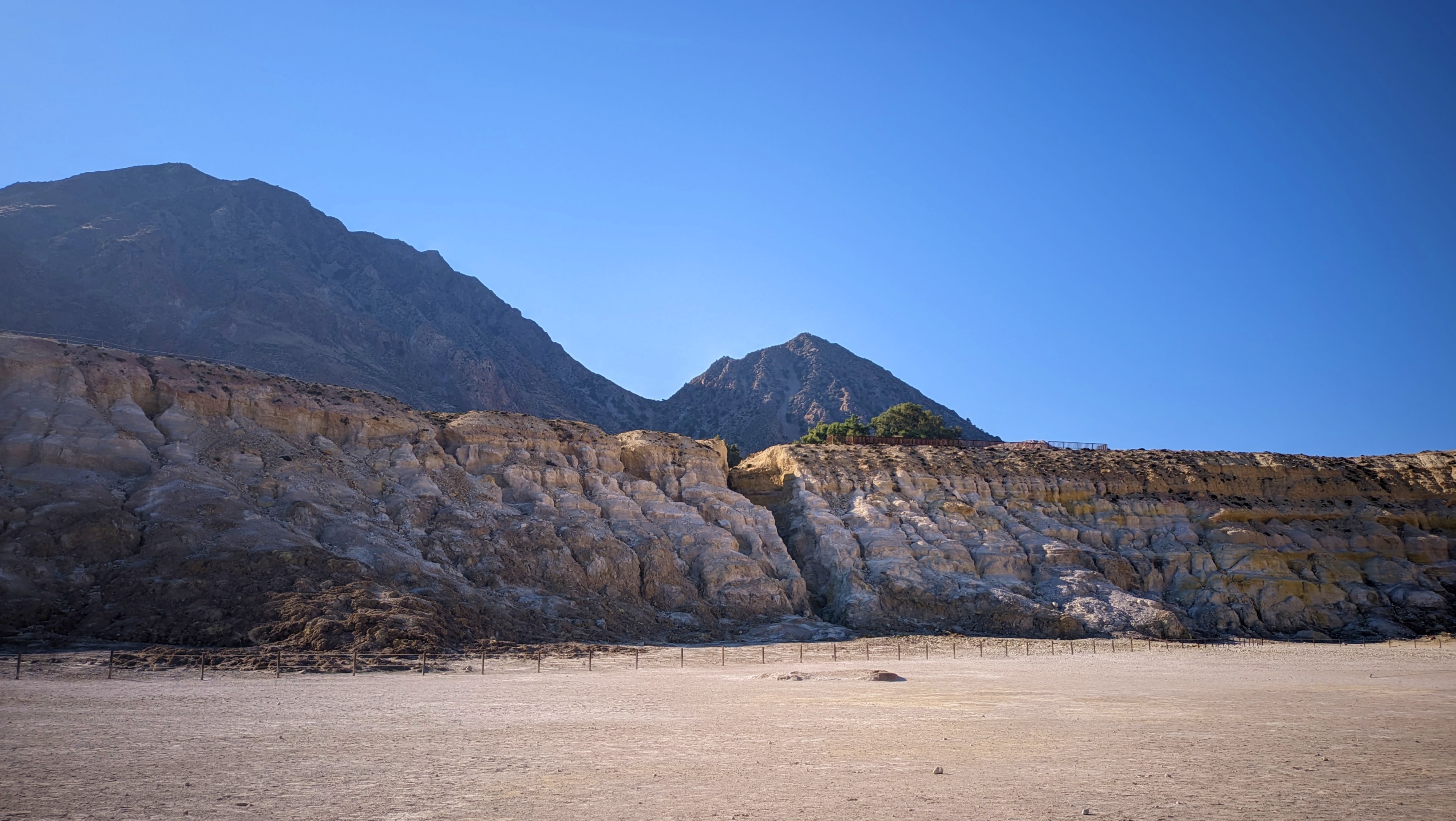
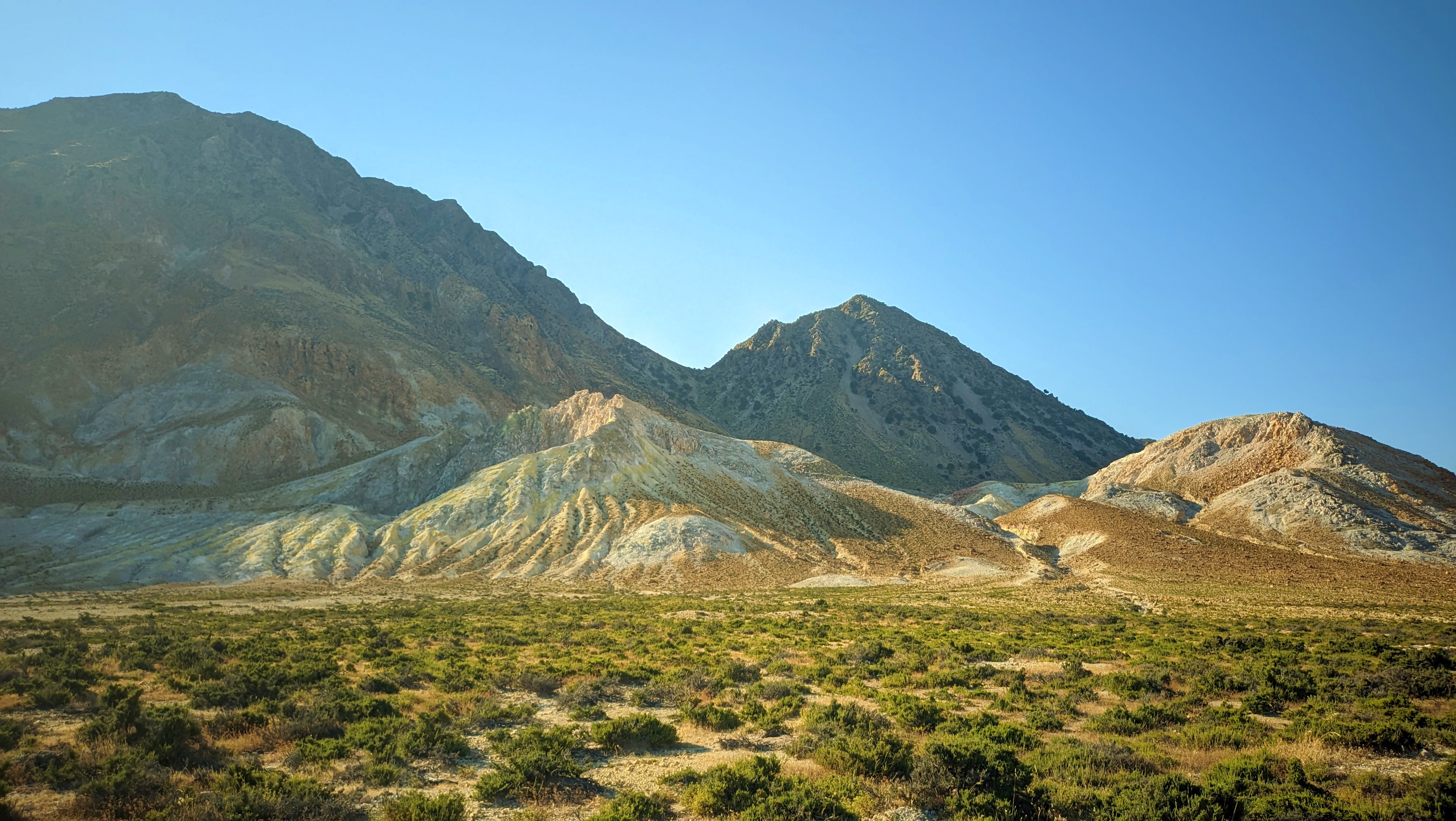
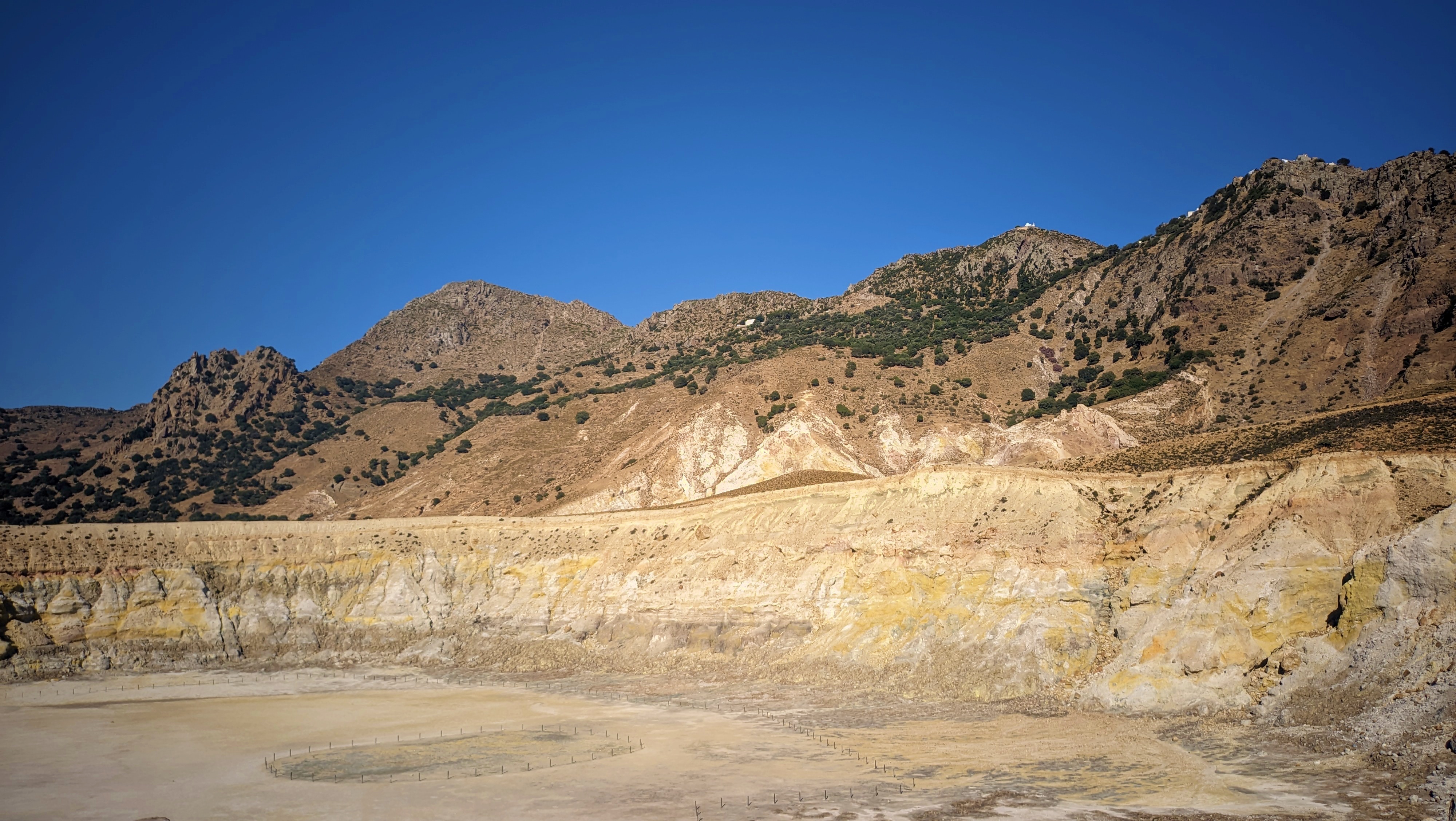
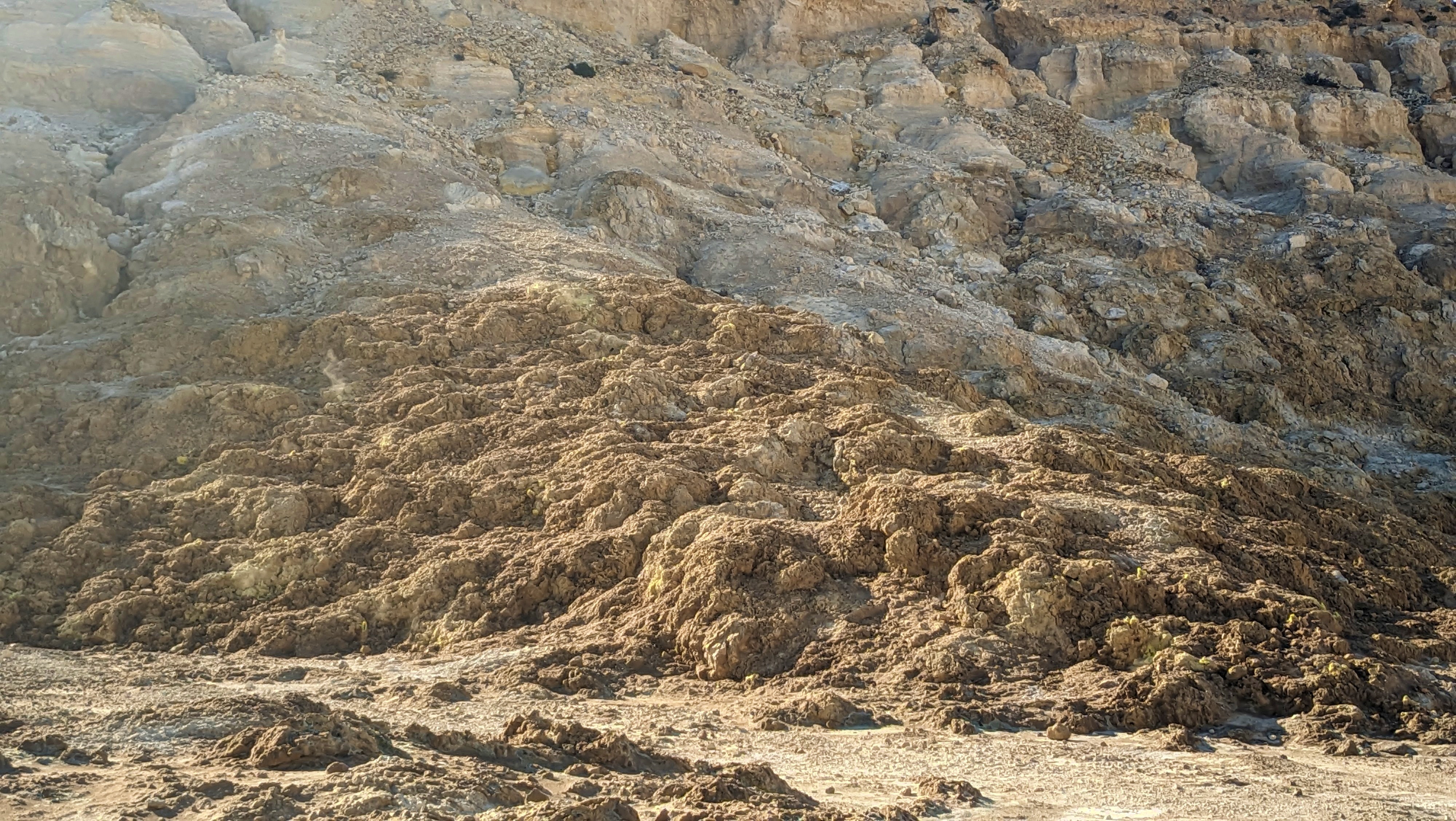
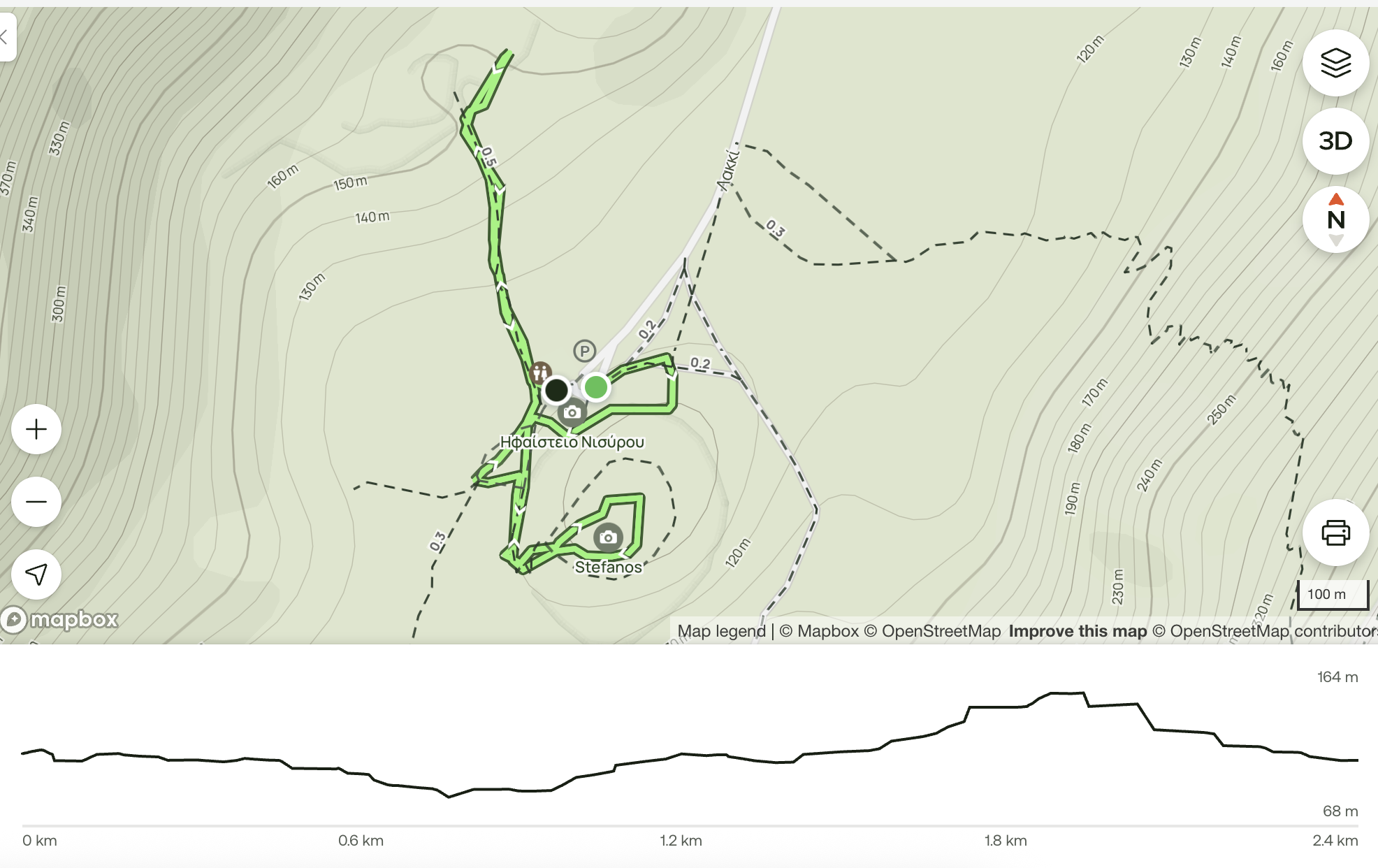
The main reason many visitors come to Nisyros is the Stefanos crater. Standing on its rim is impressive enough but, hear me out, walking down onto its floor is something else entirely. The ground changes colour beneath your feet, from pale ash grey to brilliant yellow where sulphur crystals accumulate around steaming fumaroles. The unmistakable smell of sulphur is a constant reminder that the volcano is merely sleeping. This is one of the very few places in Europe where you can safely walk inside an active hydrothermal volcanic crater. A smaller crater, Andreas, overlaps the edge of Stefanos, while the wider caldera reveals several other craters: the Polyvotis group, Logothetis, Achilleas, Flegethron and the twin Kaminakia craters. Mikros Polyvotis is the most recent one, formed after an 1887 eruption.
Just a short boat ride from Nisyros lies the uninhabited volcano island of Gyali. Unlike its neighbour, Gyali is known for its valuable deposits of pumice and obsidian, which are still quarried today. Massive industrial structures rise unexpectedly from an otherwise pristine landscape. Yet, crystal-clear aquamarine water surrounds beaches that feel almost untouched.
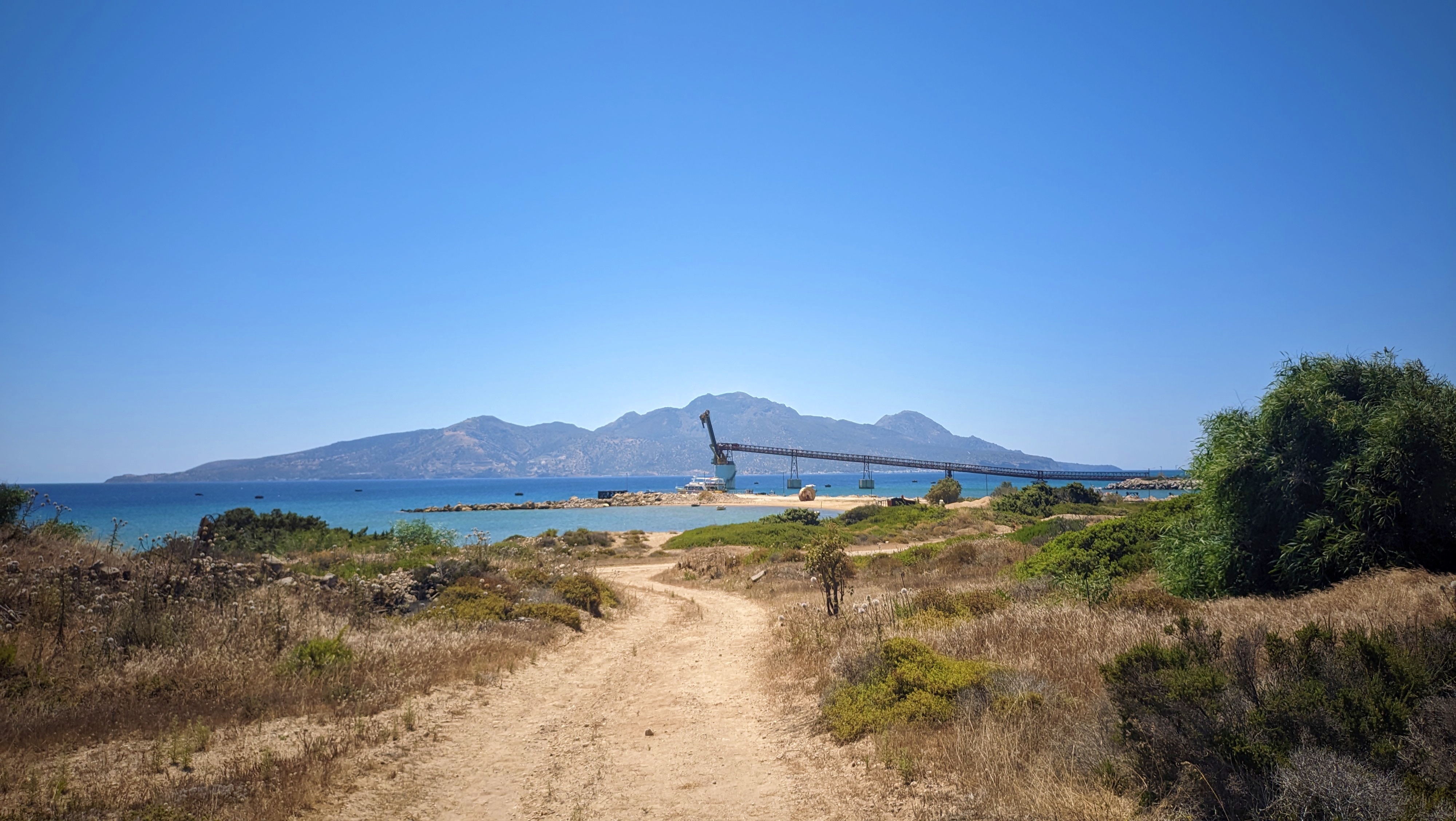
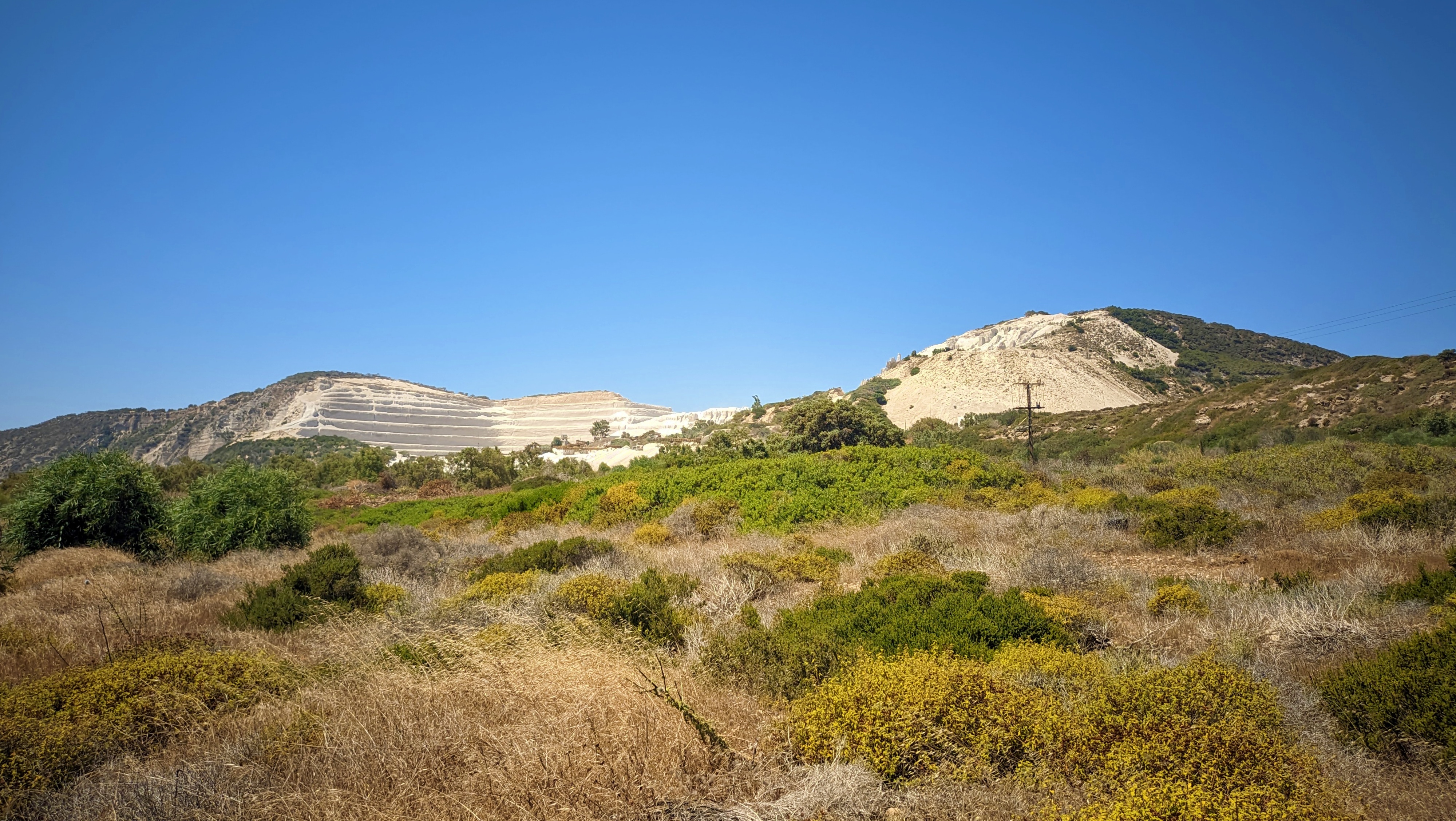
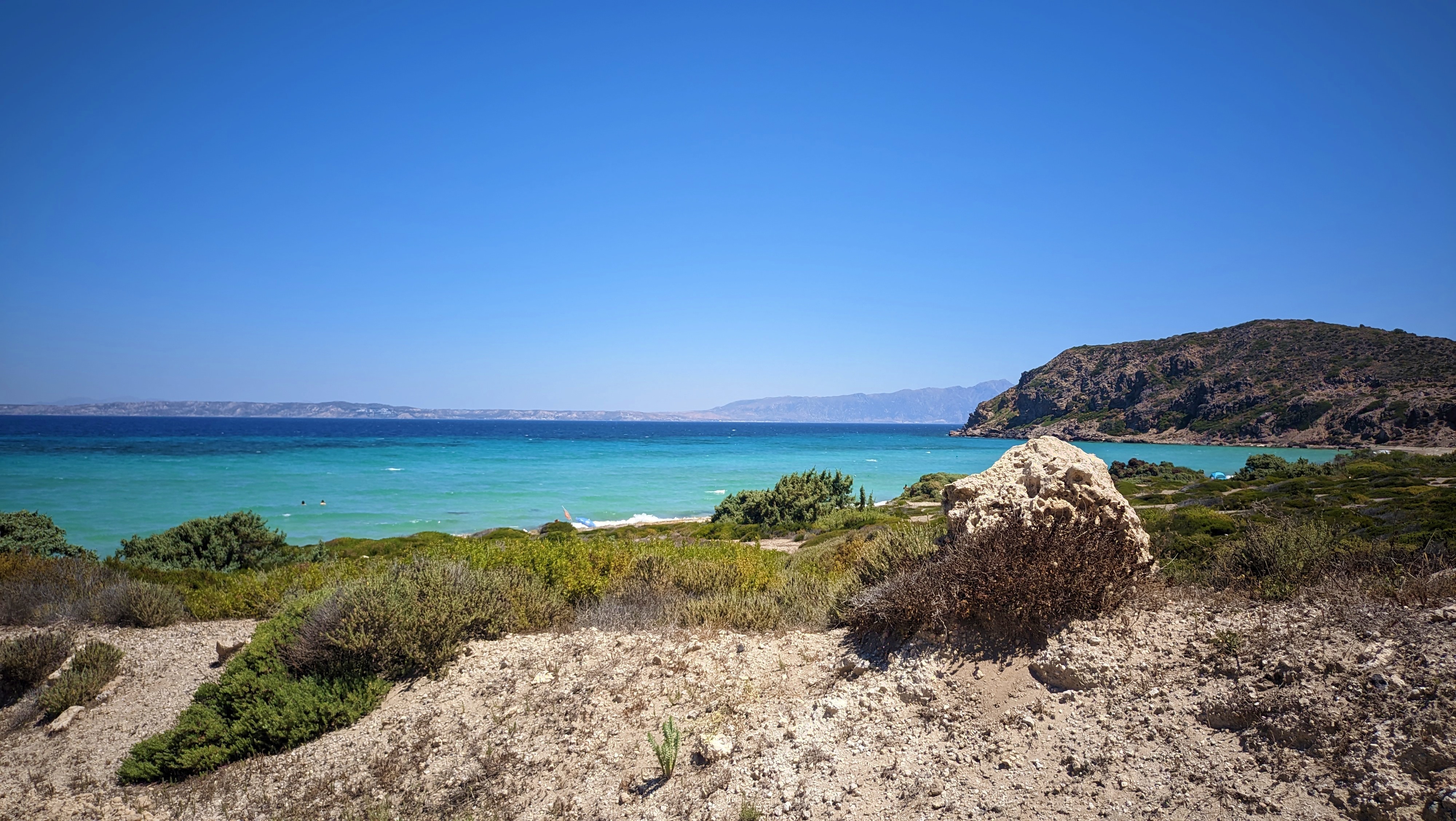
Although the island is sursprisingly small, we did rent a car for a few days to move around. The roads are narrow and winding, especially towards Avlaki. During my visit in mid-July, Nisyros still felt pleasantly quiet, apart from the regular day trips arriving from Kos. For an island born from fire, Nisyros has an unexpected sense of calm. If you’re planning your own visit, you can also follow my walking routes from Mandaki to Palaiokastro and a tour of the craters in all trails.
Read more:
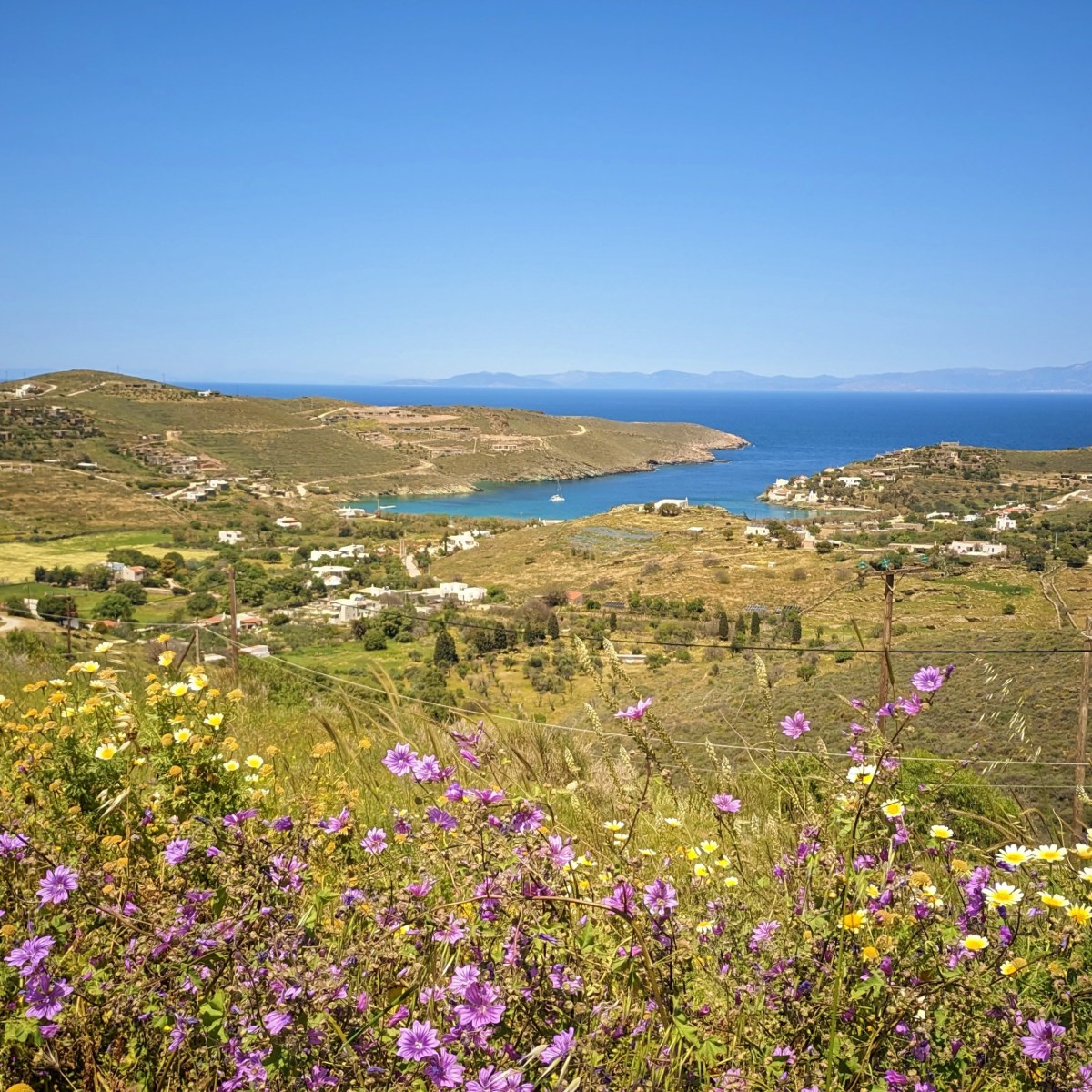
One day in Kea
Let’s say you have only one day at your disposal for an excursion in nature while in Athens.…
Keep reading
Ikaria: let me know if you move a muscle
Ikaria isn’t the island you go to “tick off” sights; it’s the one you hit to lose track…
Keep reading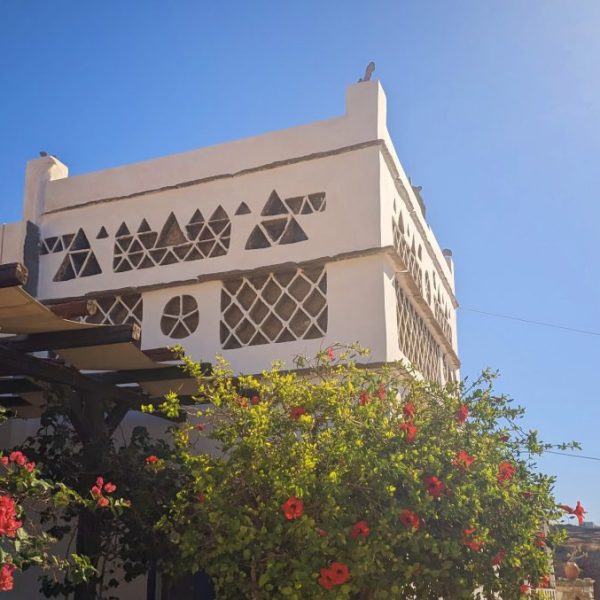
Tinos eisai esi ? or How to spend two days on Tinos Island
Sorry, it’s half past twelve and that silly word pun is still the only thing I can think…
Keep reading belleelene