
[Visited on October 25th, 2020]
Last time, I told you about the only top-100 waterfall of Tokyo. However, the Okutama area is abundant with myriads of smaller waterfalls to enjoy throughout the year. You’ll find the majority of falls concentrated around the Unazawa area, deep in Tokyo’s west.
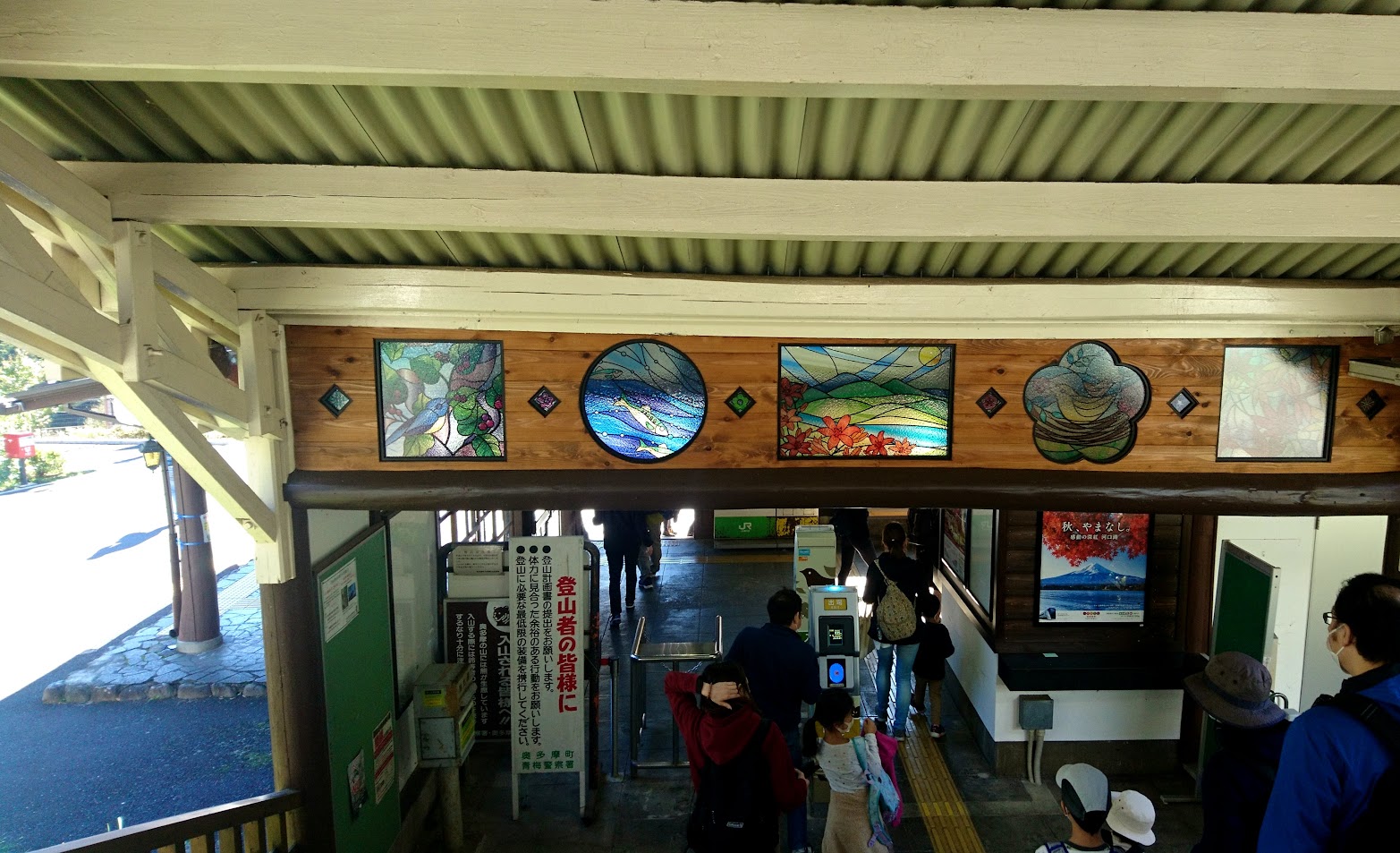
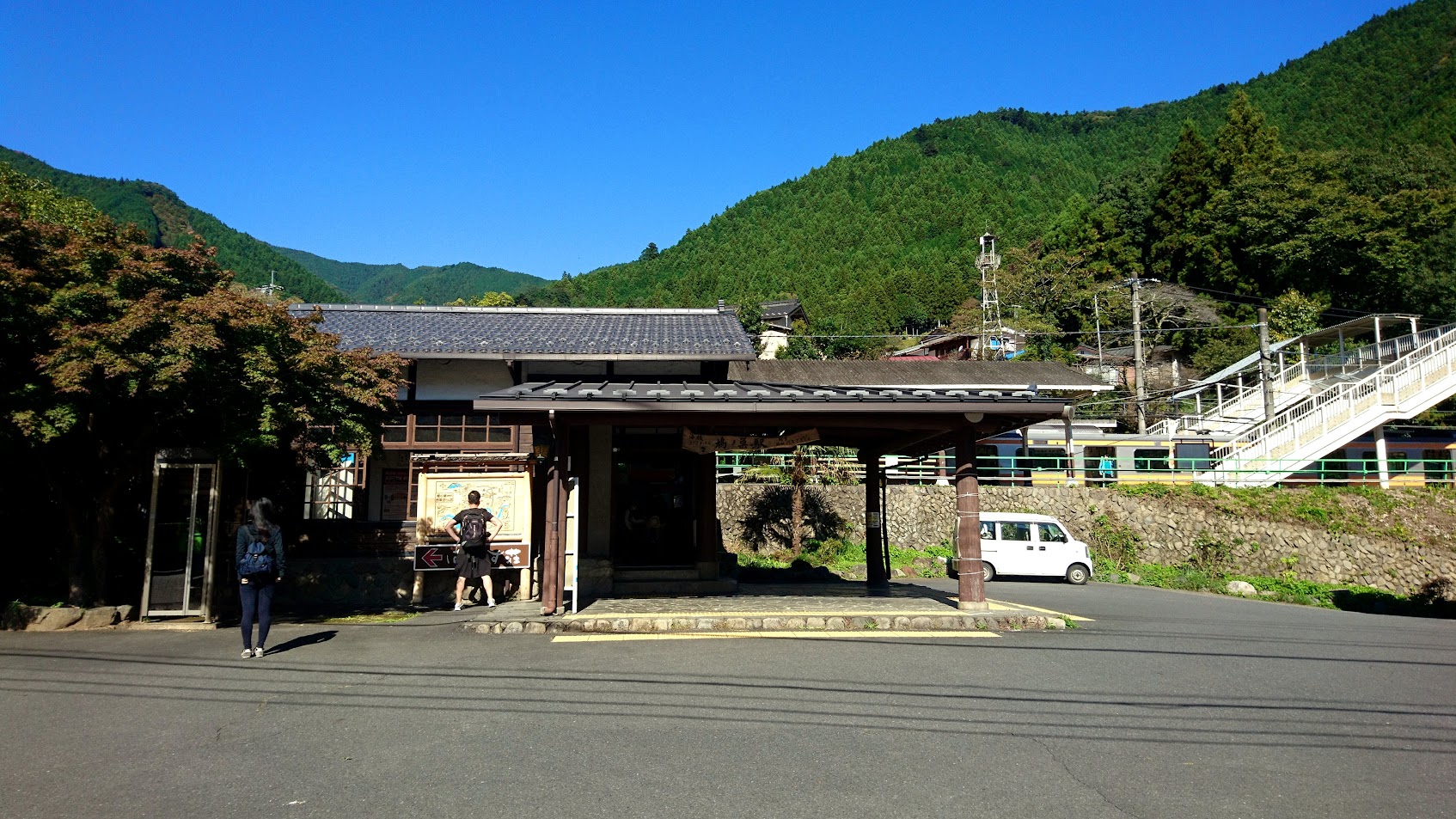
The path starts from Hatonosu station on the JR Chuo line. Like the rest of stations on the same line, it is small, wooden and decorated with colored glass. The highest altitude of the path is just short of 800 meters, so it is accessible all year long. The high season is either early spring or late autumn, when other paths are closed due to snow. However, avoid heading there on a rainy day, because you need to climb rocks and ropes in order to reach the largest waterfall.
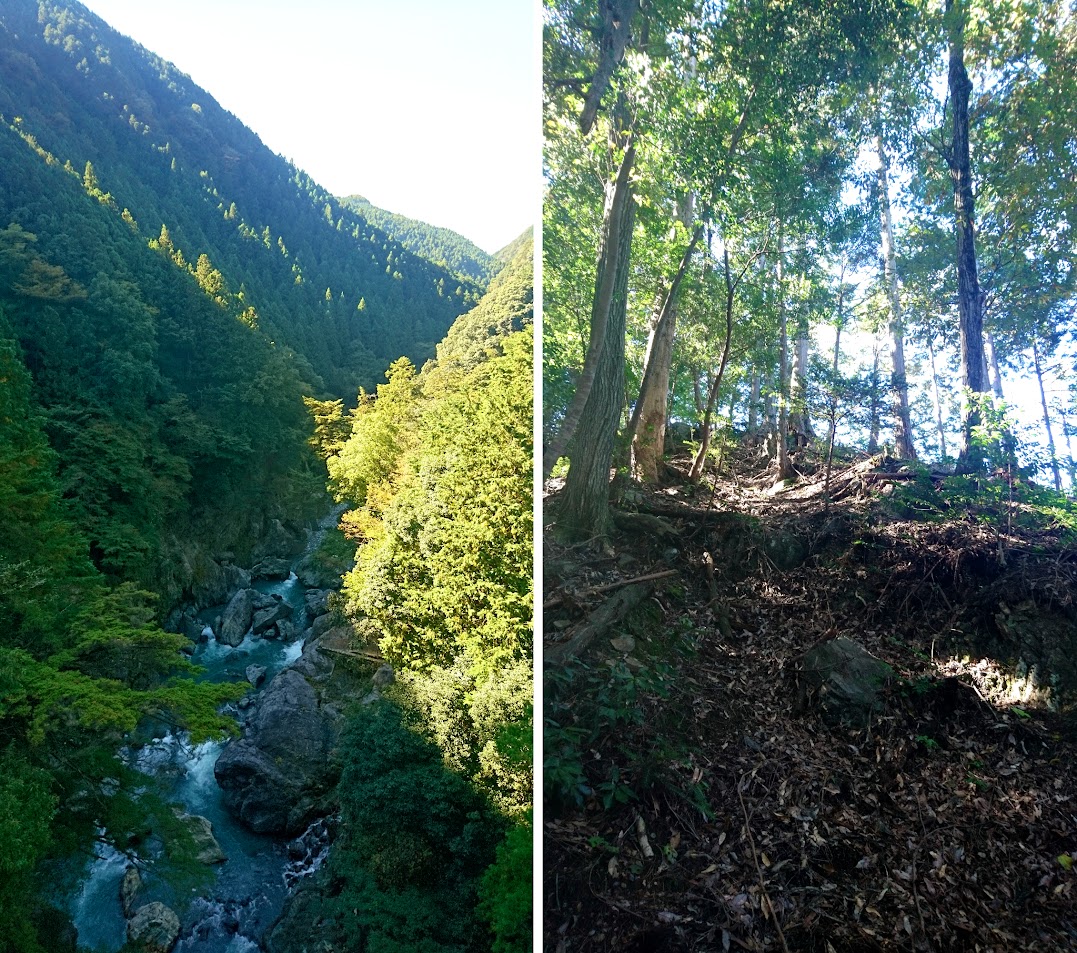
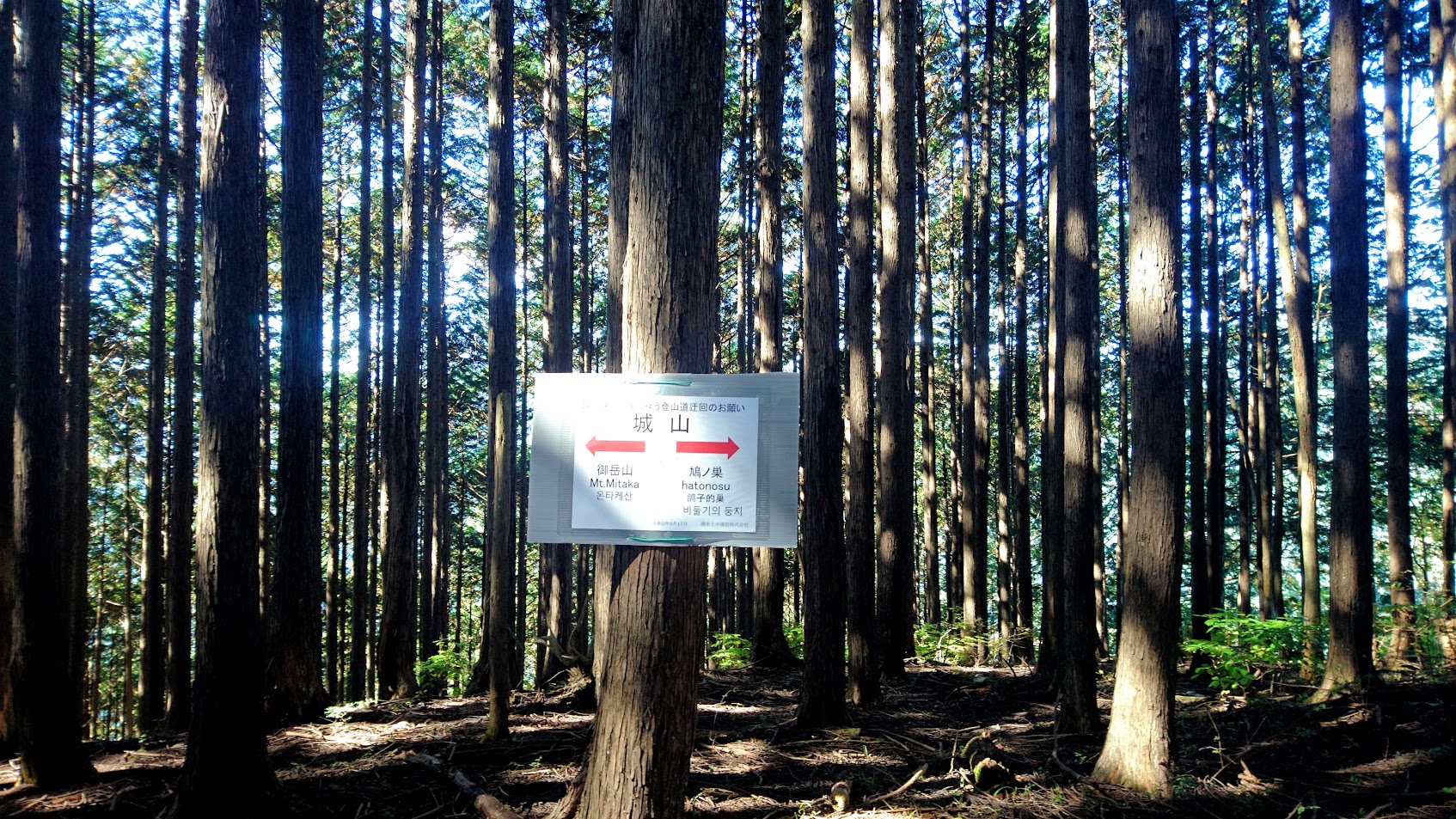
The goal of the hike is the three falls of Unazawa (海沢三滝). But there are definitely more than three waterfalls. The name Unazawa includes the character of the sea, despite the valey being tucked in between the mountain ranges of Nishi-Tama. Right at the beginning of the trail, you are going to reach an observation deck at Matsunoki Ridge Higashiya. I’ve mentioned this location a couple of times, because it is where you can turn and hike towards Mt. Mitake. Unazawa is on the other side, so you have to first pass the fork to the small peak Hatonosu Shiroyama (鳩ノ巣城山) and continue to Onara pass (大楢峠). The forest around here is thick and relatively empty. If you are lucky, you may come across kamoshika, the japanese goat-antelope, which looks exactly like you’d imagine a frankenstein goat-antelope.
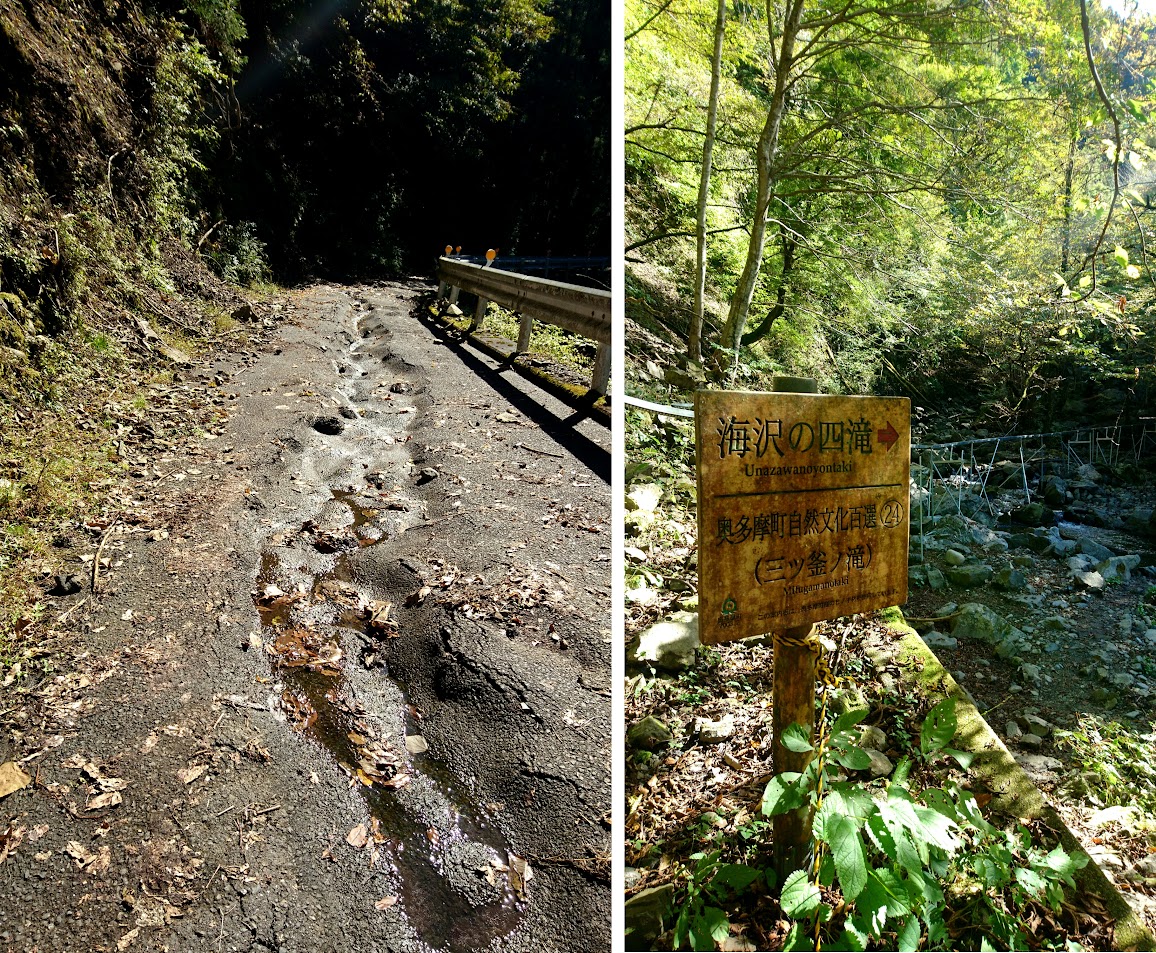
Eventually, you are going to meet signs that point towards Mitsugama Falls (三つ釜の滝), a fall with three levels with ponds shaped like shallow cooking pots. This waterfall is easily accessible by car and is by far the most popular for couples. From here on, the path becomes steeper and slippery. I came across a group of people climbing closer to the waterfalls, but they were fully equipped with uniforms and bright-colored helmets.
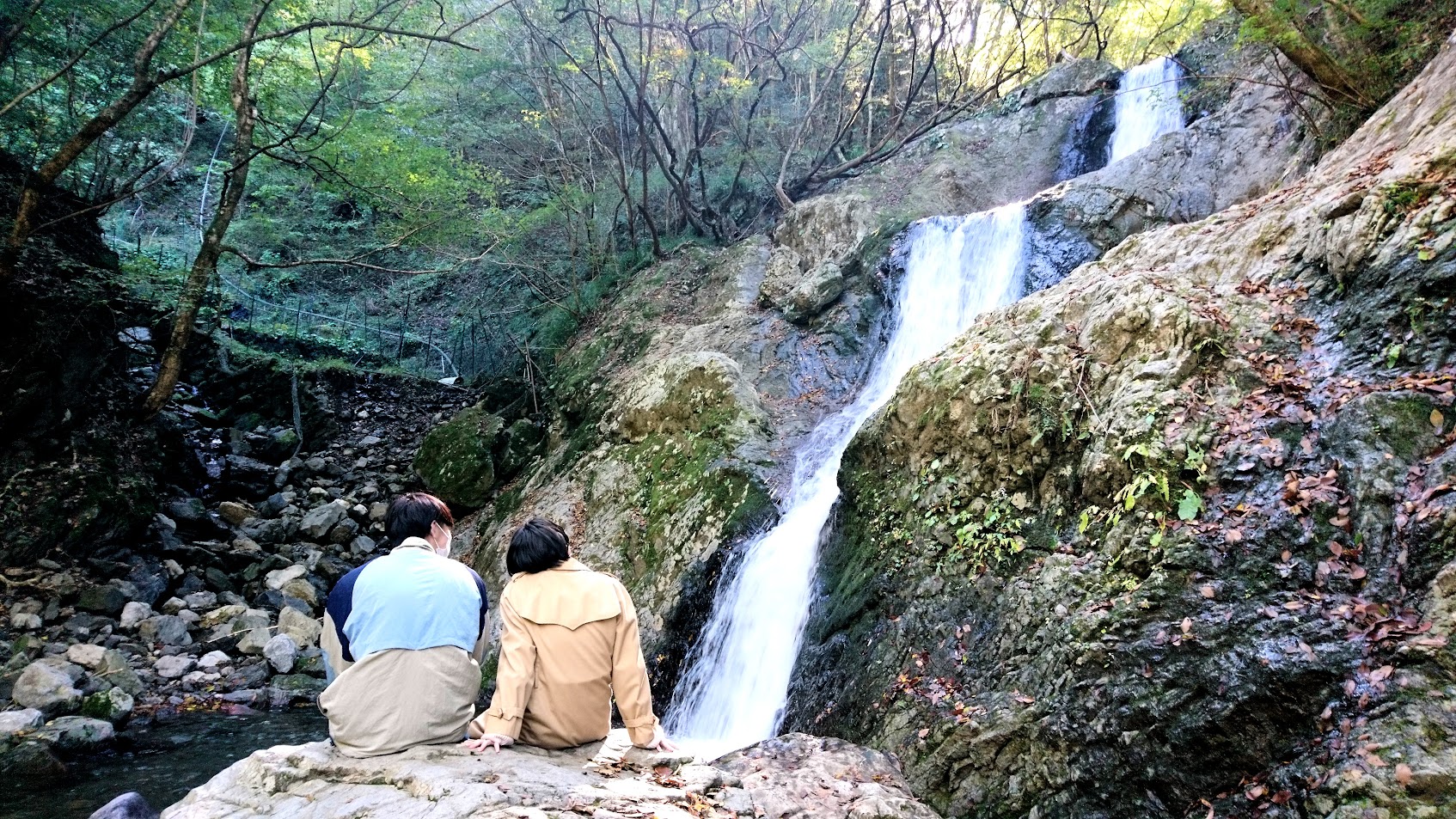
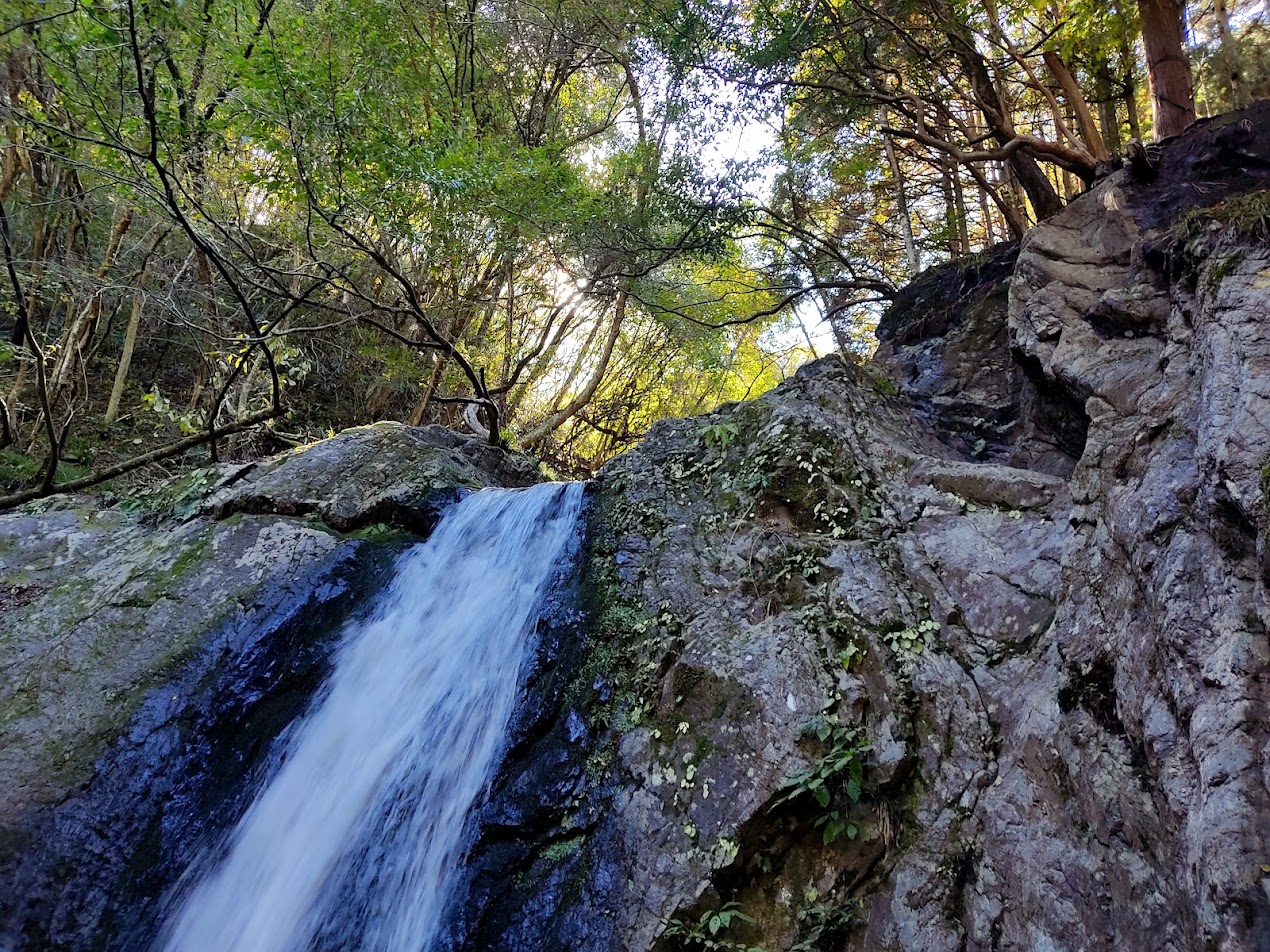
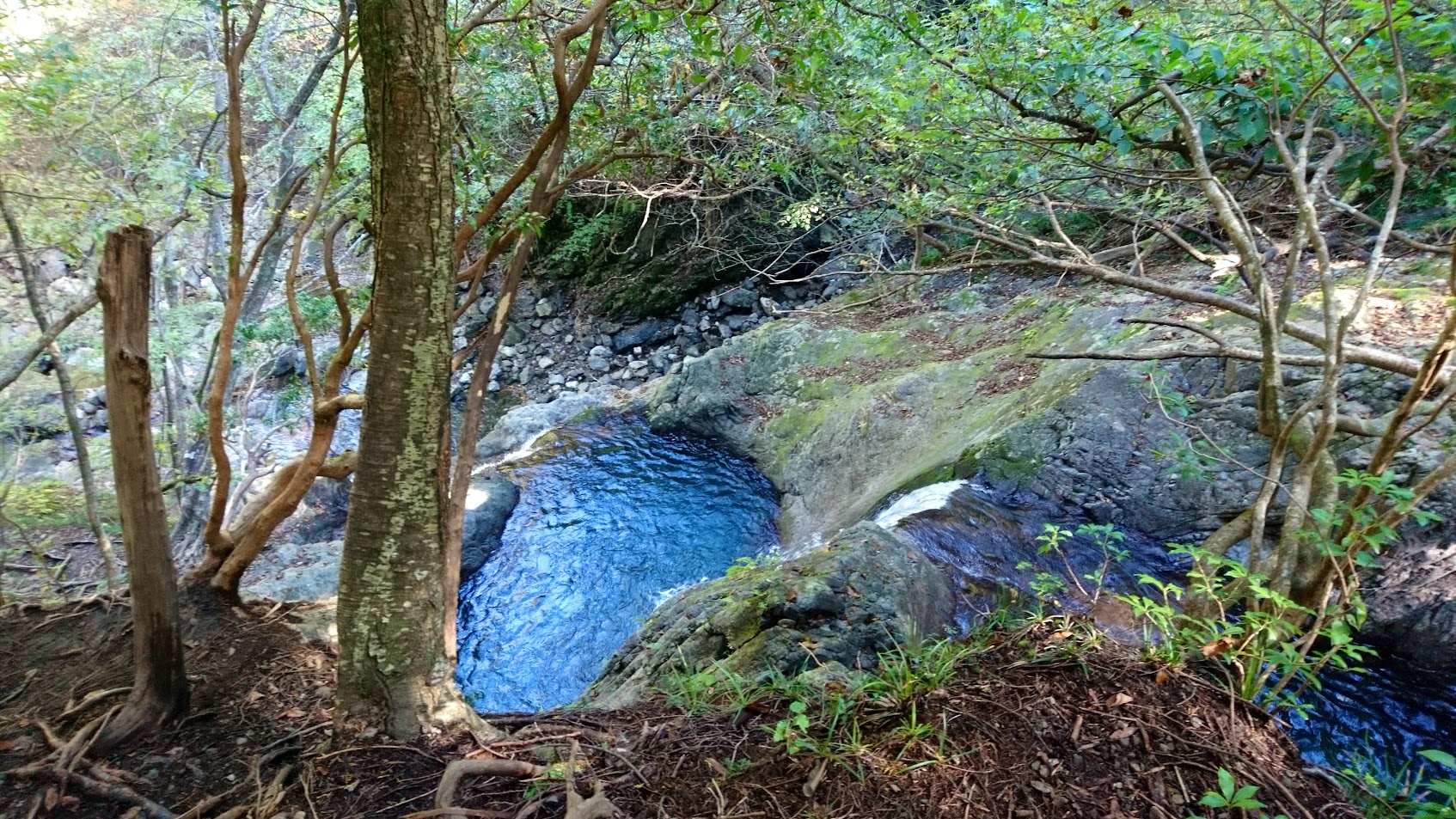
I didn’t dare to venture any closer, so made my way to the next waterfall, Nejire Falls (ネジレの滝). This fall is 10 meters high and relatively thin. By continuing up, you can observe Mitsugama no taki from above. There is an iron ladder to assist the climb at some point. The path was seriously damaged during typhoon Hagibis in 2019 and has not been restored since.
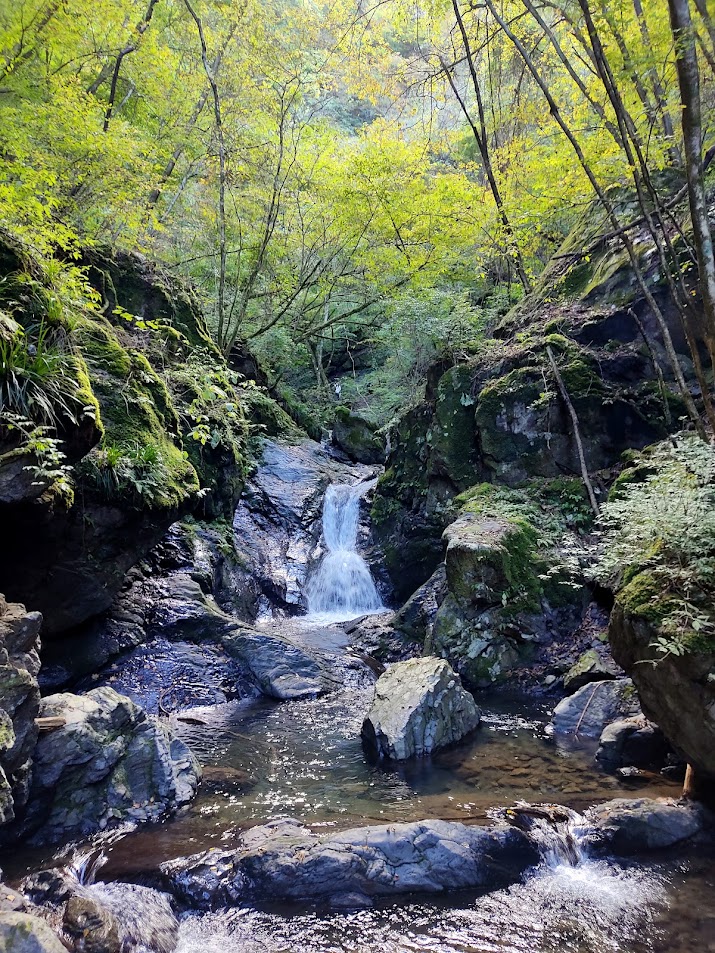
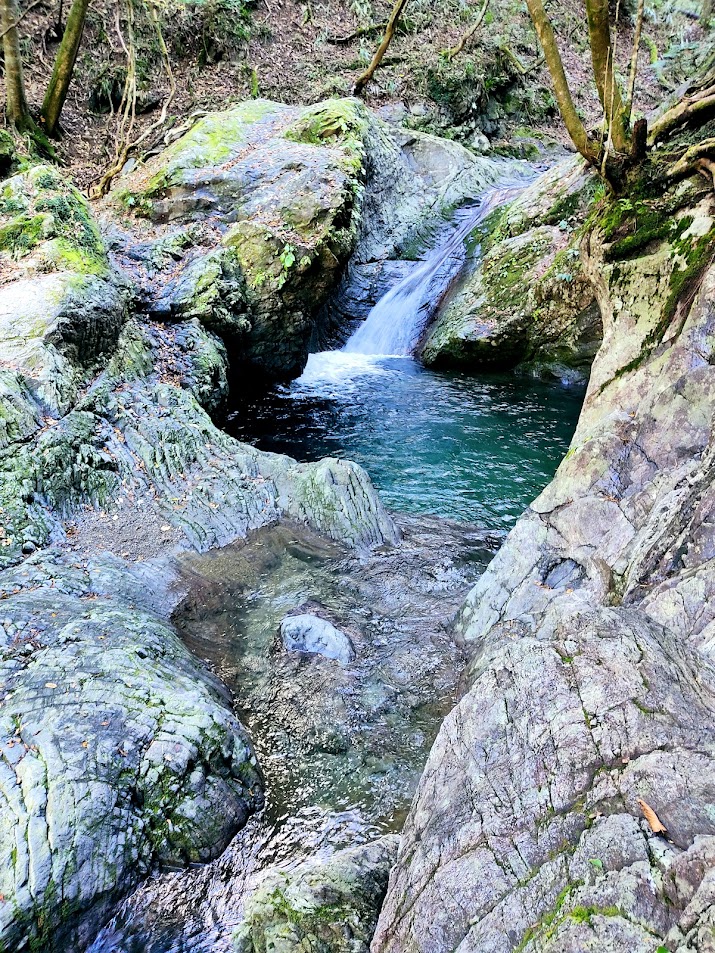
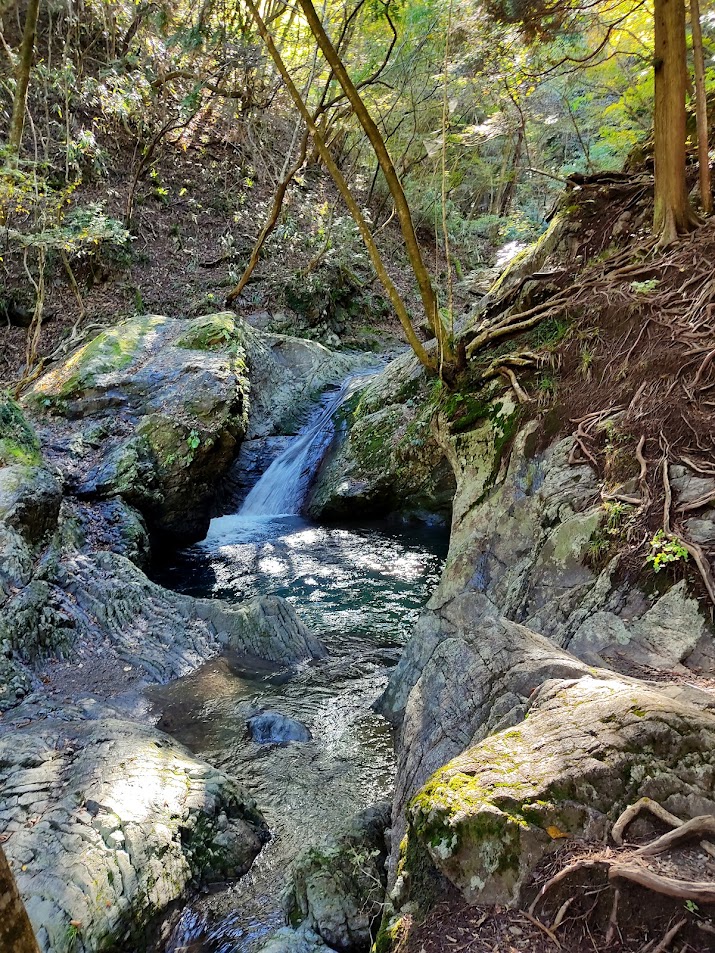
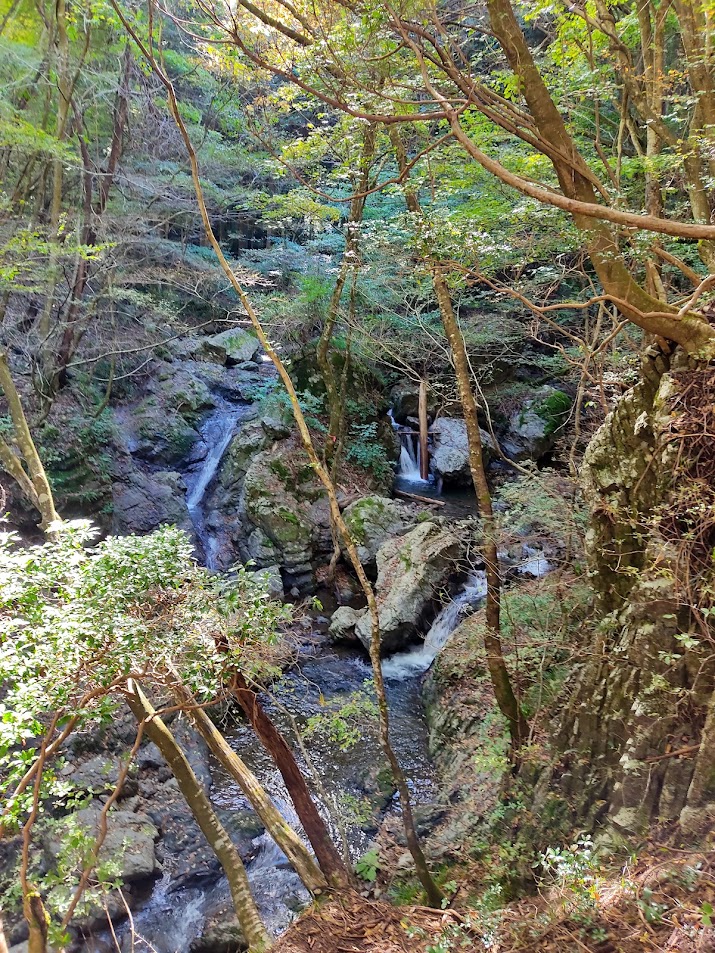
The last fall is the tallest, the 23-meter-high Otaki Falls (大滝). In order to reach it, you have to follow a dirt path, climb a steep, almost vertical rock with a rope and cross some unstable sections. Otaki Falls is certainly worth the trouble to get there, because of its amazing iridescent blue color and its moss-covered surroundings. Interestingly, the signs mentioned four, not three waterfalls. The last one is Fudo Falls (不動滝), just above Otaki Falls. It is impossible to see it from below Otaki and there is no path to walk there. However, there are metal hoops to assist rappelling and can be accessed if you have experience in climbing waterfalls. Unfortunately, I had to let this one pass.
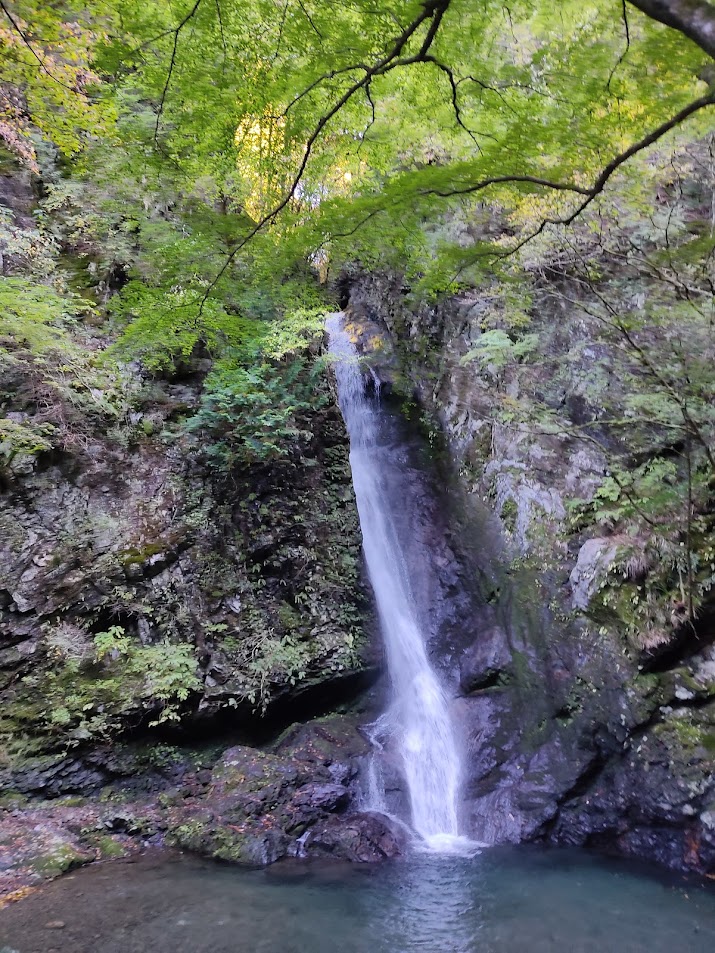
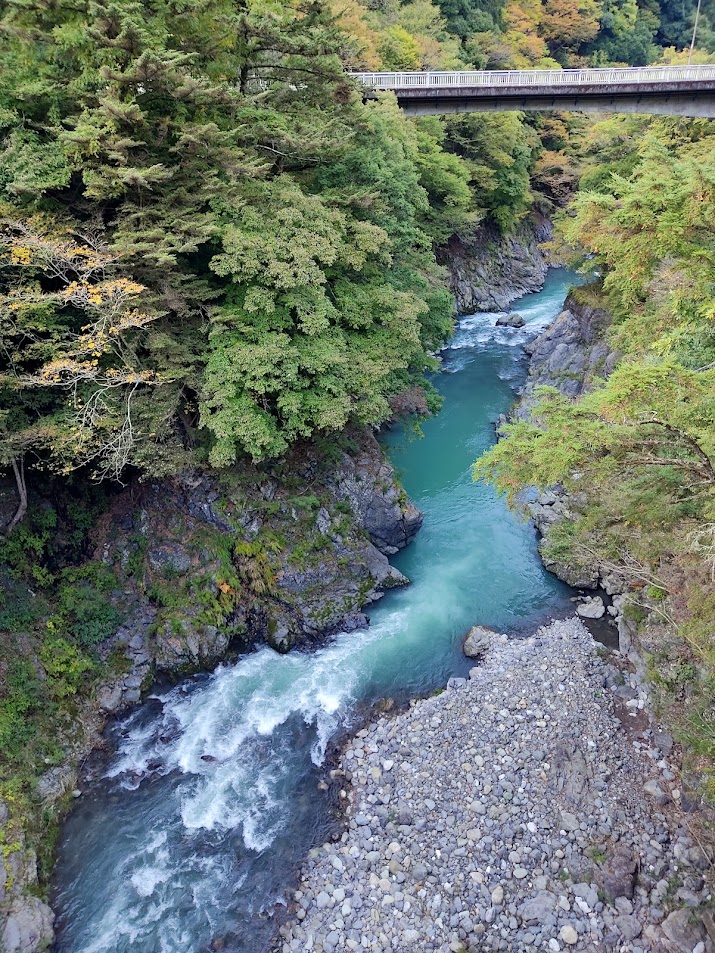
On the way back, you will pass just next to Iidozawa Falls (井戸沢), also known as Tenguiwa Falls (天狗岩の滝). This area seems popular for sawa-nobori, or waterfall climbing, like the group I met earlier.
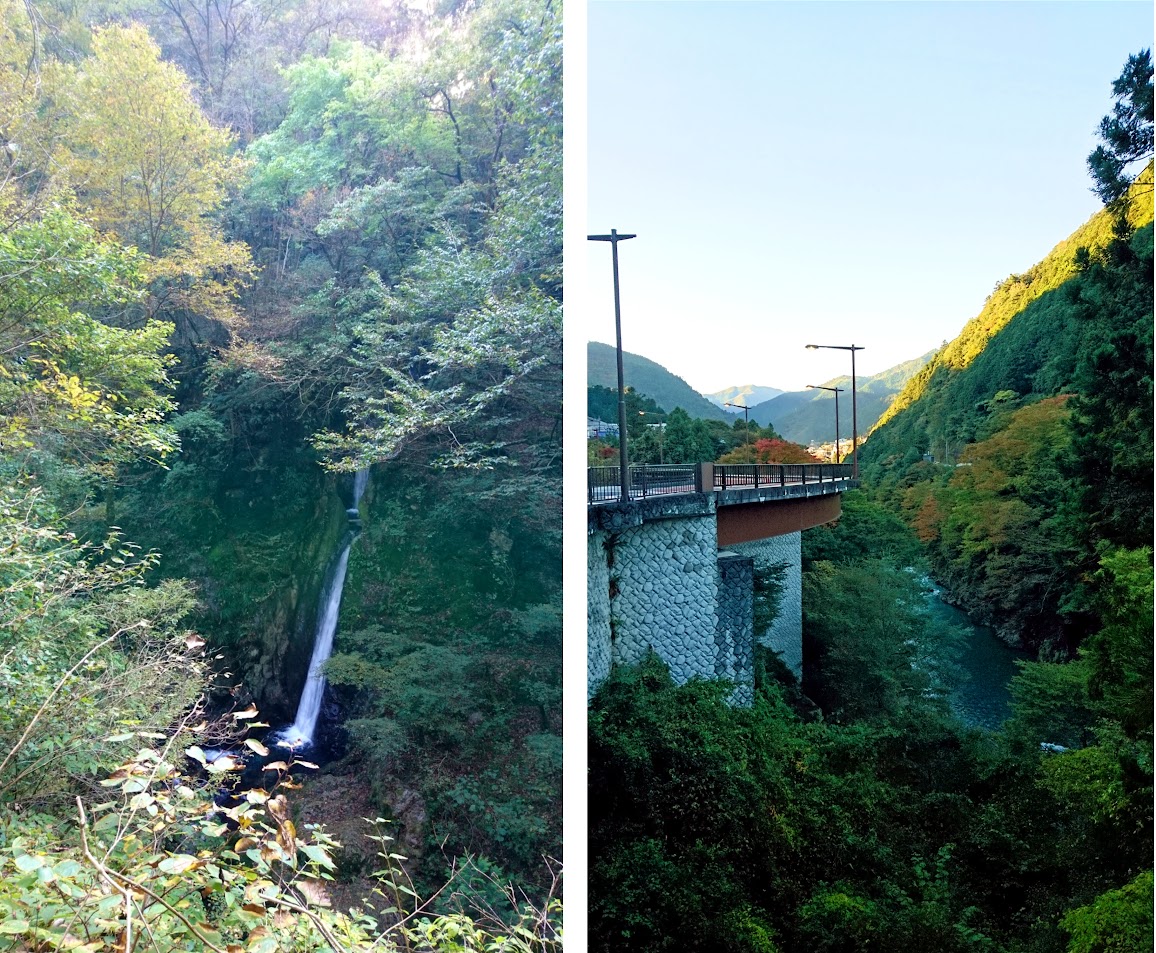
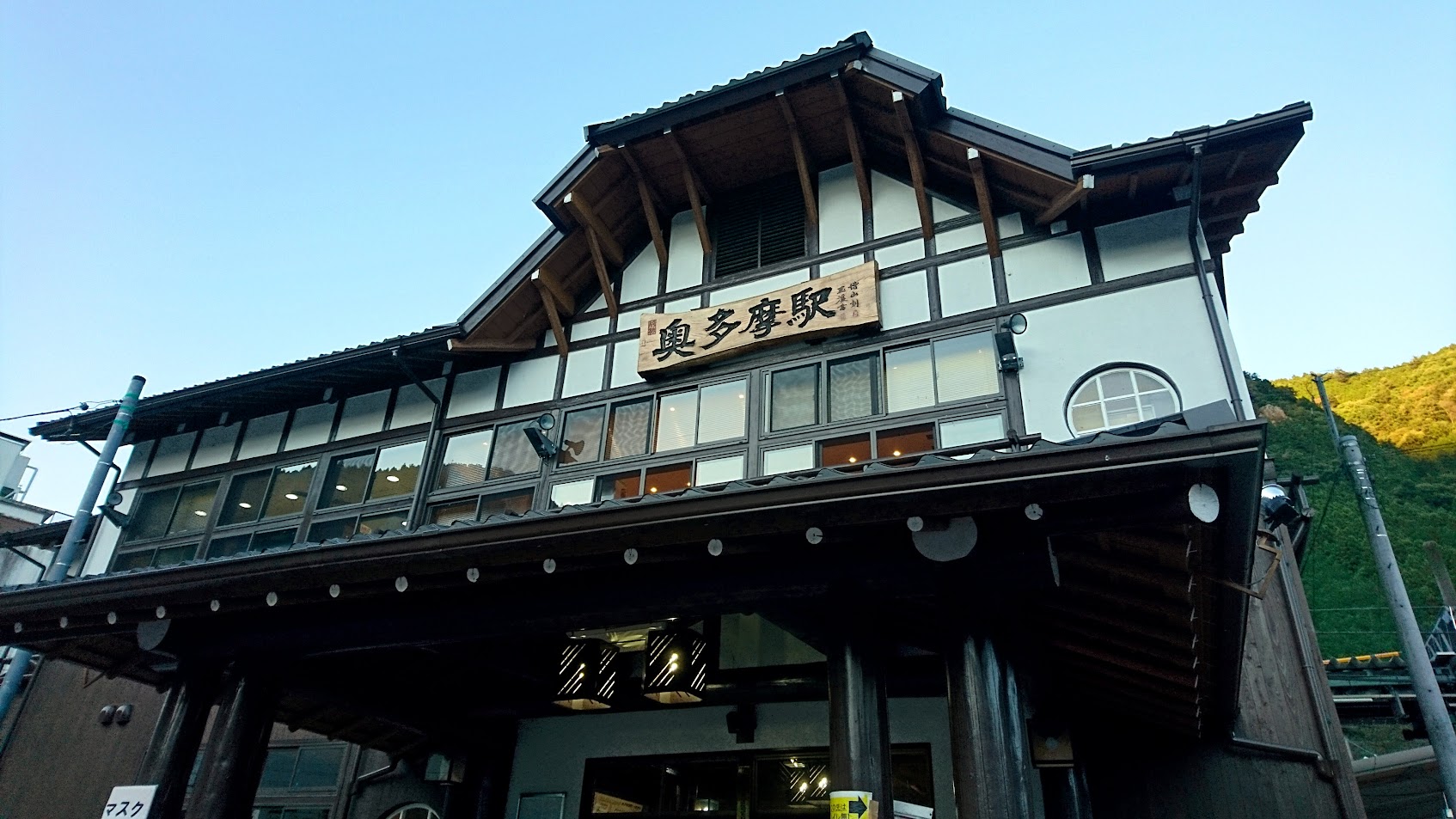
The path ends either at Shiromaru station or at Okutama station. The highlight of the return trip is a small tunnel (海沢隧道), that is supposedly haunted. I didn’t feel any creepy auras, and I found out it was haunted just as I was writing this article. If you happen to go there, tell me if you meet any ghost. At the American Camp, turn to the left in order to get to Okutama. A good choice for onsen and relaxation is Moegi no Yu, on the way to the train station.
In total, the Unazawa trail is almost 14km long and mostly desolate of people. You can follow the route in alltrails. The hike is mostly moderate but challenging at times and contacting some sports group in the area to try sawa-nobori should worth it. How did you like this hike? Did you see any wet ghost up there? Tell me about it in the comments below.
Support this blog | Στηρίξτε το blog
Read more:

Day hike from Tokyo: Tokyo’s only top-100 waterfall
You may wonder, how is it even possible that Tokyo has a waterfall at all. The west is…
Keep reading
Day hike from Tokyo: Imakuma Shrine and Kongo Falls
Today we will head out to Mt. Imakuma (今熊山), which contrary to what the name suggests, has no…
Keep reading
Day hike from Tokyo: Chisuji falls, Mt. Takanosu and Mt. Byobu
Hakone is one of the most visited places among people visiting Japan for the first time. Despite its…
Keep reading belleelene